



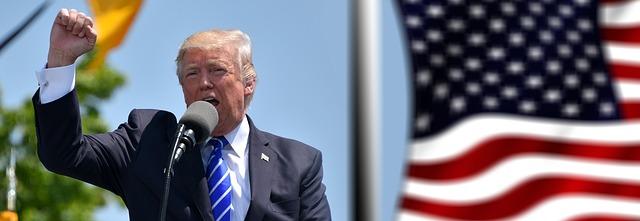
Donald Trump has not set foot in the Oval Office since 2021, yet his political shadow is increasingly visible across Europe. From Rome and Madrid to Berlin and Budapest, nationalist leaders and right‑wing movements are recalibrating their strategies in anticipation of a potential second Trump term. What was once dismissed as long‑shot U.S. campaign rhetoric is hardening into structured partnerships, shared infrastructure and an emerging transatlantic network aimed at funneling U.S. conservative influence and resources into Europe’s fragmented nationalist ecosystem.
As Europe approaches a dense electoral calendar and grapples with overlapping security, migration and cost‑of‑living crises, Trump‑aligned figures are quietly preparing the ground for a possible political realignment that could alter the balance of power inside the EU and reshape its relationship with Washington.
Trump World Deepens Ties With Europe’s Nationalist Right
Over the past year, a loose but increasingly organized cohort of MAGA‑aligned strategists, former White House advisers and conservative think‑tank operatives has begun nurturing deeper links with nationalist parties across the continent. Their efforts stretch from Italy’s governing right to insurgent forces in Spain, Central Europe and parts of Northern Europe.
Most coordination happens out of public view: closed‑door workshops, unpublicized strategy retreats, encrypted briefings and invite‑only summits where European and U.S. conservatives test‑drive messages, tactics and campaign technology. The shared agenda centers on:
- Migration crackdowns and hardline border enforcement
- Climate policy rollbacks and resistance to ambitious green transition targets
- A more confrontational stance toward EU federalism and Brussels‑led integration
Insiders describe a clear objective: if conservative and far‑right forces gain seats in national parliaments and in the European Parliament, they should be ideologically aligned with a potential second Trump presidency and capable of coordinated action on transatlantic priorities. American consultants with experience in U.S. swing‑state campaigns are sharing playbooks on microtargeting, data analytics and wedge issues calibrated to weaken centrist coalitions and peel off disillusioned voters.
- Key channels of influence: backroom policy roundtables, conservative media ecosystems, faith‑based networks and values‑driven NGOs
- Shared priorities: border security, energy sovereignty, cultural identity narratives, and skepticism toward supranational governance
- Operational tools: polling and data exchanges, digital microtargeting frameworks, surrogate speaker tours and joint content production
| US Actors | European Partners | Focus Area |
|---|---|---|
| Ex-Trump strategists | Populist parties in Italy & Spain | Voter mobilization |
| Right-leaning think tanks | Central European conservatives | Energy & climate |
| Influential media surrogates | Nordic and Dutch right | Narrative framing |
Trump‑adjacent figures are now regular guests at European gatherings hosted by national‑conservative foundations, anti‑migration NGOs and religious organizations. Panel debates about sovereignty or “family values” often double as informal coordination sessions where talking points, donors and digital tactics are quietly matched.
The stakes go far beyond symbolism. A larger, more disciplined bloc of EU hardliners sympathetic to Trump could obstruct the traditional transatlantic consensus on NATO funding, Russia sanctions, tech and platform regulation, and climate diplomacy. With national elections and the next European Parliament race approaching, both U.S. and European actors see a narrow window to sync priorities before voters on both sides of the Atlantic decide whether this nationalist experiment will become institutionalized power or remain a fringe constellation of like‑minded outsiders.
Transatlantic Nationalist Script Challenges EU Unity and Ukraine Policy
From Washington think tanks to campaign war rooms in Warsaw and Budapest, a diffuse alliance of hard‑right strategists is increasingly aligned against the mainstream European consensus on Russia, migration control and military assistance to Kyiv. Their core message is deliberately simple and easy to translate into national debates: national sovereignty first, Ukraine second.
Using podcasts, cable news hits, YouTube channels and social media campaigns, talking points circulate rapidly between U.S. and European networks. EU cohesion is reframed as a project of detached elites; continued support for Ukraine is portrayed as an unfair burden on taxpayers already struggling with inflation, high energy prices and stagnant wages. According to Eurobarometer surveys and independent polling conducted in late 2023 and 2024, support for arming Ukraine remains solid in many member states, but gaps are widening along partisan lines, especially where nationalist parties are part of or close to government.
In capitals that rely on far‑right parties to sustain fragile coalitions, these narratives are already influencing legislative timetables and policy compromises-on defense budgets, sanctions renewal and long‑term Ukraine funding mechanisms.
- Key EU capitals face mounting pressure to soften sanctions, delay new weapons packages and prioritize domestic spending.
- Far-right parties coordinate messaging with U.S. culture‑war influencers, pollsters and digital strategists to amplify themes of “peace” and “national interest.”
- Pro-Kremlin narratives gain traction by being bundled with cost‑of‑living concerns and fear‑based messaging around border security and refugee inflows.
| Axis | Main Tactic | Impact on EU Policy |
|---|---|---|
| Washington-Brussels | Pressure to scale back Ukraine funding | Divisions in EU budget negotiations |
| Think Tanks | Reports promoting “ceasefire” or “peace deal” frameworks | Gradual softening of positions on sanctions renewal |
| Far-Right Parties | Anti-EU, anti-aid campaigns and referendums | Fragmented voting blocs in national parliaments and the European Parliament |
This is still not a formal, treaty‑style alliance, but functionally it behaves like one. Coordinated appearances at conservative forums, shared use of polling and focus‑group data, and cross‑border fundraising tours are funnelling money and visibility to parties intent on slowing or reversing European integration. As Europe moves through an intense electoral cycle, parliamentary arithmetic risks turning into a geopolitical pressure point: each vote on Ukraine assistance, accession talks or defense spending is increasingly framed not as routine policy but as a litmus test of loyalty-to the EU project or to a nationalist script authored on both sides of the Atlantic.
Calls Grow to Tighten Rules on Foreign Influence and Party Financing
European policymakers are scrambling to catch up with what security services describe as “systemic vulnerabilities” in the way political money and influence flow across borders. Draft laws circulating in Berlin, Paris, Madrid and other capitals point to a continental push for more stringent transparency rules, more powerful oversight bodies and clearer red lines for foreign funding.
Security briefings shared among EU interior and justice ministers highlight how offshore foundations, shell entities and opaque think tanks have become key conduits for funding and messaging tied to hard‑right, pro‑Kremlin and explicitly pro‑Trump networks. Investigations in several member states have already uncovered cases where external money was laundered through cultural associations, media start‑ups or issue‑based NGOs.
Lawmakers are under rising pressure-from intelligence agencies, journalists and civil society watchdogs-to adopt measures that would:
- Require near real-time disclosure of large donations, loans and in‑kind campaign contributions
- Ban direct or indirect foreign-state financing of political parties, campaigns and referendum committees
- Monitor cross-border digital advertising that spreads polarizing or misleading political narratives
- Strengthen watchdog authorities with powers to audit accounts, trace money flows and freeze suspicious funds
| Country | Planned Measure | Status |
|---|---|---|
| Germany | Lower threshold for public disclosure of donations | Draft bill |
| France | Mandatory register for foreign-backed lobbyists | Committee stage |
| Italy | Prohibition of extra‑EU campaign loans | Under review |
At the EU level, the conversation has shifted rapidly. Vague appeals to “democratic resilience” are giving way to concrete discussions about how to close off overseas funding streams that have already influenced key ballots, including referendums and European Parliament contests.
Regulators are evaluating whether U.S.-based political action committees, conservative NGOs and media outlets aligned with Trump’s movement should be classified as foreign influence actors when they finance, train or promote European nationalist parties. In 2023, for example, the European Commission proposed a directive on transparency of interest representation on behalf of third countries, reflecting the urgency of the issue.
Civil liberties groups caution that poorly drafted rules could chill legitimate advocacy and collide with free‑speech protections. Security officials counter that recent elections have shown how unregulated money and covert PR operations can supercharge far‑right turnout and distort public debate. A growing consensus in Brussels holds that any new framework must deliver:
- Harmonised EU standards for party and campaign financing, applied uniformly across member states
- Coordinated enforcement mechanisms with data‑sharing, joint investigations and EU‑level oversight where necessary
- Targeted sanctions against intermediaries and entities that knowingly channel illicit political funds into the Union
Brussels and NATO Under Pressure to Respond to US-Backed Disruptive Networks
Within EU and NATO institutions, senior diplomats describe a visible change in mood: what was once quiet concern about U.S. domestic politics has turned into active contingency planning. Officials in Brussels and at NATO headquarters are mapping how to respond to a growing constellation of US-aligned activist, media and funding networks that openly seek to weaken EU integration and complicate NATO decision‑making.
Behind closed doors, policymakers are debating whether these efforts should be treated as standard foreign influence operations, or as a new category of “friendly fire”-pressure emerging from an ally whose internal political currents now spill directly into European domestic debates. The concern is not just about Russian or Chinese interference, but about U.S. factions that see nationalist parties in Europe as strategic partners in a broader culture and sovereignty struggle.
This has prompted cross‑institutional coordination: cyber defense teams, strategic communications units, legal services and foreign policy directorates are all involved in outlining a common response before the next cycle of EU, national and regional elections.
Current discussions focus on a toolkit that emphasizes defensive oversight and political risk management rather than open clashes with Washington:
- Strengthening transparency rules around cross‑border financing of parties, NGOs, media and think tanks
- Improving intelligence-sharing on digital campaigning methods, data harvesting and microtargeting operations
- Coordinating unified messaging on alliance priorities, especially support for Ukraine, deterrence posture and sanctions regimes
- Providing rapid assistance to member states subjected to targeted disinformation or influence campaigns during sensitive votes
| Arena | Primary Risk | Planned Response |
|---|---|---|
| EU elections | Fragmented coalitions and anti-EU majorities | Joint monitoring cell and early-warning mechanisms |
| NATO cohesion | Obstruction of key alliance decisions | Pre-summit coordination and scenario planning |
| Online platforms | Micro-targeted disinformation and opaque political ads | Platform MOUs, risk audits and enforcement of EU digital regulations |
Conclusion: Europe’s Political Center Faces a New Kind of Test
As European capitals prepare for a fraught sequence of elections, the outlines of Trump’s renewed engagement with the continent’s nationalist right are already visible. Whether this evolving network solidifies into a durable transatlantic alliance or remains a fluid arrangement of mutual convenience will depend as much on outcomes in Washington as on results in Warsaw, Rome or Budapest.
For mainstream parties, the warning signs are unmistakable. Trump’s allies are investing time, money and organizational muscle; nationalist leaders are receptive; and centrist policymakers are bracing for the moment when loosely coordinated rhetoric hardens into a coherent governing strategy.
What unfolds next will challenge not only the resilience of EU institutions but also the political imagination of Europe’s leaders. In an era where domestic debates are instantly internationalized and foreign influence no longer fits Cold War templates, the line between internal politics and external pressure has rarely been so blurred-or so consequential for Europe’s future direction.