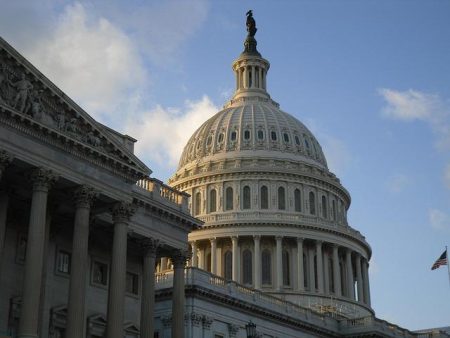



District leaders and congressional Republicans are once again at odds over who should control the National Guard’s role in Washington, D.C., exposing long-running rifts over public safety, home rule, and political power in the nation’s capital. At issue is a push from GOP lawmakers to broaden federal authority over the D.C. National Guard—authority they say is essential to prevent violence and guarantee a swift response to crises.
City officials see it differently. Already wary of what they view as routine federal intrusion into local affairs, they argue that an expanded and highly visible Guard presence sends a distorted signal that Washington is unstable and unsafe. The escalating dispute—fueled by sharp hearing-room exchanges and pointed comments, including one D.C. official’s quip that some troops looked “kind of bored”—has reignited a core question: who ultimately decides when soldiers patrol the streets of the capital?
DC Officials Challenge Ongoing National Guard Mission Amid Minimal Protest Activity
Troops on standby as crowds dwindle
District leaders are pressing federal authorities to justify why hundreds of Guard members remain around the Capitol complex when recent demonstrations have attracted more media crews than marchers. Local officials describe scenes of troops resting by fencing, checking their phones, and chatting idly—images they say undercut claims that an urgent security need still exists.
Staff from the mayor’s office, members of the D.C. Council, and civil liberties groups argue that the prolonged deployment suggests a city locked in constant emergency mode. That perception, they warn, undermines efforts to reassure residents, visitors, and investors that D.C. is fully open for business and tourism.
Federal arguments for a continued Guard footprint
Republican lawmakers counter that the Guard’s presence is not stagecraft but a necessary buffer against unpredictable unrest. To them, maintaining a force of soldiers positioned near key federal sites is akin to an insurance policy: rarely used, but critical when needed.
This clash of perspectives has intensified a broader fight over control of security in Washington and over who shoulders the lasting costs—economic, political, and symbolic—of stationing troops in a city already grappling with complex public safety challenges.
Key points emerging in the dispute include:
- Public perception: Local leaders fear that rows of uniformed soldiers and barricades make D.C. appear to be under siege rather than a functioning, accessible capital.
- Cost and strain on resources: Questions are growing about overtime pay, logistical demands, and the impact of extended deployments on Guard readiness and morale.
- Transparency and intelligence sharing: City officials say they still receive vague briefings about alleged threats, with limited concrete data to justify continued mobilization.
- Precedent and civil liberties: Advocacy groups warn of normalizing long-term domestic troop deployments that could chill protest rights and civic activity.
| Stakeholder | Main Concern |
|---|---|
| DC Officials | Overstated threat assessments and disruption of everyday city life |
| Republican Leaders | Visible deterrence and a show of federal resolve |
| Business Owners | Impact on tourism, customer access, and revenue losses |
| Residents | Balancing normalcy, civil liberties, and safety concerns |
Partisan Divide Deepens Over Long-Term Military Presence in the Capital
Security posture hardens as barriers come down
Even as fences are removed and visitor numbers rebound on the National Mall, the debate over whether the Guard should remain has crystallized along party lines on Capitol Hill. Republicans, branding themselves as stewards of national security, argue that a lean but lasting Guard deployment is vital to deter future attacks and to signal that federal institutions will not be caught off guard again.
District officials answer that the continued military footprint no longer matches the current risk environment. They say the optics—Armor near playgrounds, checkpoints by restaurants—convey an image of a capital locked in a semi-permanent defensive crouch long after the immediate emergency has abated. In oversight hearings, GOP members press Pentagon and Capitol security officials on worst-case scenarios, while D.C. leaders counter that the Guard members on corners appear “kind of bored” and underutilized.
Behind-the-scenes friction between Congress and District leaders
Privately, the standoff is reshaping how City Hall interacts with congressional overseers. Some Republicans highlight the Guard as a relatively low-cost form of protection compared with building out new permanent federal forces. By contrast, D.C. officials stress the strain on normal urban life, pointing to armored vehicles and checkpoints near schools, Metro stations, and small businesses.
The competing priorities can be distilled as follows:
- Republican lawmakers:
Focus on deterrence, ensuring they are not blamed for being “soft” on security, and emphasizing visible readiness in the face of any potential unrest.
- D.C. officials:
Emphasize local control, the economic and psychological toll of militarization, and the need to transition back to civilian-led law enforcement.
- Security agencies:
Seek adaptable frameworks that allow them to scale forces up or down quickly depending on real-time risk, without committing to permanent Guard deployments.
| Side | Main Concern | Desired Outcome |
|---|---|---|
| Republicans | Preventing any repeat of large-scale unrest or attacks | Maintained but reduced National Guard presence in D.C. |
| DC Leaders | Restoring normalcy and reinforcing local authority | Drawdown of troops and reliance on civilian security forces |
| Security Chiefs | Preserving rapid surge capacity | Flexible forces held in reserve and activated as needed |
Security Experts Push for Evidence-Based Rules on Guard Activation
From political pressure to measurable risk
Security specialists argue that decisions about deploying the National Guard in Washington should be grounded in data, not partisan maneuvering or vague allusions to possible unrest. They point to integrated models that combine:
- Real-time crowd measurement tools drawn from cameras, sensors, and permitting data.
- Online threat analysis, including monitoring of extremist forums and encrypted messaging trends.
- Historical protest and incident patterns specific to downtown D.C. and the Capitol area.
Under these models, Guard units would be activated only when transparent, pre-established criteria are met—rather than because an event is controversial or politically charged. Independent auditors and oversight bodies could review the process afterward to determine whether deployments were justified, addressing concerns that troops are simply standing around “looking kind of bored.”
Building clear playbooks and off-ramps
To make this approach operational, researchers and former homeland security officials are proposing standardized, publicly documented playbooks that specify when to escalate and when to step down a military-type posture. Their recommendations include:
- Objective crowd-size thresholds linked to clearly defined response levels.
- Credible threat scores built on vetted intelligence, not social media rumors alone.
- Time-limited deployment authorizations that automatically expire unless renewed based on updated risk.
- Explicit de-escalation triggers such as hours of peaceful protest, downgraded threat scores, or dispersing crowds.
| Risk Level | Crowd Size Range | Guard Posture | De-escalation Signal |
|---|---|---|---|
| Low | Up to 5,000 | Guard on standby at off-site locations | No incidents or credible threats after 3 hours |
| Moderate | 5,000–25,000 | Limited, targeted visible presence | Peaceful assembly and no verified active plots |
| High | 25,000+ | Expanded deployment with controlled perimeters | Threat level downgraded and crowd size declining |
| Severe | Dynamic/unknown | Maximum surge with joint command operations | Stabilized situation and absence of ongoing attacks |
Calls for Clearer Federal–DC Coordination, Legal Guardrails, and Transparency
Formalizing rules for future deployments
District officials and outside policy experts are urging Congress to establish a predictable framework governing how and when federal authorities can activate the National Guard in Washington, D.C. They warn that the current patchwork of authorities and informal practices leaves room for confusion, delays, and politicized decision-making.
Draft reform proposals under discussion on Capitol Hill include:
- Fixed response timelines dictating how quickly federal agencies must act on requests or intelligence.
- Clearly defined “imminent threat” standards, so that all parties understand the threshold for deploying troops.
- Mandatory consultation with the mayor and D.C. Council before Guard orders are issued, except in genuine, time-critical emergencies where life is at immediate risk.
Supporters say these measures would protect civil liberties, reinforce D.C.’s limited self-governance, and still allow swift action when credible threats emerge.
Transparency tools for residents, businesses, and local agencies
Analysts are also pressing for more robust public-facing transparency. In an era when trust in institutions is fragile, they argue that Washington must show not only that security decisions are being made, but how and why. Ideas on the table include:
- Standardized notification windows for Guard mobilizations, with only narrow carve-outs for covert or time-sensitive operations.
- Declassified, regularly scheduled after-action summaries explaining why deployments occurred, what was learned, and how protocols will change.
- A centralized coordination hub connecting federal agencies, District officials, and regional partners in Maryland and Virginia.
- Legal caps on deployment length and mission scope, requiring congressional renewal for any extended or expanded Guard mission in the city.
| Reform Area | Current Practice | Proposed Change |
|---|---|---|
| Coordination | Ad hoc phone calls and fragmented command structures | Single joint operations center for federal and D.C. authorities |
| Timelines | No formal deadlines for decisions or approvals | Statutory response clocks and escalation timelines |
| Legal Limits | Broad, ambiguous mission definitions | Precisely defined roles, authorities, and end dates |
| Transparency | Irregular briefings and largely closed reports | Public dashboards, summaries, and routine reporting |
Wrapping Up
The clash over the National Guard’s role in Washington, D.C. has evolved into a larger struggle over who governs security in the nation’s capital: locally elected officials or federal power brokers on Capitol Hill. As Republicans and District leaders trade accusations—over who misreads threats, who overplays them, and who ultimately pays the price—the dispute is shaping broader debates about federal oversight, local autonomy, and public confidence in crisis planning.
With investigations still unfolding and rhetoric hardening on both sides, the argument over Guard deployments is unlikely to fade soon. Instead, it is poised to influence how Washington prepares for the next major protest, rally, or emergency—and whether the city can strike a lasting balance between visible security, democratic norms, and the everyday life of the capital.