


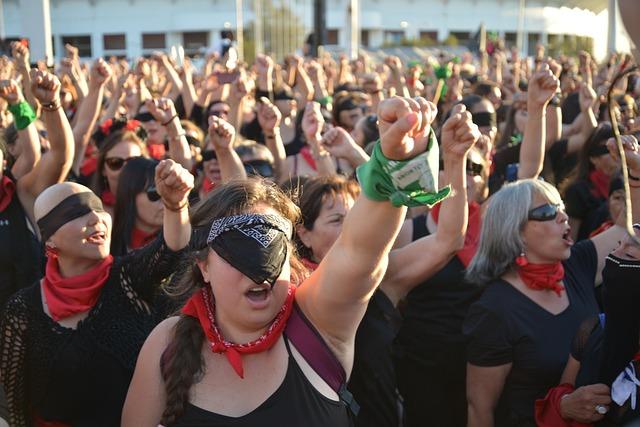
The Women’s March, first convened on January 21, 2017, quickly became one of the largest single-day demonstrations in U.S. history and a defining flashpoint in contemporary protest politics. Initially sparked by the inauguration of President Donald J. Trump, what began as a loose online call to gather in Washington, D.C., rapidly transformed into a worldwide wave of coordinated marches. Hundreds of “sister” events unfolded across major cities and small towns—from New York and Los Angeles to London, Nairobi, and Sydney—drawing millions into the streets. Marchers rallied around women’s rights, racial and social justice, LGBTQ+ equality, immigrant rights, and resistance to perceived threats to civil liberties. This article explores how the Women’s March took shape, how it scaled into a global phenomenon, and how it has influenced legislation, voter mobilization, and intersectional feminist advocacy in the years since.
From Election Shock to Global Movement: Origins and Evolution of the Women’s March
The Women’s March emerged at the intersection of digital organizing, decades of feminist and civil rights work, and the upheaval of the 2016 U.S. presidential election. Within hours of the election results, informal social media posts—many created by ordinary users rather than established organizations—began circulating calls for a mass demonstration in Washington, D.C. Separate Facebook events soon converged into a coordinated national effort, as experienced organizers and new activists joined forces.
Early leaders, including figures rooted in racial justice, immigrant rights, and reproductive rights advocacy, moved quickly to transform outrage into structured dissent. They crafted a platform centered on intersectional feminism, making it clear that gender equality could not be separated from racial equity, immigration justice, disability rights, religious freedom, economic security, and LGBTQ+ equality. This holistic framing distinguished the Women’s March from earlier single-issue protests.
Distinct imagery and visual culture accelerated the march’s spread. Pink “pussyhats,” handmade banners, and creative protest art became instantly recognizable symbols of opposition. These visuals helped build a shared identity across geographically dispersed events, turning the Women’s March into a brand of resistance as much as a one-day protest.
Over time, the Women’s March moved beyond the idea of an annual gathering and instead evolved into an ongoing political force. Networks associated with the march began to operate year-round, participating in elections, shaping policy conversations, and investing in local power-building. While leadership disputes, accusations of exclusion, and debates over strategy posed significant challenges, the broader ecosystem of affiliated groups persisted and diversified.
Today, the Women’s March is best understood as a decentralized constellation of organizations and community networks that engage in:
- Community mobilization – door-to-door canvassing, mutual aid projects, civic education workshops, and teach-ins that introduce people to local political processes.
- Legislative pressure – coordinated days of action, petition drives, public comment campaigns, and watchdogging key bills at the state and federal level.
- Electoral intervention – endorsing and supporting women, LGBTQ+, and BIPOC candidates; training volunteers; and running get-out-the-vote efforts.
- Global solidarity – partnerships with women-led and feminist movements in regions such as Europe, Latin America, Africa, and Asia, sharing strategies and amplifying each other’s struggles.
| Phase | Primary Orientation | Political Impact |
|---|---|---|
| 2017 Launch | Mass protest and global visibility | Established a clear tone of resistance and public dissent |
| 2018–2019 | Movement-building and infrastructure | Growth of national and local chapters, increased organizational capacity |
| 2020–Present | Policy advocacy and electoral engagement | Influence on voter turnout, issue advocacy, and candidate pipelines |
How a Single March Went Worldwide: Inside the Organizing Strategies
The expansion of the Women’s March from a planned rally in Washington, D.C., to synchronized actions across all inhabited continents was not simply a viral accident. It was the result of intentional organizing, designed to scale quickly while remaining flexible. Core organizers embraced distributed leadership, allowing local volunteers to become city, regional, or national leads rather than centralizing all decisions in one office.
Digital platforms provided the backbone. Within days, private Slack workspaces, email lists, and local Facebook groups emerged, linking thousands of volunteer organizers. While each city team adapted logistics to its own context, they shared overarching principles, sample messages, legal resources, and branding elements. Public social media accounts framed the Women’s March as a broad coalition event, inviting participation from a range of movements: immigrant justice coalitions, racial justice organizations, disability rights advocates, climate campaigns, labor unions, and LGBTQ+ groups.
Key components of this organizing model included:
- Decentralized chapters: Local organizers received logo files, color palettes, and messaging guidelines, enabling them to host marches that were locally tailored yet visually connected.
- Shared digital toolkits: Ready-made posters, chants, safety tips, legal hotlines, and accessibility recommendations were shared online, reducing the barrier to hosting an event.
- Signal-boosting alliances: Partner organizations cross-promoted the marches to their mailing lists, amplifying turnout and connecting the Women’s March to existing grassroots infrastructures.
- Hashtag coordination: Unified hashtags turned social media into a live broadcast of the movement, making images, stories, and updates searchable and globally visible in real time.
| Organizing Tactic | Primary Tool | Observed Impact |
|---|---|---|
| Mass mobilization | Facebook events and cross-posting | Millions signaled interest or attendance, helping estimate crowd sizes |
| Message discipline | Unified slogans, website platforms, and design kits | Consistent messaging and imagery from D.C. to Berlin to Buenos Aires |
| On-the-ground logistics | Shared legal FAQs, protest safety guides, and liaison templates | Facilitated collaboration with city officials and legal observers worldwide |
| Post-march follow-through | Action-oriented email lists and text alerts | Converted event participants into volunteers, donors, and repeat activists |
Impact on Legislation, Voter Mobilization, and Intersectional Feminist Advocacy
In the months after January 2017, the Women’s March shifted from symbolic protest to targeted political pressure. March organizers and allied groups tapped into the vast databases of attendees and sign-ups to build sophisticated advocacy networks. Volunteers tracked key votes in Congress and state legislatures, focusing on reproductive rights, pay equity, voting rights, and protections for marginalized communities, including immigrants, transgender people, and people of color.
New advocacy hubs formed to focus on specific legislative priorities. They used digital scorecards to grade officials on their votes, deployed rapid-response text chains when critical bills were introduced, and mobilized constituents for hearings and town halls. Distinct organizations that had previously operated in silos began collaborating on shared campaigns and messaging, adopting a more coordinated strategy than before the march.
- Coordinated phone banks targeted lawmakers in competitive districts, concentrating thousands of calls around pivotal votes.
- Issue-driven petition efforts connected online signatures to in-person deliveries and media events, increasing pressure on decision-makers.
- High-visibility town hall campaigns drew local and national reporters, spotlighting elected officials’ positions on women’s rights and civil liberties.
- Data-informed lobbying used volunteer research, public records, and voter data to craft more strategic arguments and identify persuadable legislators.
| Advocacy Focus | Core Strategy |
|---|---|
| Voting rights | Registration drives, protection of ballot access, and litigation against restrictive laws |
| Reproductive justice | Monitoring legislation, organizing rapid-response rallies, and supporting legal challenges |
| Racial justice | Building coalitions with community-based organizations to address policing, incarceration, and economic inequality |
Voter mobilization became one of the most visible legacies of the Women’s March. In the run-up to the 2018 midterm elections, for example, organizations connected to the march and broader women’s rights networks invested heavily in registration drives, especially among young people and communities of color. According to the U.S. Census Bureau, women’s turnout in the 2018 midterms reached 55 percent, outpacing men’s turnout and contributing to the historic election of a record number of women to Congress.
Intersectional feminist organizers reframed voting as a tool that must reflect people’s complex identities and experiences. Rather than centering a narrow image of the “typical voter,” campaigns targeted first-time voters, newly naturalized citizens, transgender and nonbinary people, women of color, and low-income communities. Outreach stressed that issues commonly labeled as “economic” or “security” concerns—such as health care access, climate crises, police violence, and wage gaps—are inseparable from gender justice.
This intersectional approach challenged single-issue activism and helped build broader coalitions. Voter education materials, training sessions, and canvassing scripts emphasized how overlapping systems of oppression shape people’s daily lives, and how policy changes must respond to that complexity. In effect, the Women’s March played a role in reframing feminist advocacy as a multi-front struggle that spans immigration, labor, housing, criminal justice, and environmental policy.
What the Women’s March Tells Us About the Future of Mass Protest and Democracy
The enormous scale of the Women’s March in January 2017—and the echoes of that mobilization in subsequent years—offers important clues about how protest and democratic participation are evolving. Rather than being confined to traditional rallies, civic action now frequently blends physical presence with digital organizing. The Women’s March embodied this hybrid model: participants discovered events through social media, coordinated logistics via group chats and online maps, and documented the day on platforms like Twitter and Instagram.
This fusion of online and offline action helps bypass traditional gatekeepers, from party elites to major media outlets. Instead of waiting for institutional approval, networked movements like the Women’s March can appear quickly, amass large crowds, and force public officials to respond. Visual symbols—beanies, buttons, posters, and viral slogans—do more than express identity; they act as organizing technologies, signaling affiliation and spreading the movement’s message with every shared photo or public appearance.
Yet the Women’s March also underscores the difficulty of sustaining momentum once a peak moment passes. Many participants had to decide whether the march would be a one-time expression of anger or the beginning of ongoing engagement. Organizers framed protest as a gateway: a visible starting point on a longer journey that includes voting, monitoring policymakers, running for office, and building neighborhood-level power.
As the movement matured, it focused more on concrete, repeatable actions:
- Neighborhood organizing through local Women’s March chapters, book clubs, mutual aid efforts, and community forums that keep people connected between national headlines.
- Policy monitoring that tracks changes in reproductive rights, civil liberties, and anti-discrimination protections at multiple levels of government.
- Candidate recruitment and support, especially for women, LGBTQ+ people, and communities historically excluded from office, encouraging them to step into public leadership.
- Digital campaigning using livestreams, webinars, texting tools, and social media campaigns to mobilize people even when they cannot gather in person—as seen during the COVID-19 pandemic and in response to major Supreme Court rulings.
| Phase | Key Feature | Democratic Impact |
|---|---|---|
| Mass Marches | Highly visible crowds and symbolic unity | Signals broad public dissent and shapes media narratives |
| Local Organizing | Decentralized community hubs and grassroots projects | Builds durable relationships and long-term civic capacity |
| Electoral Action | Candidate support, voter outreach, and accountability campaigns | Transforms protest energy into institutional and policy influence |
To Wrap It Up
The Women’s March has moved from a historic day of mass protest to an evolving ecosystem of activism that continues to shape public debates about gender, power, and democracy. Its imprint can be seen in policy fights over reproductive rights and voting access, in the surge of women and marginalized candidates running for office, and in the growing expectation that feminism must be intersectional to be credible.
Far from being a one-time outburst, the Women’s March has become a reference point for modern protest movements—an example of how digital tools, symbolic imagery, and decentralized organizing can converge to produce both monumental crowds and lasting political engagement. Its full legacy is still unfolding, but it has already altered the language and landscape of political activism, challenging future generations to consider not only what they stand for, but how they organize, who they center, and how they convert protest into power.