



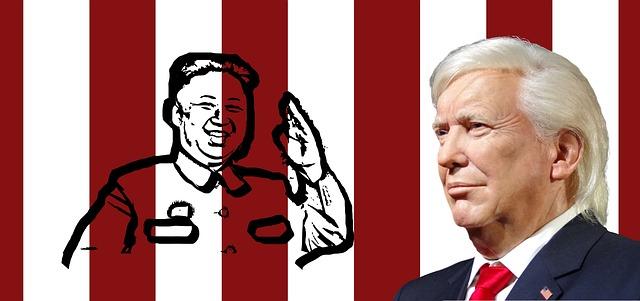
Trump Prayer Rally Pledges to “Rededicate” the US as One Nation Under God
Former US President Donald Trump headlined a highly choreographed prayer rally that sought to “rededicate” the United States as “one nation under God,” sharpening his outreach to evangelical and conservative Christian voters as the 2024 presidential race gathers speed. Staged amid intense political polarization and renewed debates over religion’s place in public life, the gathering drew thousands of attendees, influential pastors, Republican officeholders and key movement organizers.
Promoters cast the event as a spiritual response to what they described as a nation in moral and political turmoil. Worship segments interwove with campaign-style speeches and calls for repentance on behalf of the country. Supporters framed the rally as a moment of national soul-searching; critics saw it as a pointed effort to fuse religious imagery with electoral politics and to solidify Trump’s base through religious symbolism and Christian nationalist language.
Recasting the Campaign Trail as a Spiritual Battlefield
Standing before a crowd of worshippers and conservative activists, Trump presented himself as a bulwark for Christian values in what his allies call an increasingly secular America. Surrounded by pastors, worship leaders and faith-based influencers, he used biblical phrases and spiritual imagery to describe the upcoming election as a clash between good and evil rather than just a contest of policy proposals.
Throughout the rally, organizers invited attendees to raise their hands in prayer, confess national sins and intercede for the country’s future. Trump’s 2024 bid was framed as an effort to restore what speakers described as America’s broken “covenant” with God. He highlighted:
- Religious liberty as central to his agenda, promising to roll back policies his supporters label hostile to Christianity
- Patriotism grounded in the idea of a nation under divine authority
- Moral decline in culture, education and government as a key reason for his return to the political arena
White evangelicals remain one of Trump’s most reliable voting blocs—exit polls in recent national elections have shown roughly 75–80% of white evangelical Protestants backing Republican presidential nominees. Rally speakers underscored this loyalty, often portraying Trump as an imperfect yet “chosen” figure whose policies align with their priorities on issues like abortion, religious freedom and judicial appointments.
The program blended elements of revival meetings and political convention sessions, featuring:
- High-profile pastors leading prayers for repentance, spiritual awakening and electoral outcomes
- Worship music that gave the event the feel of a church service as much as a campaign stop
- Personal testimonies from attendees who tied their support for Trump to their faith convictions
- Direct mobilization appeals urging churches and small groups to register voters and turn out on Election Day
| Core Theme | Primary Target Audience |
|---|---|
| Protect religious freedom | Evangelical churches |
| Restore moral order | Social conservatives |
| Patriotism under God | Christian nationalists |
Religious Nationalism and the Eroding Wall Between Church and State
The prayer rally unfolded amid growing concern that the once-firm boundary between church and state is eroding in American politics. Increasingly, campaign speeches resemble altar calls, and legislative proposals are framed as moral crusades. In this context, the call to “rededicate” the US to God positioned a partisan event as a kind of public liturgy, implicitly linking political loyalty with spiritual fidelity.
Supporters interpreted the display of mass prayer as a reaffirmation of America’s religious heritage. Opponents countered that such events risk sidelining religious minorities and non-religious citizens by elevating one brand of conservative Christianity as the nation’s presumed default faith. The worry, they argue, is not public prayer itself, but the suggestion that genuine patriotism is inseparable from a particular theological outlook.
This convergence of religious nationalism and partisan politics has been building for decades but has intensified around flashpoint issues like:
- Education policy, including book bans, school prayer disputes and conflicts over how US history and gender identity are taught
- Reproductive rights, especially in the wake of the Supreme Court’s decision overturning Roe v. Wade
- LGBTQ+ protections, where debates over marriage equality, transgender healthcare and anti-discrimination laws are frequently framed as battles over religious freedom
Campaign strategies increasingly feature:
- Explicit biblical references in speeches, political ads and fundraising appeals
- Faith-branded rallies marketed as worship or prayer gatherings while doubling as campaign events
- Clergy endorsements used as moral validation for specific candidates and policy platforms
- Religious freedom legislation that broadens protections for believers while critics argue it narrows secular and minority faith space
Religious leaders themselves are far from unified. Some see this realignment as overdue pushback against secularism and view Christian nationalism as a corrective. Others, including many theologians and denominational officials, warn that tying Christianity too closely to any party or politician can undermine both democratic norms and the integrity of faith communities.
Split Reactions Among Faith Communities and Civil Rights Advocates
Responses to Trump’s prayer rally revealed deep fissures across religious and civic groups. Many evangelical pastors, conservative Catholic leaders and Christian nationalist activists applauded the event as a needed reassertion of faith in public life. They argued that openly religious gatherings are an expression of First Amendment freedoms and a response to what they describe as decades of marginalization of Christian voices in government and culture.
By contrast, Black church coalitions, Muslim organizations, Jewish advocacy groups and progressive Christian networks voiced alarm over the rally’s rhetoric of “rededicating” the country to God. They argued that such framing can create an insider–outsider divide between those deemed “real Americans” and everyone else, especially communities that worship differently or embrace secular identities.
Civil rights organizations drew attention to the country’s history, noting that religious language has at times been used to justify segregation, anti-immigrant sentiment and efforts to limit voting access. They emphasized that safeguarding democracy requires defending both the right to practice faith publicly and the right not to have a particular faith imposed or favored by government.
Key concerns raised by critics included:
- Religious neutrality in policy-making and public administration
- Equal access to civic participation and public resources for minority faiths and non-religious citizens
- Non-discriminatory enforcement of voting, assembly and speech rights regardless of religious identity
| Stakeholder Group | Primary Concern |
|---|---|
| Supportive clergy | Securing space for visible public expressions of faith |
| Civil rights groups | Defending pluralism and equal voting protections |
| Interfaith leaders | Preventing informal religious tests for belonging or patriotism |
Safeguarding Pluralism as Christian Nationalist Rhetoric Grows
With explicitly Christian nationalist messaging appearing more frequently at mainstream rallies and in campaign platforms, policy experts argue that there is a limited window for shoring up the country’s pluralistic foundations. Rather than inventing new tools, they emphasize robust enforcement of existing laws and norms while updating civic practices for a more religiously diverse society.
Recommended steps include:
- Strengthening civic education so students understand the First Amendment’s protections for both free exercise of religion and the separation of church and state
- Expanding training for poll workers and public servants to prevent subtle forms of religious bias in elections and public services
- Increasing oversight of public funding that flows to religiously affiliated charities and schools, ensuring access to services without doctrinal requirements
- Adopting clear government statements at municipal and state levels affirming religious neutrality while welcoming diverse faith participation
Policy analysts and democracy advocates highlight several priority areas:
- Reaffirm constitutional norms in official resolutions, legislative preambles and court filings that restate commitments to church–state separation and equal protection.
- Protect at-risk communities by funding hate-crime monitoring, data collection and rapid-response systems for religiously motivated harassment.
- Support interfaith and secular dialogue initiatives in schools, libraries and community centers to build social trust across belief lines.
- Improve transparency around political spending and lobbying by religiously aligned organizations.
| Priority Area | Suggested Action | Key Actor |
|---|---|---|
| Civic Education | Revise curricula to explain church–state separation and religious freedom | State Boards of Education |
| Election Integrity | Issue rules barring sectarian conditions for poll workers or voters | Secretaries of State |
| Public Safety | Coordinate tracking of religiously motivated threats across agencies | Local Police & DOJ |
| Community Cohesion | Fund interfaith councils and partnerships with secular organizations | Mayors & City Councils |
Legal scholars note that the constitutional and statutory framework for protecting pluralism is already extensive—from Establishment Clause case law to federal civil rights protections and local non-discrimination ordinances. The challenge lies in implementation at a moment when politicians often benefit from polarizing religious rhetoric.
Civic leaders are being urged to:
- Use inclusive language that acknowledges believers, non-believers and multiple faith traditions in public addresses
- Invite a broad spectrum of clergy and secular representatives to official ceremonies rather than relying on a single religious perspective
- Resist efforts to transform official prayers, proclamations or government-sponsored events into partisan showcases
- Scrutinize tax-exempt gatherings that function as de facto campaign events, as well as school board policies that blur lines between religious instruction and public education
The goal, proponents argue, is not to push religion out of public life but to ensure that public power is not captured by any one creed.
Concluding Remarks
As the 2024 election season accelerates, Trump’s prayer rally illustrates how appeals to faith and national identity continue to shape US politics. For his supporters, the gathering signaled a spiritual stand against what they see as moral collapse and governmental hostility to Christianity. For opponents, it exemplified the strategic blending of religious devotion with partisan messaging, raising fresh questions about church–state separation and religious nationalism.
With both major parties increasingly invoking moral and religious themes, debates over what it means to be a “nation under God” are unlikely to subside. The central question is whether such appeals can serve as a bridge across partisan divides—or whether they will deepen existing fractures in an already polarized electorate.