




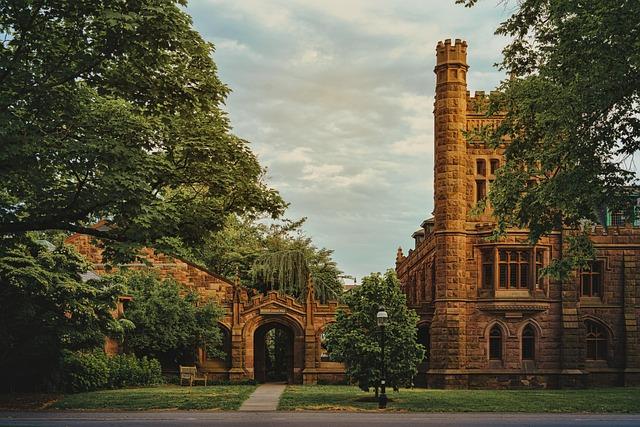
In a region renowned for its technology leadership and research intensity, the collaboration between the University of Washington and Microsoft has evolved into one of the Pacific Northwest’s defining innovation engines. By marrying academic discovery with commercial-scale platforms, the alliance is transforming domains such as artificial intelligence, cloud computing, global health, and climate science. At a time when data, automation, and digital infrastructure are reshaping every sector, the UW–Microsoft partnership offers a revealing case study in how universities and tech giants are reimagining innovation, talent pipelines, and public benefit.
A new kind of regional innovation engine: Inside the evolving University of Washington–Microsoft partnership
What started as a locally focused collaboration has steadily grown into a long-term strategy for research, talent development, and economic growth across the Pacific Northwest. The University of Washington’s strengths in computer science, health sciences, and climate research now intersect directly with Microsoft’s capabilities in cloud, AI, and large-scale data systems. Instead of one-off collaborations, the two institutions are co-creating multi-year initiatives that share infrastructure, expertise, and risk.
New research centers are being designed around joint priorities such as responsible AI, climate resilience, and digital health. In these spaces, UW faculty and students work shoulder to shoulder with Microsoft engineers and product teams. This integrated setup allows experimental ideas to progress from early prototype to production-ready service in a fraction of the usual time, helping solidify the Seattle area as a real-world proving ground for emerging technologies.
Within this broader framework, UW and Microsoft are constructing an interconnected pipeline that links basic research, hands-on learning, and regional competitiveness. Academic programs increasingly resemble real enterprise environments: students interact with industry-grade tools, cloud systems, and large datasets, while Microsoft gains early visibility into future researchers and technologists.
Key areas of joint activity include:
- Joint research clusters advancing AI for health, sustainability, and accessibility.
- Curriculum co-development that maps cloud, data, and cybersecurity skills to current industry demand.
- Innovation challenges pairing UW student teams with Microsoft mentors to address civic and public-sector technology needs.
- Regional impact pilots exploring technology solutions for transportation, housing, and digital public services.
| Focus Area | UW Role | Microsoft Role |
|---|---|---|
| AI & Data Science | Foundational research, ethical and policy frameworks | Cloud infrastructure, scalable AI and data tools |
| Climate & Sustainability | Field studies, climate and environmental modeling | Analytics platforms, simulation and scenario testing |
| Health Innovation | Clinical expertise, public health datasets | AI diagnostics, secure and compliant data environments |
| Workforce Development | Training pathways, student and alumni talent | Certifications, internships, and early-career roles |
Campus labs as AI and cloud testbeds for health and beyond
Across UW’s campus, joint research labs now host hybrid teams in which computer scientists, clinicians, and cloud engineers co-develop tools and services. Using Azure-based supercomputing clusters, researchers can train and evaluate advanced AI models on synthetic and de-identified clinical data, run large-scale simulations, and share real-time performance metrics via cross-department dashboards.
This physical and organizational co-location has reshaped how projects move from theory to application. Instead of sequential handoffs, faculty, students, and Microsoft engineers work in the same space to design secure APIs, governance protocols, and data pipelines, ensuring that privacy, fairness, and regulatory requirements are built in from day one. Prototype systems can then be deployed into UW-affiliated hospitals and clinics within weeks, with clinicians feeding back results that guide rapid iteration.
The impact is not confined to research papers. These joint labs are translating AI and cloud innovations into practical improvements in patient outcomes and operational efficiency. Examples include AI-assisted triage tools, predictive maintenance systems for imaging and lab equipment, and privacy-preserving population health analytics built on cloud-native architectures.
Core areas of experimentation and deployment include:
- Edge-to-cloud diagnostics that support rural and resource-constrained clinics with AI-enabled tools.
- Responsible AI tooling integrated directly into clinical workflows and decision support systems.
- Federated learning models that allow multiple hospitals to collaborate without pooling sensitive patient data.
- Climate-aware data centers and infrastructure strategies that reduce the carbon footprint of health computing.
| Lab Focus | Cloud Asset | Health Impact |
|---|---|---|
| AI Radiology Suite | GPU-accelerated clusters on Azure | Quicker and more consistent imaging reads |
| Clinical Language Lab | Domain-tuned language models | Higher-quality visit summaries and documentation |
| Predictive Care Hub | Streaming and real-time data infrastructure | Earlier identification of high-risk patients |
From classroom to cloud careers: Aligning education with Microsoft’s talent needs
In classrooms and teaching labs across Seattle, UW students now work on challenges that look much like the problems faced by Microsoft engineering and product teams. Through industry-informed capstone projects, UW instructors and Microsoft mentors jointly define project briefs that reflect real concerns such as data privacy, AI reliability, and resilient cloud architectures.
Multidisciplinary student teams must deliver functioning prototypes, maintain technical documentation, and present outcomes to panels that frequently include hiring managers and senior engineers. Academic performance is increasingly tied not only to theoretical mastery, but also to the ability to reason about large systems, collaborate across roles, and think at production scale.
This shared talent pipeline is becoming more structured, data-informed, and iterative. Insights from internships, interviews, and early-career performance feed back into course design and project expectations.
Elements of this pipeline include:
- Co-authored project scopes that track closely with Microsoft’s emerging product lines and research directions.
- Embedded Microsoft mentors who conduct sprint reviews, give design critiques, and share best practices from the field.
- Recruiting indicators based on capstone performance, peer assessments, and open-source contributions.
- Continuous curriculum refinement driven by observed skill gaps in areas like cloud security, MLOps, and human-centered design.
| Program Element | UW Focus | Microsoft Outcome |
|---|---|---|
| AI & Data Capstones | Model architecture, evaluation, and ethics | Industry-ready applied machine learning talent |
| Systems Projects | Reliability, scalability, and distributed systems | Engineers prepared for Azure-scale infrastructure |
| Human-Centered Design | Accessibility, inclusivity, and user experience | Teams that build user-first products and services |
Beyond the lab: Policy risks, equity gaps, and the path to shared regional prosperity
While technology investment in the Puget Sound region continues to grow, long-standing inequities in housing, transportation, and digital access threaten to deepen. Without deliberate policy interventions, the benefits of the UW–Microsoft partnership could accrue primarily to already advantaged communities, widening racial, geographic, and income divides.
To counter this, experts argue that university–industry partnerships must expand their focus from research labs and scholarship programs to systemic issues affecting low-income residents, communities of color, and rural areas. That includes working closely with city, county, and state governments to ensure that innovation-driven revenue helps fund essential public goods: affordable housing near major campuses and offices, dependable transit options that connect people to jobs, and robust broadband infrastructure.
It also requires building in accountability from the outset. Rather than relying on high-level growth metrics, UW and Microsoft can commit to tracking distributional outcomes—who is hired, where investments are made, and which neighborhoods see tangible benefits.
Areas for action include:
- Reform incentive structures so tax breaks and public subsidies are contingent on concrete community outcomes, not just job creation numbers.
- Guarantee inclusive pipelines by expanding bridge programs, paid apprenticeships, and reskilling initiatives for residents without four-year degrees.
- Share data transparently on hiring patterns, wages, and neighborhood impacts to support evidence-based adjustments in policy and practice.
- Co-invest in civic capacity by funding community organizations that can negotiate community benefits and monitor progress over time.
| Priority Area | UW Role | Microsoft Role |
|---|---|---|
| Housing & Land Use | Impact assessments, urban policy labs | Dedicated housing funds, strategic land leases |
| Workforce Access | Certificates, bridge and community college pathways | Apprenticeships, local and inclusive hiring targets |
| Digital Equity | Community technology hubs and training spaces | Low-cost broadband offerings, devices, and cloud credits |
| Accountability | Independent evaluation and public-interest research | Open dashboards and regular public reporting |
Future Outlook
As the University of Washington–Microsoft partnership deepens, its impact is extending well beyond the Pacific Northwest. The alliance is shaping new models for how academia and industry can co-develop AI, cloud computing, and data-intensive research while training the next generation of technologists and policymakers.
With additional joint initiatives already under discussion—from expanded climate collaborations to new digital health platforms—the partnership is on track to become an influential node in the global innovation ecosystem. How UW and Microsoft choose to leverage this position—balancing cutting-edge research with inclusive growth—will help determine not only the trajectory of regional prosperity, but also the broader future of technology, education, and work.


