


In a single day packed with pivotal developments in finance, politics and climate, three narratives are shaping the national conversation. Mounting speculation over a possible SpaceX initial public offering is fueling debate about how public markets might accelerate or redirect the commercial space race. Former President Donald Trump’s birthday has morphed into a political spectacle and fundraising engine that offers a glimpse into both parties’ 2024 election strategies. Simultaneously, the emergence of a fresh El Niño cycle is raising alarms among climate scientists and economic forecasters, who warn of mounting risks to infrastructure, agriculture and household budgets. Taken together, these stories underscore how tightly intertwined technology, electoral politics and climate stability have become in the modern American landscape.
Potential SpaceX IPO Opens a New Frontier for Commercial Spaceflight and Retail Investing
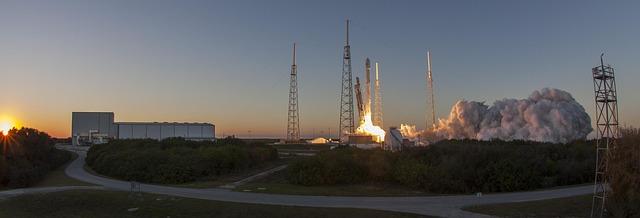
After years of rumors, Elon Musk’s SpaceX is reportedly moving closer to the regulatory filings that would pave the way for a long-awaited debut on public stock exchanges. Such a SpaceX IPO would not only rank among the most closely watched listings of the decade, it could also redefine how capital flows into the broader commercial space sector.
Equity analysts and venture capital firms are already reevaluating their models. A publicly traded SpaceX would create a visible benchmark for valuing launch providers, satellite‑internet platforms and deep‑space ventures. That, in turn, could reshape fundraising terms across the industry—from early‑stage startups designing in‑orbit manufacturing facilities to established players racing to build reusable heavy-lift rockets. With global space-related revenues already estimated by some research firms at more than $500 billion a year and projected to grow sharply through 2030, a SpaceX IPO could act as an accelerant for an already expanding market.
Institutional investors are signaling substantial interest, with some large funds preparing focused strategies around:
- Orbital logistics and infrastructure
- Satellite broadband and data services
- Reusable launch systems and propulsion technologies
- Exploration and deep-space research missions
For retail investors, the shift could be even more dramatic. An industry once accessible primarily through defense contractors or niche exchange‑traded funds would suddenly feature a pure‑play commercial spaceflight leader available on mainstream brokerage platforms. In anticipation, trading apps and online brokers are rolling out explainer series, risk tools and “space economy” watchlists to help individual traders navigate a sector defined by technological breakthroughs and high execution risk.
Key potential changes for individual investors include:
- Broader access to space exposure beyond indirect plays and specialized funds, allowing investors to participate directly in commercial spaceflight growth.
- Fresh sources of volatility as rocket launches, regulatory rulings, satellite failures or headline‑grabbing missions trigger rapid price moves.
- Pressure on legacy aerospace firms as capital shifts toward high‑growth orbital businesses rather than diversified defense portfolios.
| SpaceX Focus Area | What Investors Will Watch |
|---|---|
| Reusable Rockets | Launch frequency, turnaround times, and impact on operating margins |
| Satellite Networks | Subscriber acquisition, churn, global coverage and regulatory approvals |
| Deep-Space Missions | Long-horizon optionality, partnerships with NASA and allies, and technology milestones |
Trump’s Birthday Events Offer a Window Into 2024 Election Messaging and Strategic Risks
Instead of a low-key personal celebration, Donald Trump’s 78th birthday became a carefully staged series of rallies and fundraisers, effectively doubling as a live-fire exercise for his 2024 campaign strategy. The gatherings provided a real-time readout on grassroots energy, with staff tracking metrics such as attendance, small‑dollar donations, volunteer sign-ups and viral clips circulating on social platforms.
Republican strategists see these Trump birthday rallies as multi-purpose tools. They help cement loyalty among the MAGA base, road‑test speeches centered on inflation, border security and cultural grievances, and project an image of resilience despite ongoing court cases and ethics controversies. The events also offer a way to dominate news cycles during a period when undecided voters are beginning to pay closer attention.
Democrats, however, view the same spectacle through a different lens. They are studying the rhetoric and crowd dynamics for signs of fatigue or fragmentation within Trump’s coalition, while simultaneously refining messages that emphasize institutional stability, rule of law and generational change. Both parties recognize that, with polling in key swing states often within the margin of error, small shifts in perception among independents and suburban moderates could prove decisive.
- Republican priorities: lock in core supporters, woo skeptical conservatives who drifted away in 2020, and keep Trump at the center of the media narrative.
- Democratic priorities: frame Trump as a high‑risk choice, galvanize anti‑Trump alliances across demographic lines, and highlight internal GOP divisions.
- Voter-level implications: gauge how independents, suburban women and politically disengaged younger voters respond to a familiar but polarizing figure.
| Election Risk Factor | Challenge for Republicans | Challenge for Democrats |
|---|---|---|
| Base-First Strategy | Could alienate centrists and swing-district voters | Risk of underestimating conservative turnout in key states |
| Legal Headlines | May reinforce perceptions of chaos and unpredictability | Can crowd out discussions of economic and policy proposals |
| Age & Fitness | Invites doubts about long-term stability and capacity | Raises parallel questions about President Biden and party bench strength |
El Niño Season Fuels Extreme Weather, Forcing Faster Resilience and Disaster Planning
As Pacific Ocean temperatures climb above historical norms, federal meteorologists confirm that a new El Niño phase is underway, with major consequences for U.S. weather patterns. This climate phenomenon typically alters jet streams and storm tracks, increasing the likelihood of intense rainfall in some regions and severe drought in others. Combined with long‑term warming trends, experts warn that the current cycle could rank among the more disruptive episodes in recent memory.
Recent analyses from U.S. and international agencies suggest that, in El Niño years, the odds of record‑breaking heat events and extreme rainfall increase significantly. In 2023 and 2024, for example, global average temperatures have repeatedly challenged previous records, and the United States has experienced a growing number of billion‑dollar climate and weather disasters annually. Against this backdrop, emergency management officials are racing to identify weak points in levees, storm drains, transmission lines and healthcare systems before the next wave of storms, wildfires or heat waves arrives.
State and local governments are shifting from piecemeal repairs to comprehensive redesign. Rather than planning solely around historical weather data, they are integrating forward‑looking climate models that reflect higher sea levels and more frequent extremes. City councils are weighing large infrastructure bonds, utilities are revising peak-load projections, and school districts and hospitals are updating evacuation and heat‑response protocols.
Core priorities in this El Niño season include:
- Reinforcing critical infrastructure such as bridges, dams, rail corridors, airports and power substations that are vulnerable to floods, storms or wildfires.
- Expanding modern flood control with upgraded stormwater management, restored wetlands, and stronger coastal defenses to counter higher storm surges.
- Improving emergency communication networks to reach rural, tribal and underserved urban communities quickly during fast‑moving disasters.
- Hardening power and water systems so that grids, pipelines and treatment plants can withstand overlapping stresses from heat, storms and demand spikes.
| Region | Primary El Niño Threat | Top Resilience Priority |
|---|---|---|
| West Coast | Atmospheric rivers and landslides | Strengthen levees, modernize stormwater systems, stabilize hillsides |
| Gulf Coast | More intense hurricanes and storm surge | Elevate critical roads, hospitals and emergency shelters |
| Midwest | Rapid shifts between flooding and drought | Upgrade dams, reservoirs and river management systems |
| Southwest | Prolonged extreme heat and wildfire risk | Reinforce electric grids, expand cooling centers and wildfire buffers |
Strategies for Policymakers, Investors and Households in an Era of Market, Political and Climate Uncertainty
As speculation around a SpaceX IPO collides with the heated atmosphere of Trump-centered campaign events and the mounting disruptions of El Niño, it is increasingly clear that volatility is no longer confined to a single arena. Financial markets, political institutions and physical infrastructure are being tested simultaneously, demanding more coordinated and nimble responses.
For policymakers, that means moving beyond reactive crisis management toward building durable, data‑driven safeguards. This includes designing automatic stabilizers for the economy, prioritizing climate-resilient infrastructure in federal and state budgets, and updating regulatory frameworks for commercial spaceflight, AI and other frontier technologies. Transparent rulemaking can help reduce uncertainty premiums that might otherwise dampen investment.
Investors are likewise adapting. Many portfolio managers are adjusting risk models to account for election shocks, launch delays, regulatory interventions and climate‑related disruptions to sectors like agriculture, insurance and logistics. Environmental, social and governance (ESG) metrics are increasingly being blended with traditional financial indicators to identify companies best positioned to withstand or benefit from structural shifts.
For households, the convergence of political and climate risk translates into more frequent and sometimes costlier disruptions—from insurance premiums that rise after repeated floods to job instability in weather‑sensitive industries. Financial planners often recommend reinforcing emergency savings, reviewing coverage for homeowners and renters, and diversifying income sources where possible.
- Policymakers: Run budget stress tests that factor in climate disasters and election-related uncertainty; accelerate clarity on rules for commercial space ventures and other critical technologies.
- Investors: Tilt portfolios toward resilient sectors such as infrastructure, grid modernization and disaster recovery; hedge exposures around key political dates; integrate climate and transition risk into screening tools.
- Households: Build or expand emergency funds; reassess flood, fire and disability coverage; explore side income or skills training that can buffer against sector-specific downturns.
| Actor | Dominant Risk | Recommended Immediate Step |
|---|---|---|
| Government | Escalating disaster and recovery costs | Create or expand dedicated climate-reserve and resilience funds |
| Investors | Sharp swings tied to election coverage and regulatory surprises | Adjust position sizes, diversify strategies, and set clear risk limits |
| Households | Financial strain from extreme weather and economic shocks | Update insurance policies, review emergency plans, and reinforce savings |
Future Outlook
As markets parse the implications of a possible SpaceX public listing, political operatives dissect the meaning of Trump’s birthday rallies, and climate experts brace for the full impact of the ongoing El Niño season, the intersections between technology, governance and environmental change are becoming impossible to ignore. Each development alone would be significant; taken together, they are reshaping how Americans think about risk, opportunity and long-term planning.
In the weeks ahead, investors will scrutinize regulatory filings and launch schedules, voters will assess campaign messages and leadership qualities, and communities will watch weather forecasts and infrastructure projects with renewed urgency. Whether on Wall Street, along the campaign trail or in the atmosphere above, the next set of signals will help determine how prepared the country is for an era in which disruption is the rule, not the exception.