




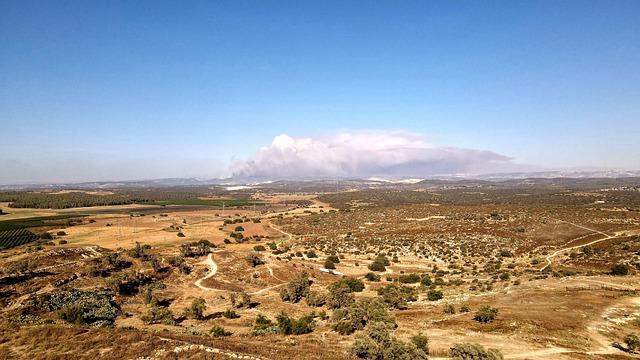
Tens of thousands of people in the Spokane, Washington, area have been forced to leave their homes as aggressive wildfires swept across the region, consuming buildings, shutting down key highways, and blanketing neighborhoods in dense, hazardous smoke. Officials estimate that roughly 60,000 residents are under a mix of mandatory evacuation orders and warnings as crews confront multiple fires fueled by dry vegetation, gusty winds, and late-summer heat. The unfolding emergency has triggered disaster declarations, stretched firefighting capacity, and renewed questions about the region’s readiness for an increasingly severe Western wildfire season.
Daily Routines Derailed As Families Rush To Escape Spreading Wildfires
Across Spokane and surrounding communities, ordinary weekend plans collapsed in a matter of hours. Automated alerts, sirens, and rapid-fire text messages jolted residents into action, replacing errands, barbecues, and children’s activities with a single priority: getting out safely.
Parents cut short grocery trips and family outings to stand in long lines at gas stations and ATMs. Schools activated emergency plans and helped coordinate student pickups as smoke thickened and visibility dropped. Hospital and long-term care administrators scrambled to relocate vulnerable patients, while home healthcare workers made urgent calls to ensure clients understood evacuation instructions.
In the rush to flee, many residents faced painful, split-second decisions about what to take and what to leave behind. Fire officials emphasized that delaying could be deadly, urging people to focus on life-or-death essentials—identification, vital medications, cash or bank cards, and a small set of necessities. Vehicles quickly filled with pets, overnight bags, critical paperwork, and a few hastily grabbed keepsakes, as streams of headlights crept along congested roads toward safer areas.
As evacuation perimeters expanded, familiar gathering spots were transformed into hubs of survival and support. Public buildings that usually hosted basketball games, community classes, or worship services became vital shelters providing temporary relief from the smoke and uncertainty.
- Primary shelters at schools and civic centers reached capacity quickly, requiring additional backup locations to open on short notice.
- Power outages in several neighborhoods cut off access to real-time news and emergency notifications, leaving some evacuees reliant on word of mouth.
- Disrupted medical services created serious risks for seniors, people with disabilities, and those needing dialysis, oxygen, or refrigerated medications.
- Farm and ranch evacuations complicated the picture for rural households trying to move horses, cattle, and other livestock under tight deadlines.
| Location Type | Function | Status |
|---|---|---|
| High School Gym | Overnight Shelter | Near Capacity |
| Community Center | Daytime Cooling & Info Hub | Open |
| Fairgrounds | Animal Evacuation Site | Active |
Fire Crews Stretched As Wind-Driven Flames Outpace Resources Near Spokane
On the front lines, firefighters are confronting fast-moving flames that can shift direction in minutes. Dry grasses, shrubs, and overgrown timber—parched by a long, hot summer—are burning explosively as wind gusts push embers well ahead of the main fire front. Incident commanders describe a constantly changing battle map, where new spot fires ignite in fields, along fences, and on the edges of subdivisions as wind speeds reach and exceed 30 mph.
Mutual-aid agreements have brought in additional engines, hand crews, and aircraft from nearby counties and other parts of the state. However, narrow rural roads, heavy evacuation traffic, and dense smoke have slowed response times, forcing dispatchers and planners to make rapid, high-stakes decisions about where limited resources can do the most good.
To keep the public informed in such a fluid situation, agencies are relying on a mix of tools: emergency text alerts, local radio updates, mapping apps, and round-the-clock social media posts. Mobile command units have been repositioned repeatedly as the fires expand and shift, helping coordinate structure protection, air operations, and medical response closer to the evolving perimeter.
Because fire behavior can change faster than many residents expect, authorities continue to stress several key safety actions:
- Leave immediately when evacuation orders are issued—waiting to visually confirm flames can cost crucial minutes.
- Keep access routes open by clearing vehicles and debris from driveways and private roads so fire engines and ambulances can turn around and operate safely.
- Limit non-essential driving on main highways and arterial roads to reduce congestion for evacuees and emergency vehicles.
- Rely on official information sources—county emergency management, fire departments, and sheriff’s offices—for updates on evacuation zones and shelter options.
| Resource | Status | Primary Focus |
|---|---|---|
| Engines & Crews | Stretched Thin | Structure Defense |
| Air Support | Weather Limited | Perimeter Cooling |
| Medical Teams | On High Alert | Smoke & Burn Injuries |
Why Wildfire Risk Is Rising: Climate Pressures And Forest Conditions Collide
Fire scientists and climatologists point to a combination of warming temperatures, shifting precipitation patterns, and accumulated fuels as the backdrop for the Spokane-area crisis. In the broader Inland Northwest, longer and more intense heat waves, coupled with below-average rainfall, have turned vegetation into highly flammable fuel for much of the summer and early fall.
Over the past few decades, milder winters have reduced mountain snowpack and shortened the period when soils and forests are saturated with moisture. As a result, trees and brush dry out earlier and stay dry longer. The traditional “fire season,” once confined largely to mid-summer, now often begins in late spring and can extend well into autumn, bringing flames closer to populated areas that did not previously see frequent burns.
At the same time, development patterns have brought more homes, schools, and businesses into what experts call the wildland–urban interface (WUI)—the transition zone between open vegetation and built environments. In many of these fringe areas, rugged terrain and dense vegetation surround neighborhoods, giving fires greater access to structures and evacuation routes. Embers carried by strong winds now routinely jump across roads, river corridors, and other natural features that once slowed the spread.
Land managers, local governments, and utilities are reassessing policies that were built for a milder era. In wildfire-prone corridors around Spokane, discussions are intensifying around stronger building requirements, landscape management, and coordinated fuel treatments that cross property lines. Among the strategies under consideration:
- Revised zoning rules to guide new construction away from the most hazardous wildland–urban interface zones.
- Mandatory defensible space standards that require property owners to clear flammable vegetation and maintain safer zones around homes and outbuildings.
- Expanded prescribed burning and mechanical thinning to reduce dense undergrowth and accumulated dead wood in strategic areas.
- Infrastructure modernization to reinforce power lines, substations, and communications towers against high heat and wind-driven debris.
| Factor | Impact on Fire Risk |
|---|---|
| Hotter, drier summers | Extends fire season and dries fuels |
| Forest overgrowth | Increases fuel loads and fire intensity |
| Suburban sprawl | Places homes directly in burn corridors |
| Inconsistent brush clearing | Creates ignition zones near structures |
National data reflect the same trend. According to federal wildfire statistics, the average annual area burned in the United States has more than doubled compared with the 1990s, and the West accounts for the majority of the increase. Spokane’s current situation fits into that broader pattern of more frequent, larger, and harder-to-control fires across the region.
Building Resilience: How Preparedness And Coordination Can Reduce Future Losses
Emergency planners emphasize that as wildfires become more intense and more frequent, survival and recovery depend heavily on what happens long before a fire starts. While well-equipped fire crews and favorable weather are crucial, local leaders stress that community-level readiness can mean the difference between orderly evacuations and chaotic last-minute escapes.
Residents in Spokane and similar high-risk areas are being urged to sign up for local alert systems, review neighborhood evacuation maps, and assemble “go bags” that can be grabbed in minutes. These kits typically include critical documents, prescription medications, basic first aid supplies, clothing, flashlights, and copies of insurance information. For families with children, older adults, or people with disabilities, customized plans and backup transportation are especially important.
Homeowners on the edge of forests, shrublands, or open fields are also being asked to take on a more active role in fire prevention. Clearing dry brush, trimming low branches, cleaning gutters, and storing firewood away from structures can dramatically improve a home’s chances of surviving a wildfire. Applied across entire neighborhoods, these individual steps create shared buffers that slow fire spread and help firefighters work more safely.
Public agencies stress that effective wildfire response relies on tight coordination across jurisdictions and sectors. Fire departments, law enforcement, school systems, tribal governments, health providers, and utilities must be able to communicate quickly and clearly during fast-moving incidents. To that end, officials are advocating for:
- Shared communication platforms that allow fire crews, law enforcement, hospitals, and emergency managers to exchange real-time updates.
- Pre-designated and well-marked evacuation corridors with signage and instructions available in multiple languages.
- Robust mutual-aid agreements so that neighboring counties and cities can rapidly share engines, personnel, and shelter resources.
- Regular community drills involving schools, care facilities, local businesses, and neighborhood associations to practice evacuation and reunification plans.
| Preparedness Step | Recommended Frequency |
|---|---|
| Create or update household evacuation plan | Every 6 months |
| Clear vegetation within 30 feet of home | Each spring and late summer |
| Check emergency alerts subscription | Before peak fire season |
Closing Remarks
Authorities continue to press residents to follow evacuation orders without delay, rely on verified information sources, and put personal safety ahead of property as suppression efforts continue. With fire lines still shifting and the full scope of destruction not yet known, the Spokane region faces a pivotal stretch in the coming days.
How quickly the crisis eases will depend on a mix of factors: on-the-ground firefighting tactics, wind and weather patterns, and the willingness of the public to cooperate fully with emergency personnel. As the response progresses, local, state, and federal officials are expected to share updated information on fire containment, air quality, shelter availability, and financial and housing assistance for those displaced.
In the longer term, the lessons from Spokane’s wildfires are likely to shape how communities across the West think about land use, infrastructure, and preparedness in an era when extreme fire behavior is no longer the exception, but an increasingly common reality.


