



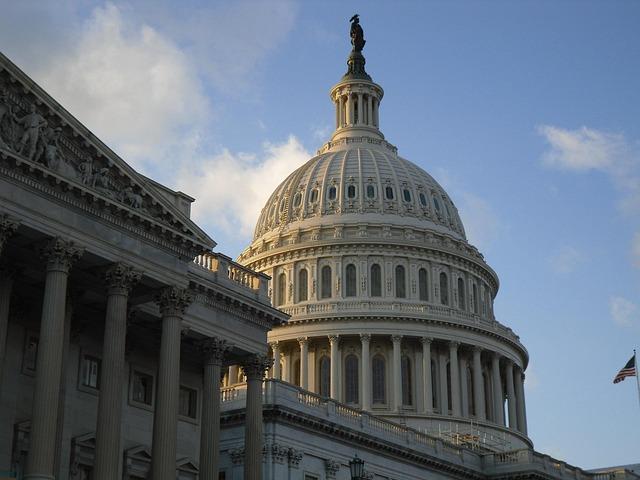
Washington, D.C., sits at the center of America’s political life-and increasingly at the center of a fierce argument over crime, public safety and how cities should be run. Highly publicized carjackings, smash‑and‑grab retail theft and spikes in certain violent crimes have fueled a sense that the capital is slipping out of control. Donald Trump has made D.C.’s challenges a centerpiece of his broader claim that Democratic leadership has failed urban America. His message resonates with real fears and draws on real data. Yet the idea that Trump-or any single politician-offers a simple fix for Washington’s crime problem ignores his own record and the complicated, long‑term forces that shape public safety in the District.
Crime Anxiety in the Nation’s Capital: Real Concerns, Political Theater
Residents of Washington don’t need a stump speech to know that safety feels more fragile. News alerts about armed carjackings within sight of Capitol Hill, robberies outside popular restaurants, and daylight shoplifting in busy corridors now arrive with unsettling frequency. That sense of unease shows up in daily habits: people text friends when they get home, avoid walking alone after dark, keep rideshare apps open, and scan Metro platforms more carefully than they did a decade ago.
Those fears aren’t imaginary-but they’re also not uniform. Some neighborhoods report noticeable disorder, while others remain comparatively calm. Longtime residents, congressional staff, restaurant workers and hospitality employees describe a city where the basics of safety feel less guaranteed, and where responses from overlapping local and federal systems can seem sluggish or opaque.
Into this environment steps Donald Trump, who presents D.C. as Exhibit A in a story of national decline. His playbook follows a familiar pattern:
- Single out the most shocking incidents and present them as typical, everyday events.
- Assign blame broadly to Democratic officials and “soft‑on‑crime” reforms without distinguishing between specific policies.
- Invoke “law and order” as a cure‑all, with few concrete, legally realistic steps attached.
| On‑the‑Ground Reality in D.C. | Campaign Narrative |
|---|---|
| Hot spots with elevated crime alongside relatively safe areas | Implied collapse of safety across the entire city |
| Some crimes are up, others flat or down | Portrayal of universal, across‑the‑board crime explosion |
| Shared responsibility across federal and local agencies | Responsibility pinned almost entirely on local Democrats |
The outcome is politics, not policy. Genuine community worries become a backdrop for rallies rather than a starting point for detailed solutions like modernizing investigations, improving witness protection, strengthening youth outreach or clarifying roles among police, prosecutors and courts. Residents’ fears are spotlighted-but rarely met with a serious plan to reduce violence, support victims or rebuild trust.
The Numbers Behind D.C. Crime: A Patchwork, Not a Free‑Fall
Strip away the trending headlines and campaign sound bites, and Washington’s crime story turns out to be more layered than either “out of control” or “overblown.” The city has seen sharp increases in troubling categories-carjackings, certain gun crimes and organized retail theft have all drawn justified concern from locals and visitors. According to recent Metropolitan Police Department data, homicides in 2023 were significantly higher than pre‑pandemic levels, and carjackings rose several hundred percent compared with the late 2010s.
At the same time, other serious offenses haven’t followed the same trajectory. Some property crimes have stabilized or fallen from their pandemic peaks. Nationwide, the FBI’s most recent uniform crime statistics show that many cities saw a drop in homicides in 2023, illustrating that trends are in flux and don’t move uniformly across regions or crime types. In D.C., the pattern is block‑by‑block rather than citywide collapse, which is easy to obscure when statistics are cherry‑picked for television or social media.
Whom crime hits-and where-matters just as much as the overall numbers. Tourist zones, central business districts and historically marginalized neighborhoods often face distinct safety challenges. Long‑term residents in disinvested areas live with chronic exposure to gun violence and instability, while office workers might mainly experience theft or car break‑ins. Policy debates frequently blur these differences, but the data highlight overlapping crises involving housing insecurity, school disengagement, unemployment for young adults and widespread access to firearms.
| Crime Category | Recent Pattern | Public Perception |
|---|---|---|
| Homicide | Still elevated compared with pre‑COVID levels | Seen as evidence the city is getting more dangerous |
| Carjackings | Major spike over several years | Viewed as a symbol of lawlessness |
| Property Crime | Mixed trends; declines in some subcategories | Overshadowed by violent episodes |
| Regional Crime (D.C. Metro Area) | Varies widely across nearby counties | Frequently lumped together as “D.C. crime” |
- Crime is concentrated in a relatively small share of blocks and corridors rather than spread evenly across the District.
- Risk is unequal: residents of lower‑income wards face much higher odds of victimization than wealthier communities west of Rock Creek Park.
- Trends differ by offense, allowing politicians to point to whichever statistic best suits their preferred story.
How Federal and Local Decisions Undermined Safety and Confidence
D.C.’s public safety challenges did not appear overnight and cannot be laid solely at the feet of any one mayor, council, president or prosecutor. For years, fragmented decision‑making among federal overseers and local officials has chipped away at neighborhood confidence. Congress, which retains unique authority over the District, has repeatedly stepped in to delay or rewrite local criminal justice reforms-most recently intervening in 2023 to block a revised criminal code. Each intervention generates policy whiplash, leaving residents unsure of what rules apply or who is responsible when something goes wrong.
Meanwhile, city leadership has cycled through police chiefs and shifted enforcement priorities, while struggling to coordinate with institutions it doesn’t fully control: the U.S. Attorney’s Office, the federally run court system and a correctional apparatus that spans local and federal agencies. That disjointed structure leaves people feeling as if no one owns the problem end‑to‑end. Residents complain of thin or irregular police presence on some of the blocks where violence is most common, and victims speak of delayed updates, dropped cases or plea deals they barely understand.
The breakdown is most visible in everyday life rather than in any single catastrophic event. Just blocks from heavily secured federal buildings, neighborhoods report slow 911 response times and limited follow‑through after repeated incidents. Community leaders point to missed opportunities: sustained outreach to a small number of repeat shooters, robust reentry support for people leaving jail or prison, and violence interruption programs that are often funded in short cycles and then scaled back when budgets tighten.
- Overlapping jurisdictions blur accountability between federal agencies and the D.C. government.
- Uneven prosecution of gun, carjacking and violent offenses fuels a perception that serious crimes don’t carry consistent consequences.
- Short‑lived task forces and pilot projects generate headlines but rarely survive long enough to transform high‑risk neighborhoods.
- Declining trust in both law enforcement and political leadership makes witnesses less willing to cooperate and reforms harder to sustain.
| Decision Arena | Representative Misstep | Effect on Communities |
|---|---|---|
| Federal Oversight | Blocking or rewriting local criminal code reforms | Creates confusion and undermines local self‑governance |
| District Government | Frequent leadership changes in public safety roles | Leads to shifting crime‑fighting strategies and priorities |
| Courts & Prosecutors | Inconsistent charging and plea decisions | Reinforces the belief that accountability is arbitrary |
What Washington Actually Needs: Smarter Crime Reduction, Not Slogans
Improving safety in the nation’s capital will not come from recycled “law and order” rhetoric, whether from Donald Trump or any other candidate. Durable progress requires a comprehensive, long‑range strategy that treats enforcement, prevention and accountability as interconnected pieces of the same puzzle.
That starts with a police force that is large enough, well trained and equipped with 21st‑century investigative tools-from reliable crime‑gun tracing to data‑driven deployment-while also being subject to clear standards and meaningful oversight. It also demands serious investment in the people and programs who can interrupt violence before it starts: trauma‑informed mental health teams, credible messengers who can mediate conflicts, job and education pathways for young people, and stable housing for those on the brink of crisis.
Metrics must go beyond simple year‑to‑year crime counts. A truly safe city is one where residents in Ward 7 and Ward 8 feel as secure walking to the bus stop as residents in Ward 3 do coming home from dinner. That means tracking neighborhood‑level fear, 911 response times, case clearance rates, and community satisfaction alongside arrest totals.
- Focused enforcement in corridors with the highest levels of shootings and carjackings, guided by real‑time data instead of talk‑show pressure.
- Proven youth engagement programs that combine tutoring, mentoring, job training and family support to keep teens connected to school and work.
- Robust oversight of use of force, stop‑and‑frisk patterns, and investigative outcomes to build trust that policing is both effective and fair.
- Long‑term funding for community organizations rooted in the neighborhoods where violence is concentrated, rather than short bursts of grant money.
| Strategic Priority | Core Objective |
|---|---|
| Targeted, Smart Enforcement | Reduce shootings and serious violence; raise clearance rates |
| Community & Economic Investment | Tackle the underlying drivers of crime, from poverty to school disengagement |
| Data, Transparency & Oversight | Measure real outcomes, correct course quickly and rebuild public trust |
Future Outlook: Beyond “Law and Order” Sound Bites
Washington’s crime challenges are not a reality show script or a convenient talking point for one campaign cycle. They are the product of years of decisions-and indecisions-about housing, education, guns, courts and policing. Addressing them demands steady leadership, evidence‑based policies and a willingness to stay the course beyond the next election.
Donald Trump is right about one thing: the nation’s capital faces serious public safety concerns. But his track record and his rhetoric indicate that he is more skilled at using those concerns as proof of political failure than at advancing detailed, workable solutions for D.C. residents.
For Washington to grow safer, it will need less grandstanding and more competent governance: a clear division of responsibility between federal and local actors, strong local accountability, and reforms that aim not only to lower crime numbers but also to tackle the social and economic conditions that help crime thrive. Voters should insist on that level of seriousness from any president or political leader who promises to “fix America’s cities”-including the one that sits right outside the White House gates.