


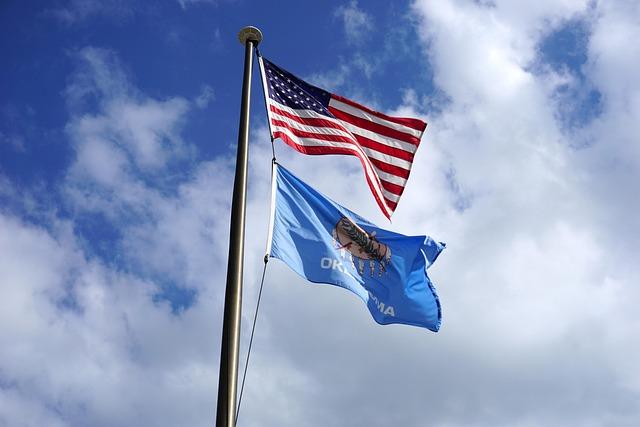
Oklahoma’s planned overhaul of teacher credentialing is turning the state into a high-stakes experiment in ideologically driven education policy. A new “America-first” style exam, backed by State Superintendent Ryan Walters, would require some new teachers to demonstrate adherence to explicitly patriotic, pro-American principles as a condition of earning their license. Supporters frame the initiative as a necessary response to what they see as left-leaning narratives in schools; opponents argue it could politicize the profession, narrow honest study of U.S. history, and worsen an already serious teacher shortage. In effect, Oklahoma has placed itself on the front line of a national clash over who controls the story of America—and how that story is told to the next generation.
Oklahoma’s “America-First” Teacher Exam: Turning Classrooms Into Political Battlegrounds
In pilot programs debuting this year, new educators in Oklahoma will face an additional obstacle beyond standard certification tests: a values-centered assessment designed to judge their alignment with a codified set of “patriotic” and “pro-American” principles. The policy’s architects say it is meant to rein in what they call “ideological activism” in the classroom and to re-center instruction on national pride, civic loyalty, and the celebration of American achievements.
Critics see something far different. They warn that the exam may function as a political filter, screening out teachers who acknowledge systemic racism, grapple with uncomfortable episodes in U.S. history, or encourage students to question government actions. The concern is less about factual civics knowledge and more about building a workforce that is ideologically uniform.
Key positions around the test include:
- Supporters insist the assessment will shield students from “anti-American bias” and restore patriotic education.
- Opponents argue it effectively weaponizes licensure to turn lesson plans into partisan messaging tools.
- Teacher groups fear the added ideological hurdle will scare away potential educators, especially in rural and already struggling districts.
| Key Issue | What’s at Stake |
|---|---|
| Curriculum Control | Determining who sets the lens for teaching U.S. history and civics |
| Teacher Autonomy | Protecting the ability to address controversial subjects without ideological screening |
| Political Influence | Using licenses and exams to enforce ideological boundaries in public schools |
The rollout of the exam has already energized school boards, parent organizations, advocacy groups, and lawmakers. For some, the policy is a rallying point to advance a particular version of patriotism; for others, it is a red flag signaling state-driven indoctrination. Legal observers expect this conflict to spill into the courts, where the boundaries of state authority over teacher speech and curricular framing may be tested.
Meanwhile, colleges of education in Oklahoma are recalibrating. Faculty are now advising future teachers on far more than curriculum design and classroom management—they are preparing them to navigate a certification process where their political stance toward U.S. history and identity can shape their professional futures.
From Certification to Conformity? How a Partisan Civics Exam Could Reshape Teaching
An exam that favors a narrow, celebratory view of the United States does more than check whether applicants understand the Constitution or the three branches of government. It can transform hiring into an ideological gateway.
Districts already face steep recruitment challenges. According to national data from recent years, many states—including Oklahoma—have reported significant shortages in areas like special education, math, and science. Adding an “America-first” litmus test risks pushing some would-be teachers out of the pipeline before they even apply, particularly those who value a more critical or inquiry-based approach to U.S. history.
In the classroom, the chilling effect could be subtle but profound. Teachers may:
- Design lessons that emphasize triumphs while downplaying or omitting failures.
- Steer clear of periods or events—such as the Tulsa Race Massacre, immigration restrictions, or surveillance of civil rights leaders—that invite scrutiny of government power.
- Limit student-driven projects that might question official interpretations of patriotism.
- Rely on “safe,” older textbooks rather than diverse scholarship or primary sources that present conflicting viewpoints.
Instead of overt bans, the pressure emerges from the risk that a teacher’s approach might be judged as insufficiently “pro-American” by administrators, parents, or state regulators. When certification and job security hinge on appearing loyal to a preferred narrative, the safest option for many educators will be to avoid anything that could be construed as controversial—even if it is historically accurate.
| Area | Potential Impact |
|---|---|
| Hiring | Smaller applicant pool, greater emphasis on ideological alignment |
| Curriculum | Narrowed content, with complex or painful histories downplayed |
| Classroom Climate | Less open debate, more self-censorship by both teachers and students |
Over time, students may encounter a version of U.S. history that feels more like a curated highlight reel than an honest exploration of conflict, contradiction, resilience, and reform. That shift has long-term implications for civic readiness: young people raised on sanitized narratives are less equipped to recognize injustice, weigh policy trade-offs, or engage in informed debate.
Legal and Constitutional Fault Lines: Is the State Compelling Ideology?
Constitutional experts are raising serious alarms about whether an “America-first” teacher certification test crosses into compelled speech and viewpoint discrimination, both of which have been repeatedly criticized by federal courts.
States unquestionably have the authority to set professional standards, including requirements that teachers understand U.S. government structures and basic constitutional principles. What is far more controversial is tying employment to endorsement of a particular ideological story about the nation’s past and present.
Legal scholars distinguish between:
- Assessing whether a teacher can accurately explain constitutional amendments, Supreme Court decisions, or the separation of powers, and
- Requiring the teacher to adopt a specific ideological stance—for example, that the U.S. has no ongoing systemic inequities or that dissent is inherently unpatriotic.
When licensure depends on professing or performing loyalty to a state-favored creed, critics argue it veers into unconstitutional territory.
Education law analysts also warn about unequal impacts. Candidates from marginalized communities or with minority viewpoints may disproportionately fail or opt out of an exam structured around a narrow patriotic lens, raising equal protection concerns. Civil rights organizations are already mapping possible court challenges, citing:
- Viewpoint-based barriers that privilege certain political beliefs as a condition of entering a public profession.
- Chilling effects on classroom discussions of race, inequality, protest movements, and government failures.
- Precedent risk, as other states watch Oklahoma and consider importing similar ideological filters into their own licensing systems.
| Key Legal Concern | Why It Matters |
|---|---|
| Compelled Speech | Teachers could be required to express or model state-approved beliefs to obtain or keep their license. |
| Viewpoint Bias | Licensing standards may privilege one political narrative over other legitimate interpretations. |
| Equal Protection | Candidates whose experiences or views diverge from the dominant narrative may face systematic disadvantage. |
These debates are unfolding in a broader legal context where courts have recently weighed in on issues like book bans, classroom discussions of race and gender, and the rights of public employees. How judges respond to any future challenge to Oklahoma’s exam could shape national norms around ideological conditions for public employment.
Strengthening Civic Education Without Politicizing It: Alternatives for Oklahoma and Beyond
There are other, less divisive paths to improve civic education that do not require ideological litmus tests for teachers. Many researchers, professional associations, and bipartisan commissions have called for reforms rooted in evidence rather than partisanship.
Instead of embedding “America-first” ideology into certification, states could:
- Prioritize deep understanding of primary sources: the Constitution, landmark court rulings, speeches, protest writings, and local records.
- Emphasize skills like argumentation, media literacy, and data analysis over rote memorization of patriotic slogans.
- Establish bipartisan or nonpartisan committees—including historians, K–12 teachers, parents, and students—to periodically review social studies standards.
- Commit to transparent processes, publishing draft standards and exam blueprints for public comment, and explicitly forbidding party platform language from appearing in licensure requirements.
Under this approach, teachers would still be held to rigorous expectations in U.S. government, civil rights history, and global context, but without being forced to align with a single ideological framing. School districts could also collaborate with nonpartisan organizations and universities to expand professional development in areas that support democratic education rather than partisan agendas.
In classrooms, a non-ideological focus on civic readiness might prioritize:
- Source evaluation – distinguishing reliable reporting from opinion, propaganda, and disinformation, especially online.
- Civil dialogue – teaching students how to have structured, respectful debates across political, cultural, or religious differences.
- Institutional literacy – clarifying how local councils, state legislatures, Congress, and the courts actually operate and how citizens can influence them.
- Community engagement – tying classroom content to real-world concerns through service learning, school-based forums, and local civic projects.
| Policy Step | Nonpartisan Goal |
|---|---|
| Statewide civic standards review | Ensure content is accurate, inclusive, and reflective of multiple perspectives |
| Teacher training grants | Strengthen teachers’ ability to manage tough discussions and build media literacy |
| Public reporting on civics outcomes | Monitor student civic knowledge and engagement without partisan filters |
Such approaches aim to build students’ capacity to evaluate claims, weigh evidence, and participate constructively in a polarized democracy—without prescribing what they must think about the nation.
Final Thoughts
As Oklahoma moves forward with its American Birthright-inspired “America-first” assessment, it is becoming a high-profile proving ground in the struggle over what counts as legitimate civic education. Supporters view the policy as a necessary correction to what they describe as ideological drift in schools; critics see it as the latest in a wave of partisan interventions that could undermine academic freedom and accelerate teacher attrition.
What happens next—how the exam is written, who passes or fails, whether courts uphold or strike down key provisions—will be watched by policymakers and advocacy groups far beyond Oklahoma. In an era when classrooms are frequently drawn into broader culture wars, the state’s experiment may help define the next chapter in America’s debate over civics: not just what students should know, but who is trusted, and allowed, to teach it.