

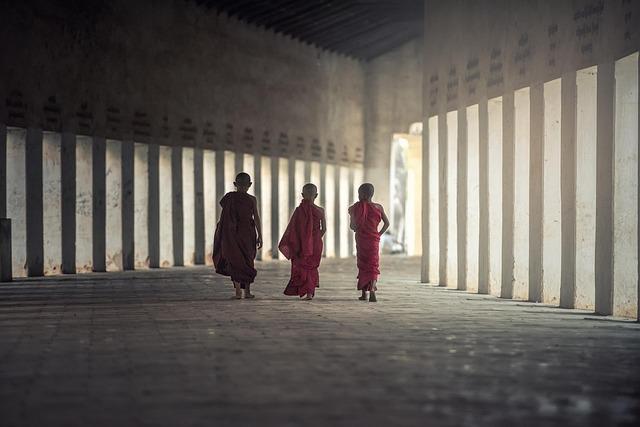
A months-long “Walk for Peace” led by a small community of Buddhist monks has now reached Washington, D.C., carrying a quiet but insistent appeal for compassion and non-violence into the center of American political life. Beginning their journey hundreds of miles away, the monks have crossed rural backroads, major highways, and city streets, stopping regularly to meet residents, hold prayer circles, and speak about ending war, hatred, and social fragmentation. Their presence in the nation’s capital—reported by Euronews—comes as global conflicts and domestic polarization are both on the rise, highlighting how an ancient spiritual discipline is being used as a modern form of peace activism.
A quiet procession through a loud capital: a message to a divided America
After weeks of passing fields, industrial zones, and overlooked main streets, the group of saffron-clad monks entered Washington, D.C. in silence, their meditative pace cutting through the city’s usual noise of sirens, traffic, and political argument. With hands joined at their hearts and eyes lowered, they walked not in support of any party or platform, but to remind Americans of practices they consider essential for healing division: deep listening, careful speech, and consistent kindness in daily life.
Their appeal is directed at more than just elected officials. They speak equally to people refreshing social media feeds, families straining under political disagreements, and neighborhoods worn down by anger and mistrust. In conversations along the route, the monks repeatedly emphasized that peace is not the absence of conflict, but the decision to confront conflict without hatred. Disagreement, they argue, is inevitable in a pluralistic society; dehumanization is not.
As they moved past federal agencies and historic monuments, the monks described their trek as a “walking meditation” through a country actively negotiating who it wants to be. Rather than proposing sweeping reforms, they focused on everyday disciplines anyone can adopt. They urged people to:
- Pause before replying in person, by email, or on social media
- Look for shared concerns—such as local safety, schools, or clean air—beyond party labels
- Restore trust through in-person conversations instead of anonymous comments
- Stand with those at risk when debating security, economics, or public health
| Core Theme | Monks’ Message |
|---|---|
| Civil Discourse | “Disagree without dehumanizing.” |
| Community | “Start peace on your own street.” |
| Media Habits | “Consume less noise, create more clarity.” |
| Personal Responsibility | “Every word is a vote for peace or division.” |
Their focus echoes a growing concern across the United States: according to multiple recent surveys, majorities of Americans describe the country as “exhausted” by political conflict and worried about increasing extremism. The monks’ slow walk, in contrast, offers an image of deliberate, disciplined response instead of reactive outrage.
From roadside encounters to local movements: how the Walk for Peace activated communities
As the Walk for Peace wound its way across several states, many of the towns it passed through briefly became centers of reflection and grassroots organizing. People stepped out of shops and homes to join the monks for a block or two, bring water and fruit, or simply stand in silence as they passed. What began as a symbolic gesture of welcome often grew into more intentional community projects.
Faith leaders, school administrators, and neighborhood organizers used the monks’ visit as an opening to convene public conversations on non-violence, racial justice, trauma, and mental health. In some places, small businesses helped by donating meals, hosting evening gatherings, or offering indoor space for rest and prayer. Local governments coordinated escort vehicles or police support, and in turn used their communications channels to share the walk’s message of nonviolent dialogue.
Many communities found that the momentum did not disappear once the robes and prayer flags moved on. Residents reported that the walk served as a catalyst to rebuild old alliances and start new initiatives focused on cooperation rather than conflict. Common forms of continuing engagement included:
- Interfaith gatherings where churches, mosques, synagogues, temples and humanist groups met for shared reflection and joint service projects.
- Youth-led initiatives such as mural projects about peace, debate clubs on constructive disagreement, and local history walks highlighting past struggles for justice.
- Neighborhood support circles offering spaces to learn conflict resolution tools, practice active listening, and organize mutual aid.
- Volunteer “connectors” who matched residents with ongoing social, environmental, and mental health efforts in their area.
| City | Local Action | Lasting Impact |
|---|---|---|
| Topeka, KS | Evening peace walk | Monthly interfaith forum |
| Columbus, OH | School assembly | Student peace club |
| Harrisburg, PA | Community vigil | Neighborhood mediation group |
These efforts reflect a broader trend: civil society organizations across the U.S. have reported heightened interest in conflict resolution training, restorative justice, and trauma-informed community work in recent years. The Walk for Peace tapped into that existing energy and gave it a visible, traveling focal point.
From streets to policy: what leaders can learn from a spiritual march
By choosing to walk slowly across the country rather than stage conventional rallies, the monks offered an alternative model of civic participation. Instead of amplifying slogans, they emphasized presence—showing up, listening, and remaining available to strangers day after day. Their example suggests that nonviolent dialogue is most credible when it is first embodied, then articulated.
For policymakers, public officials, and organizational leaders, the Walk for Peace functions as a kind of moving workshop in de-escalation. The monks did not avoid conflict zones—whether political, cultural, or emotional—but entered them with a posture of calm attention. Their stance demonstrates that choosing gentler methods is not the same as avoiding hard truths; it is a way of addressing them without inflaming already volatile situations.
Several leadership lessons emerge from their approach:
- Embodied message: Values such as respect, patience, and humility are communicated most powerfully through visible behavior—how leaders move through communities, interact with critics, and respond under pressure.
- Listening first: The monks regularly stopped to ask residents what weighed on them, suggesting that leaders can shift from campaign-style speeches to structured listening tours to better understand local realities.
- Ritual over rhetoric: Shared practices—brief silence, collective breathing, or simple chanting—created moments of common ground, even among people who disagreed, lowering defensiveness before any debate began.
- Consistency under scrutiny: By maintaining the same calm demeanor with supporters, skeptics, and indifferent onlookers, they illustrated how public trust grows when words and actions remain aligned over time.
| Practice | Leadership Lesson |
|---|---|
| Daily mindful walking | Slow the pace of decision-making in crisis |
| Chanting for peace | Use calm tone to frame hard negotiations |
| Open encounters with locals | Turn critics into dialogue partners |
| Simple shared meals | Level status differences at the table |
In a political era defined by viral sound bites and rapid-fire commentary, the sight of robed figures steadily approaching the U.S. capital points to another way: one in which leaders might take more time to deliberate, speak with greater care, and actively design spaces where disagreement does not automatically mean enmity.
Carrying the Walk for Peace into daily life: practical tools for citizens
As the monks’ pilgrimage converges on Washington, its relevance extends far beyond the capital’s streets. Their message is fundamentally about small, repeatable choices that ordinary people can make each day. Instead of grand declarations, they talk about how a person shares news, how they respond to a tense conversation at work, or how they treat a neighbor with different beliefs.
Citizens looking to embody this call for unity and compassion can adopt simple practices such as forwarding a well-sourced, measured article instead of a sensational headline; agreeing to hear someone out for a set amount of time before responding; or creating a “media-free corner” at home where emotions stirred up by the news can settle before they spill over into relationships.
Many community organizations are already adapting similar ideas. Some councils and nonprofits begin meetings with ninety seconds of quiet breathing. Interfaith groups are organizing candlelight vigils that welcome participants from varied backgrounds. Schools are experimenting with short mindfulness exercises or reflective journaling to help students manage conflict and anxiety. These measures are modest, yet they help create a public atmosphere in which dialogue is possible without constant fear of attack.
Even in places far from the Walk for Peace route, people are translating its spirit into concrete projects:
- Neighborhood “listening circles” that gather residents with opposing views under simple, shared rules—no interruptions, no insults, and a commitment to speak from personal experience.
- Digital peace pledges where community members promise to avoid abusive language, verify information before posting, and step away rather than escalate online fights.
- Volunteer mediator teams trained to help de-escalate tension at public hearings, school board meetings, and demonstrations, offering an alternative to shouting matches.
- Collaborative service projects—such as neighborhood cleanups, food drives, or support for refugees—that unite people around tangible goals instead of partisan identities.
| Action | Where it Happens | Immediate Impact |
|---|---|---|
| Silent minute before meetings | Councils, workplaces | Lowers tension, improves focus |
| Weekly interfaith tea | Libraries, community centers | Builds trust across beliefs |
| Compassionate posting pledge | Social media platforms | Reduces online hostility |
| Joint volunteer days | Neighborhood projects | Shifts focus to shared goals |
These practices, though small in scale, mirror the monks’ own method: consistent, visible acts that slowly reshape the emotional climate of a place. Just as their walk drew attention not through volume but through steady presence, these community experiments aim to normalize empathy, curiosity, and restraint.
Closing Remarks
As the monks bring this stage of their Walk for Peace to a close in Washington, D.C., their quiet procession stands in deliberate contrast to the heated language and rapid reactions that so often define conversations about war, security, and justice. The end of their physical journey is meant to function less as a conclusion than as a handoff—a prompt for citizens, officials, and community groups to consider what peace might look like in the routines of everyday life.
No one can yet know how deeply their message will influence long-term policy or public attitudes. But along the route they followed, the sight of barefoot walkers in saffron robes has already stirred debates in town halls, religious communities, classrooms, and family kitchens. For the monks, those conversations are evidence that the Walk for Peace has already begun to leave its mark—quietly, persistently, and, as they like to say, one mindful step at a time.