

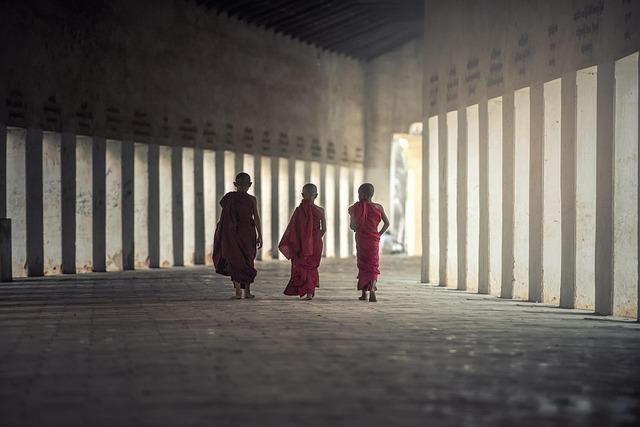
Buddhist monks in vivid saffron and deep maroon robes carried a quiet call for nonviolence into the heart of the nation’s capital this week, ending a multi-day peace walk with a final, contemplative gathering in Washington, D.C. Their route threaded through busy corridors and past some of the country’s most recognizable landmarks, drawing supporters, passersby, and neighborhood residents who stopped to watch an unhurried display of faith, mindfulness, and solidarity.
Designed to spotlight peace, compassion, and dialogue at a time of escalating global conflict, the walk culminated in an outdoor assembly of prayers, chanting, and silent meditation near major federal buildings. Photographs from the day capture monks and lay participants moving with deliberate calm through the daily rush of the city—a living symbol, organizers said, of how spiritual traditions and moral appeals can still shape public life in an era of polarization.
A River of Robes on Pennsylvania Avenue: A Peace Walk Near the White House
As the procession advanced single file along Pennsylvania Avenue, the saffron and maroon robes gently disrupted Washington’s typical weekday pace. The slow cadence of sandaled feet and low, continuous recitations of Buddhist prayers drew office workers away from their desks, leaning against windows or standing at the curb to witness the scene. For a brief stretch, ordinary lunch breaks shifted into quiet moments of contemplation.
Colorful banners lifted above the crowd, carrying clear messages of nonviolence, climate responsibility, and interfaith solidarity. Against a backdrop of traffic signals, motorcades, and government facades, the walkers stopped at significant intersections to bow their heads in silence for civilians affected by war, political upheaval, and climate-driven disasters worldwide. According to the UN, more than 110 million people are currently displaced by conflict and persecution—figures the organizers referenced as they dedicated their steps to those living with daily insecurity and fear.
When the peace walk reached the area near the White House, motion gave way to stillness. Participants formed a loose arc on the grass, joining the monks for a period of seated meditation as incense smoke curled through a sea of winter jackets, press badges, and smartphones. Organizers described the gathering as a reminder that moral appeals and ethical reflection still belong in public squares, even as political debate grows increasingly combative.
Volunteers circulated through the crowd, distributing cards that suggested simple, daily ways to reduce harm and tension in families, workplaces, and neighborhoods:
- Pause before speaking in political conversations
- Support local conflict-resolution and mediation programs
- Limit online engagement that spreads anger or misinformation
- Attend or host neighborhood dialogue circles and listening sessions
| Key Stop | Focus of Prayer |
|---|---|
| Capitol Hill | Respectful, accountable governance |
| National Mall | Victims and survivors of war |
| Near White House | Compassion and wisdom in leadership |
Robes, Bare Feet, and Prayer Beads: How Buddhist Rituals Recast Washington’s Landmarks
Set against the city’s stone monuments and towering glass offices, the monks’ saffron robes stood out like moving banners of both devotion and gentle dissent. On the Capitol steps and along the length of the National Mall, the warm, golden cloth altered the mood of familiar views, briefly turning plazas and walkways into open-air sanctuaries. Commuters slowed, tourists hushed, and the everyday clamor of the city softened as the procession passed.
The monks’ bare feet on cold pavement, a traditional symbol of humility and groundedness, transformed official corridors into temporary cloisters. The quiet contact of skin on stone carried a wordless message of nonviolence, contrasting sharply with the rhetoric and power struggles so often associated with Washington. In a city defined by suits, security lines, and motorcades, the contrast between simple robes and stark asphalt functioned as a subtle critique—not in anger, but as a calm question about what kind of authority deserves trust and respect.
As the line of monks moved beneath memorials honoring soldiers and presidents, small ritual gestures slowly rewrote the purpose of those spaces. The gentle clicking of prayer beads, the measured rise and fall of chanting, and the deliberate slowness of their steps briefly turned monuments into altars of restraint, remembrance, and responsibility rather than triumph alone.
People responded by adapting their own behavior to the ritual surrounding them:
- Tourists lowered their voices and lingered longer over photographs, which felt more like quiet tributes than casual snapshots.
- Local workers stepped out of nearby offices, watching in reflective silence during a few reclaimed minutes of their workday.
- Activists in adjacent demonstrations eased their volume, letting the monks’ slow pace and chanting carry the central message.
| Landmark | Ritual Focus | Visual Effect |
|---|---|---|
| Capitol | Walking meditation around legislative grounds | Political power reframed as service and humility |
| Lincoln Memorial | Silent, collective standing prayer | Stone figure perceived less as icon, more as witness |
| White House perimeter | Gentle chanting and bowed heads | Security fencing felt like a threshold, not just a barrier |
Quiet Crowds, Shared Steps: What the Peace Walk Revealed About a Divided Nation
As the monks passed brick row houses and granite memorials, residents slipped into the line, widening the procession with each block. People drifted out from coffee shops, front porches, and lunch counters to walk alongside the monks for a few minutes or a few miles. Families pressed close to security barricades near federal facilities, some clasping children’s hands as they matched the monks’ unhurried pace.
There were no megaphones, slogans, or shouted demands. The soundscape consisted mainly of sandals meeting concrete, an occasional bell, and the low murmur of prayers carried on the wind. Many who joined described the experience as a deliberate counterpoint to the country’s constant shouting—an hour where presence mattered more than persuasion and where strangers greeted one another with nods instead of suspicion.
The turnout also illustrated how Washington residents are experimenting with quieter modes of civic engagement at a time when social media outrage often dominates public attention. People who disagree on elections, budgets, or foreign policy found common ground in small, shared actions: standing together in front of agencies associated with partisan stalemates, offering water to strangers in the crowd, or simply walking in the same direction without debating why.
Participants and observers along the route highlighted several lessons from the day:
- Silence as protest: Using composed, wordless presence to express exhaustion with hostility and verbal combat.
- Shared ritual: Walking shoulder to shoulder as a temporary bridge across ideological, racial, and religious divides.
- Local ownership: Residents reclaiming national debates by grounding them in neighborhood-level relationships and actions.
| Group | Action | Message |
|---|---|---|
| Local families | Joined the final mile of the walk | Choosing hope and curiosity over fear |
| Office workers | Extended or redirected lunch breaks to watch | Making time for reflection amid deadlines |
| Students | Filmed and shared the procession online | Showing that peace, not just outrage, can trend |
From Symbol to Strategy: Turning Contemplative Witness into Public Action
When the monks and their followers gradually dispersed from the National Mall, they left more than a gallery of striking images. For many city leaders, advocates, and residents, the walk served as a working model of how reflection can inform policy and community life. The day’s events hinted at concrete ways that government agencies, schools, and local organizations can fold mindful practices into everyday decision-making.
City and federal officials, for instance, can build on the visibility of the march by supporting initiatives that treat calm and connection as public goods, not private luxuries. That might include funding mindfulness and social-emotional learning programs in schools, setting aside “reflection rooms” in government buildings, and incorporating trauma-informed listening circles into public hearings on high-stakes issues like policing, housing, or immigration.
Local governments and community groups can treat this peace walk as a catalyst for more enduring efforts:
- Residents can organize weekly or monthly silent vigils at contentious public sites—courthouses, statehouses, or protest hotspots—to create space for de-escalation before disagreements boil over.
- Policymakers can pilot bipartisan “quiet briefings,” in which staff, experts, and community members begin with several minutes of silence or guided breathing before discussing polarizing topics.
- Schools and campuses can form student-led peace councils tasked with responding to incidents of bullying, hate, or harassment through restorative practices rather than purely punitive measures.
- Faith and civic groups can co-host interfaith peace walks that pair meditation and prayer with voter registration, know-your-rights clinics, and community safety trainings.
| Action | Lead Stakeholder | Timeline |
|---|---|---|
| Launch a citywide “Moment of Quiet” public-awareness campaign | Mayor’s Office | Within 3 months |
| Host recurring contemplative town halls with guided reflection | Local Council | Ongoing |
| Create neighborhood-scale peace walks and listening circles | Resident coalitions | Next quarter |
As new headlines rush in, the images of monks pacing past federal buildings may fade from the front page. Yet their steady procession offers a different tempo that leaders and residents can choose to adopt. Translating quiet witness into lasting reform means treating emotional safety, reduced stress, and social trust as key measures of policy success—alongside economic cost or political gain.
That approach might include evaluating proposals based on their ability to lower daily anxiety caused by housing instability, gun violence, or health-care gaps, and to increase people’s sense of belonging in their own neighborhoods. If embraced at scale, Washington’s ceremonial avenues could evolve from mere stages for competing protests into living laboratories where mindfulness, nonviolence, and lawmaking develop together, one deliberate step at a time.
In Closing
The monks’ arrival in Washington, D.C., marked the culmination of a journey meant to amplify calls for nonviolence, compassion, and unity in a period of intense political and social strain. Their measured steps and simple rituals invited residents, tourists, and local faith leaders into shared pauses of reflection that stood in stark contrast to the relentless momentum of the capital.
As the peace walk drew to a close, organizers stressed that its purpose did not end at the edge of a monument lawn or with the final chant. They framed the event as an open invitation for people across the country to carry the message home—to classrooms, workplaces, houses of worship, and city streets—through one conversation, one act of kindness, and one peaceful gesture at a time.
In a city built around power, negotiation, and policy, the monks’ slow, intentional procession offered another vision of influence: change not driven by volume or decree, but by presence, witness, and the steady insistence that peace, however fragile, remains possible.