



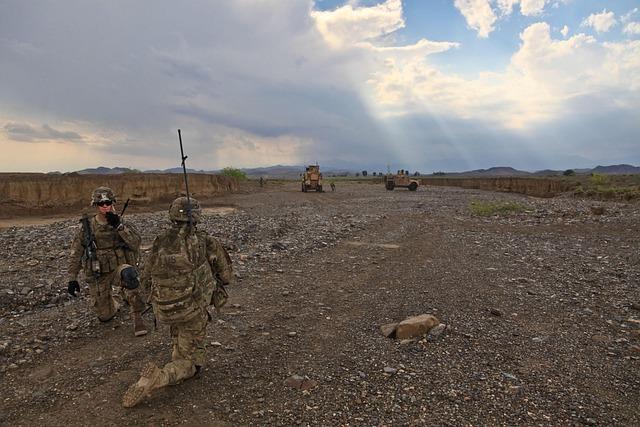
Iran’s leadership has asserted that its forces have taken several U.S. soldiers into custody amid intensifying clashes, a dramatic claim that, if proven, could significantly heighten an already volatile regional crisis. American officials have flatly denied the allegation, calling it baseless and unsupported by any credible evidence. The starkly opposed versions of events, first noted by Roya News, have injected fresh uncertainty into the conflict and underscored how quickly misjudgments or misinformation could trigger a wider confrontation.
Iran’s Revolutionary Guard Claims Detention of US Troops Near Strategic Corridor
Iranian authorities say the alleged incident unfolded during what they describe as a “hostile incursion” in or near a highly sensitive military zone, reportedly in disputed airspace above a key maritime corridor. According to Tehran’s narrative, elements of the Revolutionary Guard intercepted and detained a group of American service members, along with their equipment, after detecting what Iranian commanders labeled a serious breach of sovereignty.
State broadcasters in Iran have circulated footage they claim shows captured foreign soldiers and confiscated gear. The clips, selectively edited and lacking independent verification, are being framed as evidence of a successful defensive operation and a warning to outside powers against deeper involvement in the conflict.
Washington, however, insists that every American unit operating in the broader theater has been fully accounted for. Senior U.S. officials describe Iran’s statements as “manufactured propaganda,” stressing that no branch of the armed forces has reported any personnel missing, detained, or cut off from communication.
The contrasting narratives are unfolding as fighting elsewhere in the region continues to intensify. With global trade routes, energy supplies, and long-standing security arrangements at stake, many governments fear that even a single contested episode—such as the alleged capture of US troops—could push the crisis past a tipping point.
Rising Stakes: Information Control, Military Signaling, and External Pressure
The dispute over what actually happened has put a spotlight on the parallel information war that now accompanies almost every modern conflict. Governments, state-run media, and aligned digital networks are rushing to define the story before independent facts are firmly established.
Analysts caution that even unverified claims about foreign soldiers being taken prisoner can rapidly alter public sentiment and military risk calculations. In this context, several dynamics are shaping the environment:
- Information control: Competing state media ecosystems are pushing carefully curated narratives aimed at domestic audiences and the wider world.
- Military signaling: Tehran and Washington both appear determined to project firmness—showing they will not be intimidated—while still trying to avoid crossing the line into an outright regional war.
- Diplomatic pressure: European capitals and Gulf monarchies are quietly pressing both sides to exercise restraint, aware that any escalation could threaten energy exports, shipping lanes, and internal stability.
| Stakeholder | Stated Position | Primary Concern |
|---|---|---|
| Iran | Claims capture of US troops | Deterrence & leverage |
| United States | Denies any personnel missing | Escalation control |
| Regional Allies | Call for verification & calm | Containment of conflict |
| Global Community | Demands clarity & transparency | Protection of trade routes |
Washington Rejects Capture Allegations, Citing No Missing Personnel and No Evidence
U.S. officials have moved quickly to rebut Tehran’s account. The Pentagon and other security agencies insist that, across all operational zones, there are no missing American soldiers and no indications that any U.S. personnel have been seized.
Military spokespersons point to detailed monitoring mechanisms that track force deployments, including secure communications, GPS-based systems, and routine accountability checks. According to their assessment, these tools show no gaps, distress signals, or unexplained disruptions that would suggest a capture has occurred.
In private briefings, senior defense and intelligence sources describe the Iranian narrative as a classic element of information warfare: an attempt to take advantage of the “fog of war” and magnify Iran’s perceived leverage. They argue that the speed and style of Tehran’s messaging—with dramatic footage but no independently verifiable evidence—fits a pattern seen repeatedly in recent conflicts from Eastern Europe to the Middle East.
To reinforce their denial, U.S. agencies highlight several points:
- Confirmed personnel records are regularly checked against up-to-date unit rosters, with no discrepancies reported.
- Geolocated imagery from U.S. and commercial satellites has shown no signs of stranded or captured American troops.
- Intercepted communications monitored by U.S. and allied intelligence have not produced credible chatter about detained U.S. soldiers.
- Third-party verification from regional and coalition partners has likewise failed to uncover any supporting evidence.
| Claim Source | US Assessment | Evidence Cited |
|---|---|---|
| Iranian state media | Unsubstantiated | None publicly provided |
| US Defense Department | Denial of captures | Operational logs, troop counts |
| Allied monitoring teams | No confirmation | Field reports, situational briefs |
Information Warfare: Competing Narratives and the Global Battle for Perception
With hard proof lacking, the dispute over whether Iran has actually captured US troops has migrated to a broader arena: a multidimensional propaganda contest playing out on television screens, encrypted messaging apps, and social media feeds.
Tehran’s outlets emphasize what they portray as conclusive footage and testimonials, often accompanied by triumphant rhetoric about “resistance” and “defense of sovereignty.” U.S. officials, by contrast, focus on the absence of independent verification and encourage journalists and the public to question the provenance, editing, and timing of any circulated material.
This clash is part of a wider trend. Recent conflicts have shown how quickly misleading content can overtake verified reporting. For example, during the early months of the Ukraine war, fact-checkers documented thousands of miscaptioned videos and recycled combat clips that went viral before being debunked. Similar tactics are visible here, with several recurring techniques:
- Visual manipulation: Footage from earlier battles or training exercises is reshared as if it were newly recorded proof of the alleged capture.
- Coordinated hashtags: Hashtag campaigns seek to dominate trending lists, casting the event either as an Iranian “victory” or as a “hoax,” depending on the network’s alignment.
- Narrative seeding: Anonymous accounts claim inside knowledge—such as supposed names, locations, or units of the “captured” soldiers—without offering verifiable sources.
- Language framing: Loaded terms like “hostages,” “war crimes,” or “fabricated crisis” are used to elicit strong emotional reactions and pre-shape how audiences interpret limited facts.
| Actor | Primary Goal | Preferred Channel |
|---|---|---|
| Iranian officials | Project strength, claim leverage | State TV, Telegram |
| U.S. authorities | Reassure allies, contain escalation | Press briefings, X (Twitter) |
| Regional media | Influence local opinion | Satellite channels, news sites |
| Online activists | Amplify chosen narrative | Social networks, video platforms |
Why Verification Matters: From Social Media Claims to Real-World Consequences
The struggle over messaging is not merely a public-relations contest. In today’s highly charged environment, a rumor about captured U.S. troops can harden domestic opinion in multiple countries, drive leaders into more inflexible positions, and indirectly influence deployment or targeting decisions.
According to research by international crisis-monitoring organizations, unverified claims spread online can increase support for escalatory actions within hours. During previous tensions in the Gulf, for example, misleading reports about ship seizures and airstrikes briefly drove energy prices upward by several percentage points, reflecting market fears of immediate disruption.
The alleged capture of US soldiers fits this pattern. Even without confirmation, the story itself can:
- Pressure leaders to respond forcefully to avoid appearing weak.
- Complicate backchannel diplomacy by inflaming domestic audiences.
- Distort threat assessments if analysts are forced to react to unverified “facts.”
For policymakers and media organizations, the episode highlights the need for disciplined verification before amplifying battlefield claims—especially those involving captured personnel, civilian casualties, or major shifts in control.
De-Escalation Strategies: What Policymakers Can Do to Limit Miscalculation
Governments in the region and beyond are being urged to move from reactive statements to more structured mechanisms that can withstand both kinetic clashes and information warfare.
A central recommendation from security experts is the restoration and strengthening of direct communication channels between Washington and Tehran. Even at moments of extreme tension in the past, discreet lines—whether through Swiss intermediaries, regional governments, or backchannel envoys—have helped prevent incidents from spiraling.
At the operational level, officials are advocating for more robust deconfliction systems:
- Dedicated incident hotlines between militaries to clarify air and naval encounters in real time.
- Agreed notification procedures for military exercises, missile tests, and large deployments near contested areas.
- Shared rules of engagement in sensitive waters and crowded air corridors, reducing the chance that a misinterpreted maneuver leads to immediate retaliation.
In parallel, regional security councils and international organizations are considering practical steps that do not require sweeping political agreements but can quickly reduce risk. Among them:
- Coordinated public messaging to avoid contradictory or inflammatory statements when high-profile incidents occur.
- Independent verification mechanisms—potentially under UN or neutral-state auspices—for claims related to prisoners, casualties, or border incidents.
- Regional crisis cells that compile and compare intelligence in fast-moving situations before leaders issue responses.
- Technical working groups focused on cybersecurity, deepfakes, and disinformation, recognizing that the digital domain is now a central front in the conflict narrative.
| Priority Area | Immediate Step | Goal |
|---|---|---|
| Military Hotlines | Reactivate and test daily | Prevent accidental clashes |
| Prisoner Claims | Use neutral verification | Avoid escalation over rumors |
| Media Narrative | Issue joint fact checks | Contain disinformation |
| Regional Forums | Hold emergency sessions | Coordinate de-escalation |
Conclusion: An Unverified Incident at the Center of a Larger Contest
For now, the alleged capture of US soldiers by Iran remains unconfirmed, suspended between starkly opposed official accounts and an absence of independently verifiable proof. That uncertainty has become a story in its own right, symbolizing the broader contest over information, influence, and narrative control that now accompanies armed conflict.
Until credible evidence—such as independently verified images, third-party inspections, or corroborated prisoner lists—comes to light, the world is left with conflicting statements and carefully constructed media campaigns. The fate of any purported U.S. personnel in Iranian custody, and the potential impact on fragile U.S.-Iran dynamics, therefore sits at the center of an increasingly tense and opaque standoff.
How this episode is ultimately resolved—or disproven—will not only shape perceptions of the current confrontation, but also set a precedent for how similar claims are handled in future crises where truth, propaganda, and high-stakes diplomacy collide.