



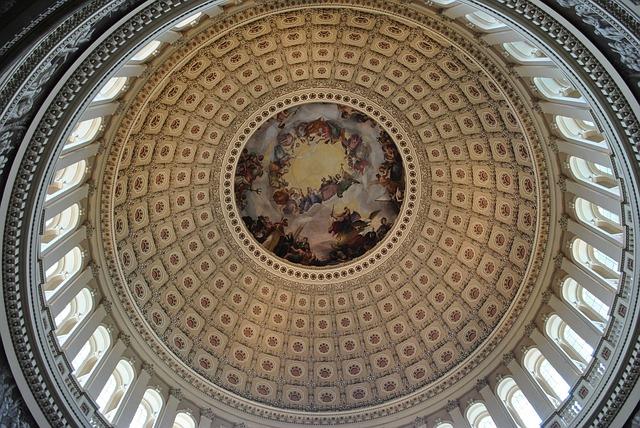
A man was arrested outside the U.S. Capitol on Wednesday after allegedly sprinting toward the complex with a loaded shotgun, U.S. Capitol Police said. The confrontation unfolded just beyond the high‑security perimeter in Washington, D.C., triggering an immediate law enforcement response at a time of elevated concern over threats to federal institutions. Officers report that no shots were fired and no one was injured. Even so, the incident has intensified debate over how to keep one of the country’s most visible government districts both accessible and secure.
Renewed debate over Capitol security after armed approach
Security procedures around the Capitol complex are again facing close examination after the suspect allegedly crossed a monitored boundary while carrying a loaded firearm. Although officers intervened before the man reached heavily populated areas, lawmakers and security specialists are pressing for detailed explanations of how an armed individual managed to get so close to a building that has been repeatedly identified as a high‑value target.
Early internal reviews suggest that several persistent vulnerabilities may have played a role, including:
- Uneven monitoring of outer perimeters and secondary access routes
- Delays in relaying initial threat information across command posts
- Reliance on visual identification rather than automated alerts at key chokepoints
In response, officials are weighing a combination of upgraded technology and revised procedures designed to deter and disrupt similar attempts before they reach the inner security rings. Among the proposals now under consideration:
- Expanded surveillance coverage at pedestrian entrances, vehicle checkpoints and public gathering spots
- More frequent perimeter patrols, particularly during high‑visitor seasons, school tours and major demonstrations
- Improved interagency communication to ensure that Capitol Police, local police and federal partners share the same, real‑time threat picture
- Refresher training focused on rapidly evolving threat patterns, including lone‑actor attacks and sudden armed advances
| Key Focus Area | Proposed Change |
|---|---|
| Perimeter Control | Tighter screening of vehicles and pedestrians, with more robust outer checkpoints |
| Technology | Higher‑resolution cameras, automated alerts and integrated monitoring platforms |
| Staffing | Repositioned and additional officers at outer barriers and high‑traffic corridors |
How fast did police respond and communicate during the shotgun incident?
Preliminary timelines and eyewitness statements indicate that Capitol Police officers reacted within moments of spotting the suspect moving toward the building with the shotgun, reflecting a rapid tactical response that appears broadly consistent with post–Jan. 6 security reforms. According to officials, internal radio traffic shows a swift progression from the initial visual confirmation to designation of an active threat, followed closely by the deployment of armed units who intercepted the man before he arrived in dense pedestrian zones.
Security analysts caution, however, that a full assessment will require the release and review of detailed dispatch logs, body‑camera footage and command‑center recordings. Only then, they say, will it be possible to evaluate whether every step of the process—from the first alert to physical apprehension—matched the stringent response benchmarks established for potential attacks near federal facilities.
Public communication rolled out more gradually. Initial information surfaced through brief, tightly managed updates on official social media feeds, followed by more formal written and on‑camera statements. People in nearby neighborhoods and on Capitol grounds reported receiving shelter‑in‑place guidance, as well as restrictions on movement, through a mix of loudspeaker announcements, email, text alerts and security personnel on the scene. Some described inconsistencies in timing and clarity, pointing to areas where messaging could be streamlined.
Early reviews by security experts suggest that internal after‑action reports will likely center on:
- Clarity of radio dispatches among U.S. Capitol Police, D.C. Metropolitan Police and federal agencies
- Speed and scope of lockdown decisions affecting congressional offices, visitor centers and outdoor plazas
- Public notification methods, including which systems (SMS, email, apps, social media) were prioritized and how fast they were deployed
- Coordination of press briefings to counter incomplete information, speculation and misinformation
| Phase | Primary Channel | Key Objective |
|---|---|---|
| Initial Sighting | Radio Dispatch | Identify, track and confirm the suspect |
| Engagement | On‑scene Command | Intervene and neutralize any immediate threat |
| Containment | Inter‑agency Coordination | Secure the broader area and manage spillover risks |
| Public Update | Digital Alerts & Media | Inform, guide and reassure residents, staff and visitors |
Security vs. access: Managing risk at symbolic federal sites
The U.S. Capitol, like many national landmarks, occupies a difficult space: it is both a functioning seat of government and a symbol of public participation. Security planners argue that any long‑term strategy must reconcile two seemingly competing imperatives—keeping the grounds open and approachable, while minimizing the risk of violent incidents.
Over the past several years, agencies have moved toward layered, intelligence‑driven defenses that allow lawful visitors to enter designated areas but quietly track behavior that appears out of place. Current measures include:
- Discreet perimeter screening that blends into the environment but flags abnormal movements or restricted‑area incursions
- Behavioral threat assessment teams trained to spot patterns associated with potential pre‑attack behavior
- Real‑time coordination between Capitol Police, local police, federal law enforcement and emergency management agencies
Officials stress that the objective is not to turn the Capitol into an impenetrable fortress, but to create a setting where questionable actions are identified and addressed early. This layered model is increasingly common: according to the U.S. Secret Service and FBI, threat assessments of government facilities now weigh not only physical barriers but also online activity, prior contacts with law enforcement and mental‑health indicators.
Civil liberties advocates, however, emphasize that any tightening of security must be carefully calibrated to avoid undermining First Amendment protections or eroding public trust. They are calling for:
- Clear, public standards governing when and how officers can intervene with demonstrators or individual visitors
- Limits on how surveillance technology is deployed, how long data is retained and who can access it
- Regular public reporting on security measures to show that they are narrowly tailored and subject to oversight
These debates reflect a broader national trend. With protests, rallies and public vigils common around government buildings, key policy questions now center on:
- Preserving peaceful protest while deterring armed intimidation and unlawful disruption
- Maintaining open sightlines and public access without leaving exploitable security gaps
- Using technology in targeted, accountable ways that prioritize accuracy and minimize intrusive surveillance
- Training officers to distinguish between unusual but lawful behavior and genuine pre‑attack indicators
| Priority | Public Impact | Security Goal |
|---|---|---|
| Open Access | Supports visitors, tourists and public demonstrations | Ensure the grounds remain visibly open and civic in character |
| Rapid Response | Short, targeted disruptions rather than broad lockdowns | Stop active threats quickly and limit collateral impact |
| Visible Deterrence | Uniformed patrols, barriers and signage | Dissuade armed or suspicious approaches |
| Rights Protection | Safeguards for free speech, assembly and press access | Prevent security practices from chilling lawful activity |
Policy steps to bolster Capitol policing, intelligence sharing and crowd strategies
For many security analysts, the shotgun incident underscores long‑recognized challenges in how intelligence is gathered, analyzed and shared among the many agencies operating in and around Capitol Hill. They are urging lawmakers to accelerate efforts to create a unified, real‑time threat fusion dashboard that:
- Aggregates tips, open‑source social media indicators and field reports from U.S. Capitol Police, U.S. Park Police, the Secret Service, D.C. Metropolitan Police and federal partners
- Uses standardized alert thresholds so that similar behaviors trigger consistent responses across agencies
- Feeds into shared watchlists and joint training programs, ensuring frontline personnel operate from the same intelligence picture
Civil liberties groups insist that any expansion of data collection and analysis must be paired with strong guardrails. They are calling for:
- Transparency rules that explain what data is collected, why it is collected and how long it is kept
- Independent audits of databases and surveillance tools
- Strict limits on the retention and secondary use of personally identifiable information
Experts in large‑scale events and demonstrations argue that crowd management policy should move decisively away from ad‑hoc, reactive tactics and toward pre‑planned, communication‑driven management. In practice, that means:
- Designing visible but non‑militarized perimeters that clearly mark protest areas without escalating tensions
- Using plain‑language loudspeaker announcements, social media and text alerts to explain what is happening and why
- Deploying trained liaison teams to coordinate with event organizers before, during and after demonstrations
- Adopting written standards on when to escalate force, including requirements for de‑escalation attempts and documentation
Security practitioners also point to the need for consistent measurement and oversight. They recommend:
- Routine, structured after‑action reviews following significant protests or security incidents
- Publicly released metrics on crowd‑management outcomes, such as injuries, arrests and use‑of‑force incidents
- Regular community and stakeholder briefings to maintain trust
Key recommendations frequently cited include:
- Shared intelligence hubs linking federal, state and local databases in a controlled, audited environment
- Joint training in behavioral threat assessment, de‑escalation and scenario‑based drills
- Clear escalation protocols for crowd dispersal, perimeter lockdowns and communication with elected officials
- Independent oversight of surveillance tools, data retention policies and use‑of‑force guidelines
| Priority Area | Key Action | Lead Stakeholder |
|---|---|---|
| Intelligence | Develop and maintain a unified threat dashboard | U.S. Capitol Police |
| Operations | Regular joint crowd‑management and emergency drills | D.C. Metropolitan Police |
| Policy | Adopt standardized use‑of‑force tiers and review schedules | Congressional oversight panels |
| Rights | Independent civil liberties evaluations of new tools and practices | External watchdog organizations |
Final Thoughts
Investigators continue to examine the suspect’s background, potential motives and any possible connections to broader networks or prior threats. Authorities say there is currently no indication of additional injuries or secondary incidents linked to the arrest.
The episode comes amid a period of heightened concern about political violence and targeted threats in the nation’s capital, where federal buildings, lawmakers and staff have faced increasing security pressures in recent years. As the criminal case moves forward, officials have signaled that they will keep reassessing and updating security protocols around the Capitol complex—aiming to protect a critical democratic institution while preserving its role as a space for public engagement and oversight.