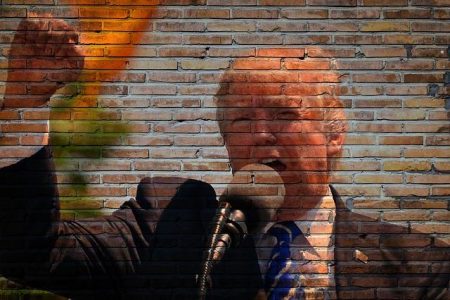




President Donald Trump is preparing to send more federal law enforcement personnel into Washington, D.C., citing what his team describes as a spike in “violent crime.” The decision is being promoted as a law‑and‑order response to a city supposedly teetering on the edge of chaos. Yet long-term crime statistics tell a very different story: violent crime in the capital remains close to some of the lowest levels recorded in decades. The move has reignited disputes over the politicization of crime, the limits of federal power in local policing, and the widening gap between political messaging and measurable reality on the ground.
Staging a Crime Emergency? Politics, Optics, and the Federal Surge
In Trump’s narrative, Washington, D.C. is suffering from “out-of-control” violence that justifies dispatching waves of federal officers. But official crime data suggest a more complex reality, with overall violent crime far below the peaks of the 1990s and early 2000s. That contrast has fueled skepticism that the decision is grounded in public safety rather than political theater.
Critics see the deployment as a carefully choreographed show of force—more about television images of federal agents on street corners than about responding to a documented crime crisis. Supporters counter that even a modest uptick in shootings or carjackings should trigger an aggressive response, arguing that Washington’s status as the nation’s capital gives the federal government a special responsibility to intervene when local leaders appear hesitant or ideologically opposed to tougher tactics.
The dispute is driven less by raw statistics than by competing storylines. Federal officials lift up isolated, dramatic incidents; local authorities and many experts frame those events within broader, long-term patterns. That tension produces sharply different versions of the same city:
- Federal messaging spotlights dramatic raids, visible patrols, and tough-on-crime soundbites.
- District officials emphasize prevention, data analysis, and incremental reform.
- Residents often feel pulled between fear of crime and fear of being over-policed.
| Year | D.C. Violent Crime Index* | Dominant Political Storyline |
|---|---|---|
| 1995 | High | “Crime wave” narrative aligned with record violence |
| 2010 | Moderate | Focus on rebuilding, reform, and recovery |
| 2024 | Decades‑low | “Emergency” framing despite long-term decline |
*Index simplified for illustration; actual metrics vary by data source, category, and methodology.
What the Numbers Actually Say: Violent Crime Near Historic Lows
Over roughly the last 20–25 years, Washington, D.C. has undergone a profound shift in public safety. Homicides, robberies, and other serious violent offenses have declined steeply from the crisis levels of the crack‑era 1990s. While the COVID‑19 pandemic coincided with modest upticks in some categories nationwide, the overall trajectory in the nation’s capital remains downward when compared with its most dangerous years.
FBI Uniform Crime Reporting data, combined with figures from the Metropolitan Police Department, consistently show that today’s Washington is dramatically safer than it was a generation ago. The city’s homicide count, for instance, is far below the highs of the early 1990s, even if recent years have seen fluctuations from one year to the next. Analysts caution that every shooting or carjacking matters deeply to those affected, but they also stress that a handful of high-profile incidents do not equal a return to the darkest days of urban violence.
What appears to be rising faster than crime itself is the political return on stoking crime fears. A single viral video of a brazen robbery can dominate national headlines, overshadowing years of gradual progress. In that environment:
- National media elevate rare but shocking incidents, replayed across platforms for days.
- Campaign strategists rebrand local fluctuations as a nationwide breakdown in order.
- Long-term declines are easily obscured by a few sensational, shareable moments.
| Period | Violent Crime Trend* | Prevailing Rhetoric |
|---|---|---|
| Early 2000s | Steep drop from 1990s peaks | “Getting safer, but still fragile” |
| Mid‑2010s | Near multi‑decade lows | “Improved, yet unequal across neighborhoods” |
| Early 2020s | Below historic highs, with pandemic-era volatility | “Out of control” and “crime crisis” |
*Trends measured relative to Washington’s 1990s violent crime levels, using long-run D.C. data.
Who Runs Public Safety in the Capital? Federal Power vs. Local Control
The latest deployment of federal officers effectively carves out a parallel policing system in Washington, D.C.—one that can bypass, overshadow, or overrule city leaders. For years, local officials, community groups, and residents have worked to refine neighborhood-based strategies: targeted patrols, violence prevention programs, and trust-building initiatives intended to reduce crime without inflaming tensions.
A large-scale federal surge cuts against that grain. Instead of strategies rooted in local conditions, the city finds itself responding to directives shaped in the White House and at the Department of Justice. Decisions about where to station officers, which offenses to prioritize, and how aggressively to enforce are increasingly driven by national political messaging rather than by the day-to-day realities on D.C. streets.
This shift is visible both organizationally and symbolically:
- Metropolitan Police Department officers report to the mayor and D.C. Council and are expected to answer to local residents and oversight bodies.
- Federal agents answer to Cabinet officials and the president, whose priorities often include shaping national headlines as much as addressing local crime patterns.
- Community partnerships and trust risk being pushed aside when armored vehicles, tactical gear, and high-profile raids become the dominant image of public safety.
| Agency | Primary Accountability | Core Focus |
|---|---|---|
| Metropolitan Police Dept. | D.C. residents, local elected officials | Community safety, sustained crime trends, neighborhood trust |
| Deployed Federal Units | Executive Branch, DOJ leadership | Visible crackdowns, short-term operations, national narrative |
What Actually Works? Evidence-Based Alternatives to Symbolic Crackdowns
Criminologists and justice reform experts largely agree that sweeping federal deployments are among the least efficient ways to improve public safety, especially in cities where violent crime is not at historic highs. The research base instead points toward evidence-based strategies that focus narrowly on the people and places most associated with serious violence.
Approaches like focused deterrence—where law enforcement, social service providers, and community leaders jointly engage small groups at highest risk of committing or falling victim to violence—have produced meaningful and durable crime reductions in several U.S. cities. Community-led interventions that mediate conflicts before they escalate, along with investments in mental health services, housing stability, and youth employment, are associated with safer neighborhoods over the long term.
At the same time, data-driven policing reforms—transparent use-of-force reporting, early-warning systems for officer misconduct, body-worn camera policies, and independent oversight—help build legitimacy. When residents trust the system, they are more likely to cooperate with investigations, share information, and support prevention efforts, making communities safer without an overwhelming show of force.
Experts argue that the federal government can play a far more constructive role by underwriting these strategies rather than deploying mass contingents of officers. They recommend steering federal resources toward efforts such as:
- Violence interruption initiatives rooted in affected neighborhoods, using trained mediators to defuse disputes.
- Mental health and crisis response teams that work alongside or instead of police in nonviolent emergencies.
- Targeted youth employment, education, and mentoring programs in communities with entrenched poverty and limited opportunity.
- Robust data transparency requirements to track crime outcomes, use of force, racial disparities, and civil rights impacts.
| Strategy | Main Objective | Research Consensus |
|---|---|---|
| Violence Interruption | Prevent shootings and retaliatory attacks | Promising results in multiple cities |
| Focused Deterrence | Concentrate on small, high-risk groups | Strong evidence of sustained reductions |
| Large-Scale Federal Deployments | Project toughness, increase visible enforcement | Mixed, with limited long-term benefits |
Conclusion: Crime, Power, and the Politics of Perception
As additional federal officers fan out across Washington, the Trump administration portrays the move as an urgent response to urban violence. Yet this escalation comes at a time when violent crime in the capital—and in many major U.S. cities—remains far below the extremes of previous decades. That disjunction raises a fundamental question: is the deployment designed to solve a documented safety crisis, or to send a political message about who is “tough” on crime?
For D.C. leaders, civil rights advocates, and many residents, the stakes go far beyond today’s crime numbers. At issue is who ultimately controls public safety in the nation’s capital, whose priorities shape daily life in its neighborhoods, and whether federal law enforcement is being used as a practical policy tool or as a powerful political symbol. Those debates—and their consequences for democracy, local autonomy, and civil liberties—are likely to persist long after the federal surge has ended.