



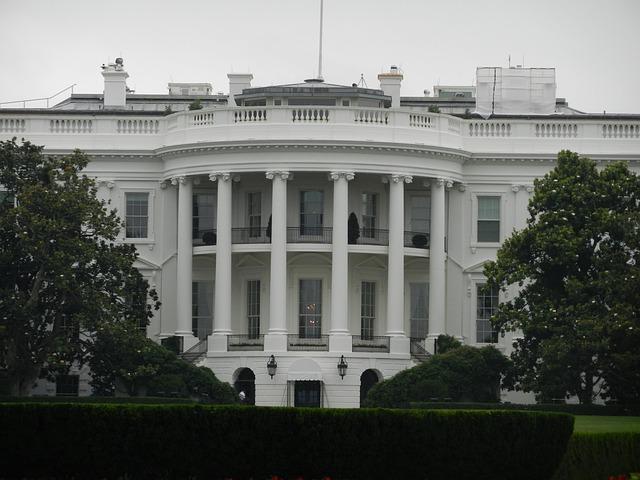
In the aftermath of Donald Trump’s repeated assertions that American cities are collapsing into “chaos and lawlessness,” many people living in and around the nation’s capital describe a far different reality. Conversations with residents across Washington, D.C. and nearby neighborhoods reveal that they often do not recognize the dire picture drawn by the former president and current Republican presidential candidate. Crime statistics, expert assessments, and everyday routines in the District and its suburbs repeatedly clash with Trump’s narrative of a city on the brink. Instead, a large share of locals say they feel reasonably secure where they live, exposing a widening disconnect between campaign rhetoric and life on the ground.
DC residents push back on Trump’s portrayal of a city in crisis
On a damp afternoon in Columbia Heights, a small group of neighbors gathering outside a corner shop glance up at a cable news broadcast describing Washington, D.C. as “out of control.” Their response is mostly disbelief.
“I walk my dog after midnight and I’ve never felt like I was in danger,” explains one resident who has lived in the area for more than a decade. Students near U Street, recent arrivals in Navy Yard, and retirees in Petworth express similar views: they see problems—especially around property crime and car break-ins—but not the collapse into lawlessness portrayed at rallies.
Many locals acknowledge that certain offenses, including carjackings and shoplifting, surged during the height of the COVID-19 pandemic, a pattern mirrored in other U.S. cities. Yet they argue that national speeches often highlight the most extreme incidents while ignoring the broader context: busy playgrounds at dusk, long lines at neighborhood restaurants, packed Metro cars late into the evening, and steady streams of cyclists and runners on city streets.
Community advocates add that this federal-level framing sidelines the daily work of residents, nonprofits, and city agencies trying to address safety through policing reforms, housing policy, public health, and mental health services rather than solely through harsher punishment.
Local organizers and analysts underscore several key points:
- Federal alerts vs. local patterns: Highly publicized bulletins from national officials frequently emphasize one-off episodes, while data from the Metropolitan Police Department show a more mixed, uneven trend over time.
- Category-by-category changes: Although some violent offenses have edged up in specific neighborhoods, other categories—especially several types of property crime—have declined or remained stable across the city.
- Community-based responses: Violence interruption teams, youth employment programs, and neighborhood-based mediation efforts rarely make it into campaign speeches, despite their growing role in shaping daily safety.
| Measure | 2019 | 2023 |
|---|---|---|
| Violent crime rate (per 1,000) | 10.2 | 10.9 |
| Property crime rate (per 1,000) | 41.5 | 38.7 |
| Residents reporting feeling “unsafe” | 22% | 24% |
While the numbers show some modest shifts, they fall well short of the apocalyptic image pushed in much of the national conversation.
Crime trends in the US capital: statistics versus dystopian rhetoric
Long-term data from the FBI and the District of Columbia government paint a picture that diverges sharply from the dystopian scenario promoted on the campaign trail. Certain crimes have indeed increased in recent years, particularly gun-related incidents and motor-vehicle theft. But when placed in historical perspective, violent crime per capita remains far below the levels of the late 1980s and 1990s, when Washington regularly topped lists of U.S. homicide rates and carried the label of “murder capital.”
Criminologists and policy researchers argue that national politicians often zoom in on short-term spikes or particularly shocking episodes while ignoring multi-decade trajectories that tell a more complicated story. According to preliminary figures released by major-city police departments across the country, homicides in many urban areas actually declined in 2023 compared with the pandemic-era peaks—a pattern echoed, with local variations, in D.C.
Residents point to their own routines as evidence that the city’s safety narrative is more complex than the sound bites suggest. On any given weekday, people:
- Ride the Metro late into the evening, including service workers and students returning from night classes.
- Run or cycle along the National Mall, the Anacostia Riverwalk Trail, and Rock Creek Park in the early morning hours.
- Fill cafés and bars in Shaw, H Street, Adams Morgan, and Navy Yard well past sunset.
- Stroll with dogs and children through parks that, decades ago, many residents avoided after dark.
For those who have lived in the region since the crack epidemic era, the contrast is striking. “You still have to use common sense,” one longtime resident said, “but the overall atmosphere is nothing like it was in the 90s. The city feels more open, more active, and in many ways, safer.”
How “war zone” rhetoric shapes fear, media coverage, and laws
Analysts who study political language emphasize that repeated phrases like “war zone,” “out of control,” and “American carnage” can profoundly shape how people think about safety, even when their own experiences suggest otherwise. When such language is amplified across partisan media and social platforms, audiences may begin to perceive a generalized threat that feels detached from their day-to-day lives.
In interviews around Washington, D.C., residents often describe an odd split between what they hear on television and what they see from their front steps. Many say their daily routines—commuting, shopping, socializing—do not align with descriptions of a city on the verge of collapse. Yet they also encounter relatives or friends in other states who are convinced, based on national coverage, that the capital is barely livable.
Communication scholars explain that this dynamic can produce “emotional maps” of the country, in which certain urban neighborhoods loom in the imagination as far more ominous than they feel to the people who live there. Over time, this distortion does more than shape perception—it influences how lawmakers respond.
Advocacy groups in Washington point to several ways that crime rhetoric feeds into policy:
- Agenda setting: Dramatic language about surging violence pushes complex safety issues—like housing instability, addiction, or community investment—off the front page in favor of calls for rapid crackdowns.
- Resource allocation: When voters are convinced that “lawlessness” is the primary threat, elected officials face pressure to pour money into visible enforcement measures—extra patrols, surveillance technology, tougher sentencing—while programs for mental health care, youth outreach, and job training struggle for funding.
- Trust and legitimacy: If people repeatedly hear that their neighborhoods are “hellscapes” but experience something different every day, confidence in both media and political institutions can erode. Conversely, residents of genuinely high-violence areas may feel that sweeping rhetoric masks the specific, targeted support they actually need.
| Element | Rhetoric Focus | On-the-Ground Feedback |
|---|---|---|
| Crime levels | “Surging violence” | “Mostly routine incidents” |
| Public mood | “People are terrified” | “I’ve never felt threatened” |
| Policy response | More patrols, harsher penalties | Calls for housing, mental health, youth programs |
As the debate intensifies, city officials and community groups warn that a narrow focus on punitive measures can overlook the strategies many residents say make them feel safer: stable housing, accessible treatment for addiction and trauma, and youth programs that offer alternatives to the street economy.
Closing the gap between fear, statistics, and lived reality
Researchers who specialize in public opinion and criminology argue that narrowing the distance between perception and reality starts with how information is gathered and shared. They call for a shift away from vague alarmism toward transparent, verifiable data that places individual incidents in context.
Among their recommendations:
- Clear sourcing standards: News outlets and public officials should cite specific datasets—such as FBI Uniform Crime Reports, city dashboards, or peer-reviewed studies—whenever they make claims about crime waves or “lawless cities.”
- Context with every headline: Crime stories should be accompanied by concise explanations of how the incident fits into recent trends, rather than being presented as proof of a sweeping crisis.
- Local listening sessions: Regular forums where residents, not just politicians and law-enforcement leaders, describe how safe they feel and which interventions they believe actually work.
- Real-time data partnerships: Collaborations between city governments, universities, and independent researchers to track crime patterns, perceptions of safety, and the impact of new policies.
- Media literacy and education: Programs in schools, libraries, and community centers that help people interpret statistics, recognize sensational framing, and distinguish between anecdote and trend.
To make this possible, experts highlight a set of practical tools that can be adopted by cities, journalists, and civic groups:
| Tool | What it shows |
|---|---|
| City dashboards | Monthly crime vs. a 5-year average, broken down by neighborhood and offense type |
| Perception surveys | How safe residents say they feel in specific settings—on transit, in parks, near schools |
| Fact-check widgets | Real-time checks of viral claims or political statements about “crime surges” and “lawless cities” |
Experts in political communication stress that these tools matter because emotional reactions are now shaped less by local observation and more by nationalized media narratives and viral video clips. They encourage Washington residents—and Americans everywhere—to regularly consult independent statistical sources, compare them with their own routines, and treat sweeping claims about “dangerous cities” as hypotheses to be tested, not assumptions to be absorbed.
The goal is not to deny real problems—gun violence, neighborhood-level spikes in crime, and longstanding inequities in policing demand serious attention—but to ensure that responses are tied to evidence rather than to the most alarming headline of the week.
In summary
As the presidential campaign accelerates and crime rhetoric becomes sharper, the accounts from Washington’s streets tell a story that is more layered than the stark images invoked at rallies. Official data do not show a city collapsing into lawlessness on the scale suggested by Trump’s speeches, and the day-to-day experiences described by residents point to a place where concerns about safety are real but coexist with crowded parks, thriving nightlife, and a prevailing sense of normalcy.
The tension between national political narratives and local lived experience speaks to a broader struggle over who defines reality in American public life. In Washington, D.C., the people who navigate its avenues, buses, sidewalks, and parks every day appear unconvinced that they inhabit the dystopian landscape described from afar. Their quiet but consistent testimony challenges a campaign strategy built on amplifying menace—and suggests that any meaningful conversation about crime and safety must begin with both the data and the voices of those who call the city home.