


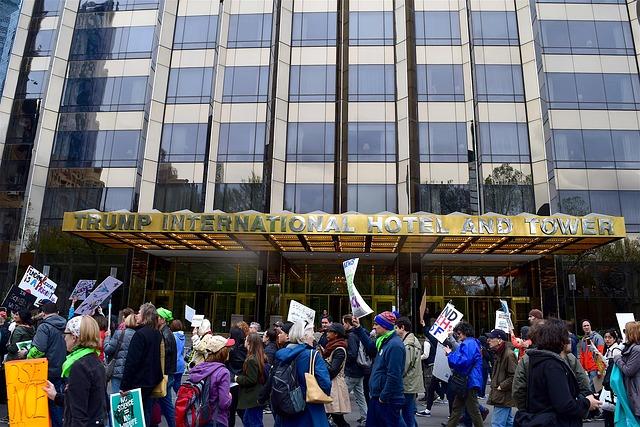
Global leaders are converging on Washington for President Donald Trump’s highly publicized “board of peace” summit, billed by the White House as a turning point in how the United States engages with the world. But as the opening session nears, the absence of several core US allies is fueling questions about how broad the initiative’s backing really is—and how much diplomatic sway Washington still wields. Amid intensifying geopolitical rivalries, domestic upheaval and increasingly fluid alliances, Trump’s latest attempt to reshape the global order is unfolding under a spotlight, with a noticeably smaller circle of traditional partners at his side.
Trump’s “board of peace” launches as traditional allies keep their distance
Donald Trump is preparing to roll out his long‑trailed “board of peace” during a headline‑grabbing summit in the US capital, promoting the forum as a new hub for international dealmaking. Administration officials say the gathering is designed to jump‑start ceasefire efforts, security arrangements and post‑war recovery plans. Yet the guest list reveals a stark imbalance: while a number of regional heavyweights and business envoys are expected, several of Washington’s closest allies have declined to attend at a senior level.
Key European governments have quietly passed on high‑profile invitations, opting instead to send mid‑rank envoys or stay away altogether. Their stated reasons range from unease over abrupt US policy swings to frustration with what they see as a unilateral, “America First” posture that sidelines long‑standing alliance mechanisms. In their place, a different lineup is emerging—one dominated by regional powers with narrower interests, pragmatic partners seeking specific deals, and private‑sector representatives promising capital rather than collective commitments.
Behind the carefully stage‑managed visuals, diplomats describe the summit as an early gauge of whether Washington can still assemble a broad, reliable coalition on urgent global challenges without its usual core of Western democracies. US officials insist that a more fluid, less institutionalized format will allow for faster bargaining on a handful of priority tracks, even if some of the most influential transatlantic voices are missing:
- Security guarantees tailored to fragile regions and contested borders
- Energy and trade corridors that bypass traditional alliance frameworks
- Private investment to underwrite reconstruction and infrastructure
- Counterterrorism cooperation with non‑traditional and emerging partners
| Present | Absent | Focus |
|---|---|---|
| Gulf states | Key EU members | Energy, arms deals |
| Asian partners | Canada | Trade, security |
| Private envoys | Some NATO officials | Investment pledges |
The White House is betting that this reshuffled mix can still generate headlines and signatures on targeted agreements. But the conspicuous empty seats highlight just how much the US leadership landscape has changed since earlier eras, when major summits virtually guaranteed a full turnout from transatlantic and Indo‑Pacific allies.
Key allies stay away, exposing fractures in US leadership and credibility
Even before the “board of peace” formally convenes, the story dominating quiet conversations in embassies and foreign ministries is not the agenda but the absences. Long‑time partners in Europe and Asia—usually pillars of US‑led defense, trade and diplomacy—are either under‑represented or entirely missing from the room. Diplomats describe this as a calculated move: a way to flag deep concerns about US reliability while stopping short of a dramatic public break.
Allied officials point to a series of disruptive shifts: threats to withdraw from security commitments, volatile stances on trade and tariffs, abrupt reversals on climate and arms‑control agreements, and an increasingly transactional approach to alliance management. Instead of predictable, treaty‑driven cooperation, they see a pattern of short‑term bargaining tied closely to Washington’s domestic political calendar.
- Reduced engagement from core NATO and Indo‑Pacific partners
- Anxiety over fluctuating US positions on defense and deterrence
- Strains across trade, climate policy and multilateral institutions
| Ally Response | Diplomatic Signal |
|---|---|
| Lower‑rank delegation | Reduced political trust |
| No formal attendance | Dissent without outright rupture |
| Late confirmation | Hedging against US unpredictability |
For critics, both inside Washington and abroad, these dynamics erode the US claim to be the indispensable convener when global tensions rise. Security planners warn that once allies begin building parallel channels—on sanctions coordination, technology standards, or defense planning—the momentum can shift quickly away from US‑centric frameworks. Already, Europe has been expanding its own defense initiatives, while Indo‑Pacific states deepen regional partnerships to insure against US political swings.
In private briefings, foreign envoys increasingly frame their relationship with Washington not in terms of shared long‑term strategy, but in terms of risk management: how to safeguard their own security, economies and climate goals when one of their main partners is subject to rapid, polarizing policy reversals with each election cycle.
Diplomatic gaps complicate conflict management and global cooperation
The limited participation in the president’s “board of peace” coincides with a period when global flashpoints are multiplying and deepening. International monitoring organizations note that the number of active conflicts worldwide has risen in recent years, driven by great‑power competition, proxy wars and the spread of advanced weapons into unstable regions. At precisely the moment when coordinated diplomacy is most needed, the architecture built after World War II—from NATO to the UN and its agencies—is under stress.
In major capitals from Brussels and Berlin to Seoul and Tokyo, policymakers are reassessing assumptions about Washington’s steadiness in managing crises. Many are asking whether high‑profile summits built around personalities can meaningfully replace slower, more institutional processes that historically provided continuity across administrations. The risk, analysts argue, is that when leading players withdraw from common forums, smaller and middle powers are encouraged to hedge, signing overlapping security agreements or turning toward alternative centers of gravity.
The result is a messier, more competitive diplomatic landscape:
- Ad‑hoc coalitions form around specific conflicts, bypassing or sidelining established institutions.
- Middle powers such as regional blocs and non‑aligned states are stepping in as mediators when great powers clash.
- Security assurances are increasingly framed as short‑term political bargains rather than long‑range commitments.
- Global rules on sanctions, arms control and humanitarian access are challenged in real time, with inconsistent enforcement.
| Region | Key Risk | Diplomatic Gap |
|---|---|---|
| Eastern Europe | Protracted and frozen conflicts | Divided Western strategy |
| Middle East | Escalating proxy confrontations | Overlapping and competing peace initiatives |
| Indo‑Pacific | Maritime and territorial stand‑offs | Ambiguous and uneven security guarantees |
These fractures are visible in practice. In Eastern Europe, divergent positions on military aid and negotiation terms have complicated efforts to present a united front. Across the Middle East, separate peace conferences and rival mediation tracks dilute leverage over warring parties. In the Indo‑Pacific, uncertainty over how far defense treaties extend has encouraged both arms buildups and cautious hedging by states caught between major powers.
Calls grow for Washington to restore trust with clear goals and broader inclusion
Policy experts and veteran diplomats argue that the United States can no longer assume that allies will simply fall in line behind closed‑door briefings and last‑minute invitations. To rebuild confidence, they say, the administration must shift from improvisation to clarity—especially when it comes to initiatives like the “board of peace.”
That means publicly outlining what the forum is intended to accomplish, how its work will be sequenced, and how success will be measured. In an era of instant information, vague talking points and opaque communiqués only deepen suspicion. Analysts recommend a more transparent, inclusive model of engagement that would:
- Publish specific diplomatic objectives before and after each “board of peace” session.
- Invite structured input from excluded allies, regional organizations and civil‑society groups.
- Ensure independent press access beyond staged photo opportunities and tightly scripted remarks.
- Standardise follow‑up reporting on agreed actions, timelines and unmet targets.
| Priority Area | Proposed Action | Expected Outcome |
|---|---|---|
| Goals | Release a concise, time‑bound peace agenda | Common understanding of aims |
| Allies | Hold structured pre‑summit consultations | Lower diplomatic friction and surprises |
| Public | Include briefings with independent experts | Stronger domestic and international buy‑in |
Foreign officials caution that symbolism and branding will not be enough. To shift perceptions, Washington would need to institutionalize shared ownership of the process. Practical steps could include seconding diplomats from currently sidelined countries into working groups, circulating redacted summaries of negotiation rounds, and establishing a regular calendar of review meetings that brings in partners beyond the usual G7 set.
By demonstrating that the “board of peace” is not simply a stage for unilateral announcements—but a platform where multiple stakeholders shape decisions—the US could start to counter the narrative that it has become a purely transactional actor. Over time, a more predictable and open approach could restore some of the credibility lost during recent disputes over defense spending, trade disputes and withdrawals from multilateral agreements.
In Retrospect
As the administration moves forward with its “board of peace” in the noticeable absence of several cornerstone US allies, the coming period will reveal whether this narrower coalition can deliver real diplomatic progress—or whether the empty seats will overshadow any declarations that emerge. With crises simmering in Eastern Europe, the Middle East and the Indo‑Pacific, and with trust in traditional partnerships under strain, the composition of the summit may matter as much as its communiqués. How this experiment in recalibrated alliances plays out will serve as an early indicator of how far Washington’s current model of global leadership can stretch before the costs of going it with a smaller, more selective circle become impossible to ignore.