



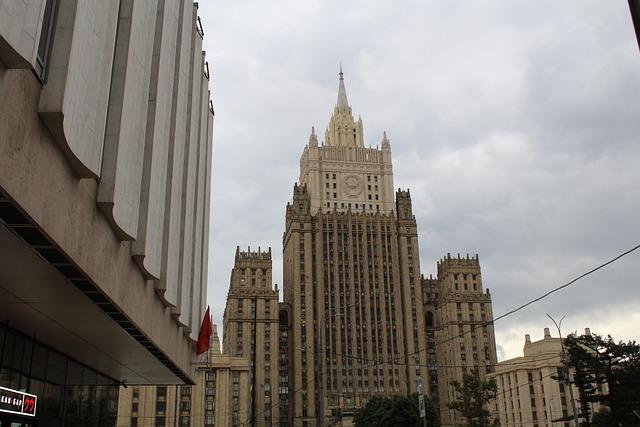
Pakistan is preparing to host direct talks between the United States and Iran, casting itself as a key diplomatic intermediary at a moment of heightened volatility in the Middle East. The initiative comes as Tehran issues sharp warnings against any U.S. ground operations, raising concerns that a localized escalation could quickly widen into a multi-front confrontation. By stepping forward, Islamabad is signaling its ambition to play a more visible role in regional crisis management, despite the deep mistrust that still defines U.S.–Iran relations over sanctions, security, and influence across the broader region.
Pakistan’s bid to act as a bridge state in the U.S.–Iran standoff over ground operations
Pakistan is moving swiftly to position itself as an unexpected venue for high-stakes diplomacy. Senior officials in Islamabad indicate that groundwork is underway to bring American and Iranian delegations to Pakistan “within weeks,” with a focus on preventing any slide into open confrontation triggered by U.S. ground operations or retaliatory moves by Iran and its partners.
Unlike previous mediation efforts led by European capitals or Gulf states, Pakistan is framing its role around concrete security outcomes rather than political grand bargains. The prospective talks, according to officials familiar with the planning, would center on:
- De-escalation mechanisms in areas where U.S. and Iranian-linked forces operate in close proximity.
- Rules of engagement designed to reduce the risk of unintended clashes.
- Discreet security assurances and communication channels that can be activated in a crisis.
Islamabad has reportedly proposed secure sites in both the federal capital and the garrison city of Rawalpindi, tapping its established links with Washington and its quieter, more complex relationship with Tehran. A dedicated cell within Pakistan’s Foreign Office is coordinating with allied embassies, security agencies, and multilateral observers to structure the talks and manage expectations.
- Possible venues under consideration: High-security compounds in Islamabad and Rawalpindi diplomatic enclaves
- Core objective: Prevent spillover from any U.S. ground push into neighboring states and critical supply corridors
- Primary communication tools: Intelligence backchannels, encrypted liaison, and formal diplomatic notes
| Actor | Stated Priority | Risk Concern |
|---|---|---|
| Pakistan | Regional stability | Border insecurity and internal blowback |
| United States | Force protection | Troop vulnerability in hostile environments |
| Iran | Sovereignty and deterrence | Direct military clash with the U.S. |
Pakistani officials describe their country as a “bridge state” able to host low-profile, proximity-style engagements even when public statements remain confrontational. The message from Islamabad is that this is not about aligning with either side, but about defusing the danger that misunderstandings over ground operations, airspace, or maritime deployments could tip the region into a conflict that would engulf multiple theaters—from the Gulf to Afghanistan and the Arabian Sea.
Despite hardened public positions in Washington and Tehran, Pakistani intermediaries argue that there is still diplomatic space for incremental understandings on incident-avoidance protocols, humanitarian access routes, and secure crisis hotlines. The calculation is straightforward: the financial, political, and human costs of a misstep are now so high that all sides may be willing to entertain narrowly focused confidence-building measures, even if broader disputes remain unresolved.
South Asia’s high-stakes exposure as Pakistan enters high-risk diplomacy
Pakistan’s effort to convene U.S.–Iran talks comes against a backdrop of overlapping security challenges across South Asia. The region is already grappling with Afghanistan’s volatile transition, enduring India–Pakistan frictions, and persistent militant networks that exploit porous borders. Any miscalculation in U.S.–Iran engagement—especially involving ground operations—could reverberate well beyond the Middle East.
For Islamabad, the stakes are multidimensional. An escalation could:
- Complicate efforts to stabilize its western border with Afghanistan.
- Trigger refugee movements at a time when Pakistan’s economy is under strain.
- Disrupt energy supplies and trade corridors that underpin its recovery plans, including projects linked to the China–Pakistan Economic Corridor (CPEC).
Regional governments are therefore reading the situation through a hard security lens. Defense planners in New Delhi, Kabul, Islamabad, and Gulf capitals are factoring in scenarios where a shift in U.S. deployments or an Iranian response could quickly alter their threat maps.
Key areas of concern include:
- Border security: A risk of spillover violence, arms flows, and militant transit across Pakistan’s western frontier and potentially into Afghanistan and Iran-adjacent areas.
- Maritime routes: Exposure of oil, LNG, and container shipments in the Arabian Sea and through the Strait of Hormuz, a chokepoint transited by around 20% of global oil trade in recent years.
- Strategic alignments: The prospect of intensified great-power competition in the Indian Ocean and Central Asian corridors, with the U.S., China, Russia, and regional powers recalibrating their footprints.
- Domestic extremist networks: Additional space for hardline or sectarian groups to exploit anti-U.S. sentiment and regional grievances, potentially destabilizing internal politics across South Asia.
| Key Stakeholder | Primary Concern |
|---|---|
| Pakistan | Balancing U.S. relations with ties to Iran and Gulf partners while containing security spillover |
| India | Safeguarding energy imports, trade routes, and regional influence in the Gulf and Central Asia |
| Afghanistan | Preventing new proxy confrontations from being fought on its soil |
| Gulf States | Containing Iran’s reach without tipping into outright war that would threaten domestic stability and economic plans |
In this context, Islamabad’s diplomatic gamble could either position Pakistan as a constructive security stakeholder or expose it to intensified pressure from rival blocs and non-state actors, depending on how the talks unfold.
How U.S. and Iranian negotiators can use Pakistan-hosted talks to deescalate and avoid direct confrontation
For both Washington and Tehran, a dialogue channel in Pakistan offers a controlled setting to manage the most dangerous flashpoints without requiring a public climbdown. By ring-fencing the agenda around immediate risk-reduction measures, both sides can pursue practical outcomes while preserving hardline narratives for domestic audiences.
Possible early steps could include:
- Quiet understandings on minimum distances between naval vessels and aircraft in critical waters such as the Persian Gulf and the Gulf of Oman.
- Limits on the scope and geography of ground and air operations in contested theaters like Iraq and Syria.
- Basic protocols for notification and verification when either side conducts high-visibility exercises or deployments in sensitive zones.
Pakistan’s neutral platform could also support discreet exchanges of threat assessments on militant groups that neither side wants to see empowered. Establishing closed-door crisis alert mechanisms would allow Washington and Tehran to signal intentions or clarify movements before they are misread, functioning as a diplomatic safety valve even when public rhetoric remains confrontational.
To move beyond firefighting and toward a more stable modus vivendi, negotiators could be tasked with crafting a concise package of deconfliction and confidence-building measures, such as:
- Mutual non-targeting pledges for each other’s personnel and assets in third countries, particularly where both sides maintain a presence.
- Advance notification of large-scale military drills, missile tests, or naval maneuvers in strategically sensitive corridors.
- Limited humanitarian arrangements in conflict zones where both actors operate, including coordination on medical evacuations and relief corridors.
- Structured working groups focused on specific issues: detainee exchanges, sanctions implementation, regional militias, and nuclear-related technical questions.
| Track | Practical Outcome |
|---|---|
| Military Deconfliction | Round-the-clock hotline, standardized incident reporting, and agreed rules of engagement |
| Regional Security | Informal understandings on use of proxies, overflight rights, and sensitive airspace |
| Humanitarian | Designated safe corridors, medical evacuation arrangements, and coordinated aid access |
If structured carefully, Islamabad-based discussions can serve as a backstop against rapid escalation while leaving space for each side to frame outcomes as defensive, not conciliatory.
Policy recommendations for Pakistan, the U.S., and Iran to build confidence and avert a wider regional conflict
Policy experts stress that rhetorical signaling alone will not be enough; the parties must anchor their engagement in specific, verifiable steps that can be implemented even during moments of crisis. Pakistan, the United States, and Iran each have distinct levers they can pull to reinforce de-escalation.
From Islamabad’s perspective, one priority is to institutionalize a discreet deconfliction channel that covers:
- Ground and air operations near key border areas.
- Protection of critical infrastructure, including ports, pipelines, and energy grids.
- Clear “red lines” around troop movements and missile deployments.
Specialists recommend that the three countries pursue written understandings on airspace management and maritime conduct, including clear instructions for commanders on how to respond to close encounters at sea or in the air. A joint mechanism to respond to cross-border militant incidents—especially those that could be misattributed—would further reduce the risk of opportunistic spoilers derailing the process.
Pakistan’s relationships with both capitals place it in a practical position to convene technical working groups bringing together defense, intelligence, and energy officials. These groups could be mandated to produce specific recommendations on safety measures and economic safeguards, reporting back to foreign ministers under strict timelines.
At the same time, economic and humanitarian incentives are widely viewed as critical to moderating behavior and fostering trust:
- Targeted sanctions relief tied to verifiable nuclear transparency steps, allowing Iran limited financial breathing space without dismantling broader leverage.
- A tightly monitored U.S.–Iran humanitarian trade channel, potentially routed through or facilitated by Pakistan and overseen by multilateral bodies.
- Pakistan-brokered arrangements to secure vital energy routes—covering tanker traffic, LNG shipments, and regional electricity interconnections—that all three parties depend on either directly or indirectly.
Regional players such as China, Saudi Arabia, the European Union, and other Gulf states can reinforce these efforts by providing guarantees, monitoring roles, or economic sweeteners in support of de-escalation.
The following table outlines key proposals under consideration:
| Actor | Key Step | Intended Impact |
|---|---|---|
| Pakistan | Host and sustain back-channel security consultations | Reduce the likelihood of border incidents and proxy clashes |
| United States | Offer calibrated sanctions relief tied to verifiable benchmarks | Create incentives for Iranian restraint and transparency |
| Iran | Expand nuclear and missile transparency measures | Reassure neighbors and signal willingness to avoid escalation |
| All Three | Establish a joint deconfliction hotline and shared incident log | Prevent rapid, uncontrolled escalation from minor incidents |
Strategists broadly frame the path ahead in three phases:
- Short-term priority: Formalize crisis hotlines, rules of engagement, and incident-reporting protocols in high-risk areas.
- Medium-term goal: Implement phased security and economic confidence-building measures, including limited sanctions relief and humanitarian channels.
- Long-term objective: Work toward a wider regional security framework that incorporates Gulf and South Asian stakeholders, addressing maritime security, energy flows, and non-state threats.
The Way Forward
As Pakistan steps forward as a potential broker between Washington and Tehran, the margin for error is narrow. Iran’s warnings against U.S. ground operations, combined with already-elevated tensions across the Middle East, ensure that every move by Islamabad will be closely monitored by allies, rivals, and markets alike.
Whether this diplomatic opening leads to tangible de-escalation or merely highlights the depth of distrust will shape not only U.S.–Iran dynamics, but also the broader security environment stretching from the Levant and the Gulf to South Asia. In the coming weeks and months, Pakistan’s ability to translate its bridge state rhetoric into practical crisis-management tools may prove decisive in determining whether the region edges toward managed competition—or drifts closer to another major conflict.