



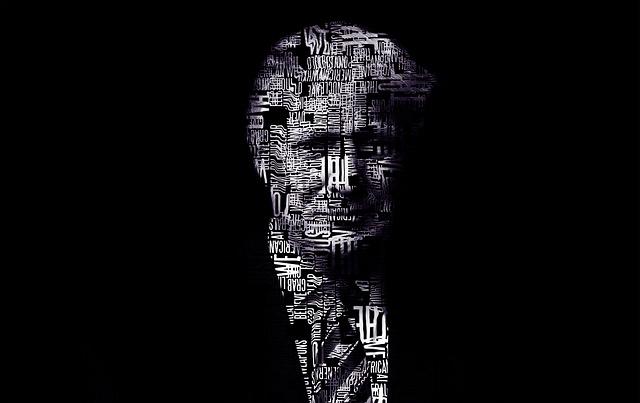
Renaming the US Institute of Peace After Trump Triggers Political Firestorm and Global Concern
The recent decision to rename the United States Institute of Peace (USIP) in honor of former President Donald Trump has set off a fierce clash in Washington and around the world. First reported by outlets including the BBC, the move effectively reshapes the public identity of a taxpayer-funded institution long regarded as a rare nonpartisan space for conflict resolution, diplomacy, and peacebuilding.
Supporters frame the rebranding as overdue recognition of Trump’s disruptive approach to foreign policy, citing his administration’s role in the Abraham Accords and hard‑line stance toward NATO allies and adversaries alike. Opponents, however, warn that attaching such a divisive political brand to a congressionally created peace institute risks politicizing one of the few American institutions designed to operate above day‑to‑day partisan conflict.
The uproar reflects a deeper fight over how recent U.S. history should be remembered—and who gets to define the nation’s symbols of peace, soft power, and global responsibility.
Mounting Outrage: Bipartisan Resistance and Public Backlash
Opposition to the renaming has formed with unusual speed and breadth. Lawmakers from both major parties condemned the move within hours, describing it as an effort to convert a nonpartisan body into a monument to one presidency. Senior figures in both the House and Senate have already begun drafting legislation to roll back the decision.
Former American diplomats argue that the change could undercut decades of work positioning the US Institute of Peace as an honest broker in volatile regions. They warn that negotiators in civil wars and political crises depend on the perception that USIP is guided by professional standards and international law, not by loyalty to any administration or political faction.
Retired military officers and long‑time peace activists—often at odds on other policy questions—have issued joint statements urging the institute’s board to reconsider. They argue that associating the US Institute of Peace so closely with Trump, whose tenure was marked by polarizing rhetoric at home and abroad, threatens to tarnish the credibility of an institution built on careful, consensus-based engagement.
Critics highlight a stark mismatch between USIP’s formal mandate—conflict prevention, mediation, and post-war reconciliation—and Trump’s confrontational style, which often fueled sharp domestic polarization and rhetorical clashes with allies and adversaries alike.
Public Mobilization: Petitions, Protests, and Digital Campaigns
Outside Washington’s power circles, the renaming has fueled a surge of civic action:
- Online petitions gathering hundreds of thousands of signatures call for immediate reversal.
- Student groups on university campuses have organized demonstrations, teach‑ins, and panel discussions on the politicization of peacebuilding.
- Social media campaigns, including coordinated hashtag movements, have pressured the institute’s board and members of Congress to intervene.
Civil society coalitions—ranging from human rights organizations to interfaith networks—describe the change as part of a broader pattern of attempting to rewrite recent history and reward political loyalty over long‑term service to peace and diplomacy. They point to alternative candidates they believe would better embody the institute’s mission: career peace negotiators, human rights defenders, and multilateral diplomats who have worked across party lines.
Among the most frequently cited risks are:
- Loss of institutional neutrality in sensitive conflict mediation and peace talks.
- Damage to US soft power and the country’s reputation as a fair and independent mediator.
- Dangerous precedent that could normalize partisan renamings of major public institutions.
| Stakeholder | Reaction |
|---|---|
| Bipartisan lawmakers | Drafting legislation to reverse the renaming |
| Former diplomats | Warning that US credibility as a neutral mediator is at risk |
| Peace NGOs | Coordinating protest campaigns and public statements |
| General public | Launching petitions and sustained online backlash |
Congress Probes Threats to Neutrality and US Soft Power
On Capitol Hill, the controversy has quickly become a focal point in hearings on American foreign policy and institutional integrity. Members of both parties have pressed administration officials on whether tying the US Institute of Peace to a single, contentious political figure is compatible with its nonpartisan mandate established by Congress.
Lawmakers caution that what began as an act of symbolic recognition could transform a technocratic institution into a new arena for culture‑war battles—potentially influencing leadership appointments, research priorities, field projects, and grant distributions. Several cited the institute’s statutory role as an independent convener and mediator, asking whether USIP staff can still function as neutral brokers when the organization’s very name appears to endorse one particular presidency.
Soft Power at Stake: How Allies and Adversaries May React
Foreign affairs committees have zeroed in on the repercussions for American soft power, especially in fragile states and conflict zones where perception often outweighs formal authority. US-funded peacebuilding, democracy support, and reconciliation programs depend heavily on being seen as impartial.
Career diplomats and former special envoys have testified that key partners may now hesitate to collaborate closely with the US Institute of Peace, worrying that association with the renamed body could be read as political alignment rather than professional cooperation. Those concerns are particularly acute in countries where Trump’s policies were controversial or where domestic actors are sharply divided over his legacy.
Among the issues flagged by lawmakers:
- Perception abroad: Allies might view the renaming as a partisan gesture rather than a principled honor.
- Field access: Mediators could encounter resistance or suspicion from opposition groups, armed factions, or governments wary of perceived bias.
- Funding leverage: International donor consortia may shift resources toward more clearly independent multilateral platforms.
| Concern | Impact on U.S. Soft Power |
|---|---|
| Partisan branding | Undermines trust in US‑led mediation and peacebuilding |
| Questioned neutrality | Weakens US influence during sensitive political transitions |
| Symbolic precedent | Encourages further politicization of other national institutions |
Policy Analysts Warn of Long-Term Damage to US Peace Efforts
Policy experts across ideological lines stress that rebranding the country’s flagship peacebuilding institute around one political leader risks unraveling years of careful, often quiet work in mediation, post-conflict justice, and governance reform.
For decades, the US Institute of Peace has leveraged a reputation for institutional neutrality to secure invitations into spaces where few outsiders are welcome: insurgent strongholds, rebel negotiation tents, and closed-door talks between warring elites. Analysts fear that once the institution is overtly associated with a single presidency, that access could narrow dramatically.
In a world where conflict is proliferating—from the Sahel to Eastern Europe to the Indo‑Pacific—diminished trust in US mediation tools could have wide-ranging consequences. According to recent UN data, the number of people living in conflict-affected areas has reached historic highs, making credible mediators more essential than ever.
Potential On-the-Ground Consequences
Veteran negotiators and field practitioners sketch out a series of likely ripple effects:
- Reduced trust among local partners: Civil society groups and community leaders may fear that working with a Trump‑branded institution will label them as aligned with one side in U.S. politics.
- Hesitation among mediators: Experienced facilitators could avoid US-funded platforms in negotiations where accusations of bias can derail fragile ceasefires or inclusive political deals.
- Strategic gains for rivals: China, Russia, and regional powers may seize the opportunity to present their own diplomatic initiatives as more neutral or less ideologically driven.
| Key Concern | Likely Impact |
|---|---|
| Neutrality in talks | Weaker leverage and fewer invitations to broker peace accords |
| Reputation of U.S. mediation | Greater reliance on alternative mediators such as regional organizations or rival powers |
| Long-term soft power | Gradual erosion of America’s moral and diplomatic authority in major crises |
Advocacy Groups Push Congress to Safeguard Nonpartisan Peacebuilding
In response to the escalating controversy, a broad coalition of advocacy organizations is urging Congress to step in—not only to reconsider the Trump renaming, but also to erect stronger guardrails around similar institutions in the future.
Networks of retired ambassadors, conflict‑resolution professionals, veterans’ groups, faith-based organizations, and academic centers have sent coordinated letters to key committees. Their core message: renaming long‑standing, publicly funded peace institutions after current or recently departed political figures risks corroding public confidence in their impartiality.
They argue for new, durable rules governing commemorative naming, including:
- Waiting periods before honoring public officials, allowing their legacies to be evaluated with historical distance.
- Clear criteria emphasizing cross‑party respect, demonstrated service to peace, and alignment with an institution’s mission.
- Stronger oversight mechanisms to prevent short‑term political majorities from using institutional names for partisan signaling.
Proposed “Neutrality Safeguards” for Peace Institutions
Policy advocates are circulating draft legislative language that would write explicit neutrality protections into the founding charters of US peace and democracy-building agencies. Their proposals focus on:
- Transparency in how renaming initiatives originate, including disclosure of sponsors, lobbying efforts, and rationale.
- Independent review by bipartisan ethics bodies and historical advisory panels before any formal consideration by Congress.
- Public consultation through comment periods, expert hearings, and engagement with affected communities at home and abroad.
- Separation of powers and messaging to ensure that program oversight, research agendas, and field operations remain insulated from partisan branding.
| Key Demand | Proposed Safeguard |
|---|---|
| Protect neutrality | Prohibit overtly partisan titles for core peace and democracy agencies |
| Stabilize naming rules | Require supermajority votes in Congress for future renamings |
| Maintain credibility | Mandate independent audits of political influence and reputational risk |
Renaming the US Institute of Peace: What the Debate Reveals
The uproar surrounding the decision to rename the US Institute of Peace after Donald Trump has quickly evolved from a seemingly bureaucratic change into a test case for how the United States handles presidential legacy, institutional independence, and the politics of memory.
Supporters view the move as a symbolic acknowledgment of Trump’s impact on U.S. foreign policy, from unconventional summitry with North Korea to revised Middle East alignments. Critics see something very different: an attempt to imprint a sharply divisive brand onto an institution meant to embody principles that transcend any one leader—impartiality, long-term engagement, and respect for international norms.
As scholars, legislators, diplomats, advocacy groups, and ordinary citizens continue to weigh in, one conclusion is already clear: the future identity of the US Institute of Peace will be contested territory for some time to come. What might have remained an internal naming decision has instead opened up a broader argument over:
- How and when the United States chooses to honor its recent leaders.
- Where the line should be drawn between commemoration and politicization.
- How much political branding America’s peace and soft power institutions can absorb before their global credibility is compromised.
The outcome of this debate—whether the new name stands, is modified, or is ultimately reversed—will shape not only the institute’s own trajectory, but also the wider norms that govern how the United States presents its symbols of peace to the world.