

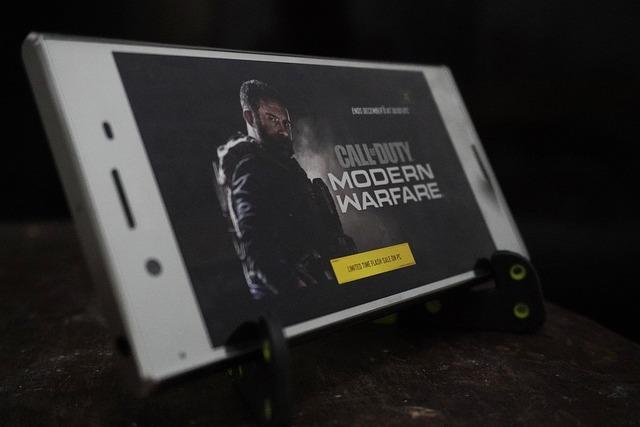
When the original Call of Duty hit shelves in 2003, it was marketed as pure spectacle: a gripping, cinematic tour through the chaos of the front lines. Twenty years on, the series has evolved into something far more consequential than a record‑breaking shooter. It now sits at the heart of the modern military‑entertainment complex – an intricate network connecting AAA game studios, weapons manufacturers and state institutions – and functions as both a cultural touchstone and a powerful communication channel. This article explores how Call of Duty operates as soft military propaganda, the financial and political entanglements behind its “authentic” combat, and the regulatory steps needed to make these influences visible.
From game night to recruitment pipeline: Call of Duty as modern military propaganda
Across PCs, consoles and smartphones, Call of Duty dominates the playtime of millions. Its meticulous weapon models, jargon‑laden dialogue and rotating cast of special operations heroes do more than provide escapism; they present a stylised, tightly choreographed vision of forever war that feels exhilarating and low‑risk. In this environment, enlisting can seem like a logical extension of on‑screen action rather than a life‑altering decision.
Armed forces have systematically capitalised on this cultural footprint. Since the mid‑2010s, US and European militaries have ramped up their presence at esports tournaments, cultivated partnerships with high‑profile streamers and placed targeted recruitment ads on Twitch, YouTube and TikTok – platforms where Call of Duty is often among the most watched titles. The pitch is usually subtle: the reflexes, teamwork and dedication that win matches are framed as transferable to real‑world military careers.
Critics argue that weaving this messaging into leisure spaces smooths over the realities of combat and military life, recasting enlistment as another “rank up” in a progression system. Rather than explicit slogans, players encounter a continuous flow of cues inside a broader collaboration ecosystem where studios chase realism and the armed forces gain a persuasive cultural stage. In this environment, audiences are introduced to an idealised, carefully edited version of soldiering through:
- Scripted campaigns that emphasise heroism, camaraderie and tactical brilliance while largely sidelining long‑term physical and psychological harm.
- Competitive multiplayer where death is reversible, civilian life is mostly absent, and complex politics are reduced to colour‑coded teams.
- Official tournaments and leagues featuring uniformed recruiters, military‑sponsored booths and branded mini‑games alongside pro players.
- Short‑form clips and highlight reels in which in‑game “epic moments” are cut together with real training exercises or recruitment footage.
| Channel | Military Objective |
|---|---|
| Esports events | Lead generation and contact capture |
| Streamer collaborations | Softening institutional image and boosting relatability |
| In‑game ads and promos | Highly targeted outreach to specific demographics |
This strategy appears to be working. A 2022 survey by the UK’s defence ministry, for example, found that over half of 16–24‑year‑olds who expressed interest in military careers cited gaming or esports as a major influence, highlighting how entertainment spaces double as informal recruitment funnels.
Inside the military‑entertainment complex: how defence contractors and studios trade access and influence
Behind Call of Duty’s “authentic” hardware and battlefields lies a dense mesh of commercial, political and strategic relationships. What is often framed publicly as a straightforward licensing deal – permission to depict a specific rifle, drone or fighter jet – frequently sits atop a broader exchange of resources, access and narrative influence.
Major defence contractors and military bodies provide “technical consultancy” that extends well beyond basic accuracy checks. These arrangements can include guided tours of active bases, opportunities to observe training exercises, access to research that hovers near classified territory, and curated briefings by public‑affairs or intelligence officers. Studios, in turn, use this privileged access to fine‑tune weapon physics, map design, soundscapes and even the choreography of special operations raids.
- Joint marketing pushes where new game launches are timed alongside recruitment drives or major defence expos.
- Consultancy contracts formally labelled as “research” or “technical support” rather than sponsorship, obscuring the flow of money and influence.
- Equipment showcases in which cutting‑edge drones, vehicles or optics feature prominently as aspirational “gear”, effectively acting as product placement.
| Actor | What They Provide | What They Gain |
|---|---|---|
| Game studio | High‑impact narratives, cinematic visuals, global reach | Funding, logistical support, exclusive reference material |
| Defence contractor | Hardware, technical expertise, locations and access | Brand burnishing, public normalisation of their products |
| State agencies | Permissions, clearances, occasional script or asset input | Recruitment channels, agenda setting, favourable framing |
These relationships shape much more than cosmetic details. They can influence which conflicts and theatres are depicted, who is framed as a legitimate combatant, and which alliances are portrayed as natural or unquestionable. Researchers have documented instances where game release schedules and narrative beats have quietly aligned with ongoing operations or diplomatic priorities, helping to frame real‑world interventions as familiar, even inevitable, scenarios.
In this sense, blockbuster shooters begin to function like a diffuse lobbying campaign. Instead of policy papers and press conferences, high‑fidelity graphics and emotionally charged missions carry implicit arguments about whose security matters, which tools are necessary to defend it, and what kinds of perpetual military presence are acceptable. For players, distinguishing where entertainment ends and strategic messaging begins becomes increasingly difficult; for policymakers, the cultural feedback from these games can subtly narrow the perceived range of legitimate foreign‑policy options.
Virtual wars, permanent conflict: how gaming normalises endless operations
Modern online shooters operate as endless services rather than finite products. New “seasons” drop every few months, bringing fresh weapon blueprints, operators and battlegrounds that mirror shifting real‑world tensions. In this format, war is not framed as a discrete event with a beginning and an end, but as a rolling spectacle that restarts with each update, reset and respawn.
Within Call of Duty’s ecosystems, story campaigns and live multiplayer bleed into each other. Fictionalised versions of actual flashpoints – oil facilities, urban districts, mountain passes, shipping lanes – reappear as maps to be mastered, not tragedies to be understood. Complex histories are compressed into clear objectives and clean HUD markers, and the consequences of conflict are reduced to a scoreboard.
- Always‑on patches and updates mirror the idea of continuous deployments and rotating theatres of operation.
- Limited‑time events recast specific battles or factions as seasonal “content drops” to keep players engaged.
- Ranked ladders and K/D ratios encourage players to treat killing as an optimisable metric of personal skill.
- Cosmetic skins and charms turn lethal hardware into collectible fashion items, abstracting away its real‑world purpose.
| Game Mechanic | Implied Message |
|---|---|
| Endless respawns | Death is reversible; war leaves no permanent marks. |
| Bonuses for kill‑streaks | Escalating violence is efficient and rewarding. |
| Rotating hotspots and warzones | Fresh conflicts are simply new scenarios to enjoy. |
| Real‑world branded weapons | Military hardware is familiar, aspirational and desirable. |
Over time, this design encourages a subtle but significant mental shift. War becomes part of the ambient background of everyday life: something distant professionals manage while the rest of us consume stylised versions as entertainment. For younger players especially, spending thousands of hours in virtual arenas where conflict never truly concludes, only restarts, can normalise a worldview in which permanent military readiness and overseas operations feel routine rather than exceptional.
Governments and defence companies recognise this cultural terrain. In recent years they have supported in‑game events, co‑branded tournaments and “authenticity” initiatives that align their messaging with the emotional highs of competitive play. The result is a feedback loop: games draw on existing geopolitical narratives to appear realistic, and those same narratives are then reinforced by the emotional investment and repetition that live‑service titles demand.
How regulators can expose covert military influence in games
Current regulation lags far behind the sophistication of the military‑entertainment complex. While product placement in film and television is relatively well policed in many jurisdictions, equivalent safeguards for interactive media are still patchy or non‑existent. To address this gap, regulators need clear, enforceable rules that make military involvement in game development visible, traceable and contestable.
A core starting point is transparency. Publishers should be legally required to disclose any direct or indirect contribution from defence ministries, armed forces or weapons manufacturers. That includes funding, script notes, access to secure facilities, provision of proprietary assets and any form of review or veto over narrative content. These disclosures should be clearly displayed in‑game, on digital storefronts and in marketing materials, not buried in fine‑print legal text.
Advertising and election regulators can treat undisclosed military partnerships in entertainment products as a form of covert political communication. Just as hidden influencer advertising now attracts sanctions, games that function as stealth recruitment tools or reputation‑laundering vehicles could be subject to fines, mandatory age restrictions or temporary removal from major platforms.
Concrete steps might include:
- Mandatory transparency reports detailing all state or military collaborations, published annually and accessible to the public.
- Standardised on‑screen notices at launch and in credits when storylines, assets or game mechanics are shaped with input from armed forces or defence contractors.
- Independent content review panels tasked with examining youth‑oriented titles for recruitment or propaganda techniques, including gamified calls to action.
- Sanctions and delisting procedures for companies that conceal, misstate or repeatedly fail to disclose their military connections.
| Action | Regulator Role |
|---|---|
| Disclosure rules | Define and enforce binding transparency requirements |
| Platform enforcement | Require proof of compliance for store listing and promotion |
| Independent audits | Review contracts, funding flows and consultancy arrangements |
| Sanctions | Impose fines, age‑gating, or temporary suspension of non‑compliant titles |
Because the games industry is fundamentally transnational, these measures also demand cross‑border coordination. Co‑regulation models – where public watchdogs set minimum international standards and major platforms like Steam, PlayStation, Xbox and mobile app stores enforce them as conditions of access – can help prevent “regulatory arbitrage”, where publishers relocate or route deals through countries with weaker oversight.
Conclusion: Call of Duty and the future of the military‑entertainment complex
As defence ministries and weapons manufacturers deepen their engagement with interactive media, Call of Duty has become both a showcase and a warning. Its immersive firefights, glossy depictions of advanced hardware and emotionally charged narratives do more than keep players entertained; they help define what war looks and feels like to a generation raised on digital battlefields.
For critics, this convergence raises pressing ethical questions about consent and manipulation in a media ecosystem where the boundaries between play, propaganda and recruitment are increasingly porous. Supporters counter that the franchise is simply the latest expression of a long‑standing relationship between popular culture, state power and public imagination.
What is no longer in doubt is that the military‑entertainment complex has moved from the margins of gaming to its centre. It is embedded in game mechanics, art direction, funding structures and marketing strategies. As new conflicts emerge and technologies such as VR, AR and AI reshape how we experience virtual worlds, the struggle over who authors the stories we tell about war – and in whose interests those stories are told – will only intensify, one blockbuster release at a time.