


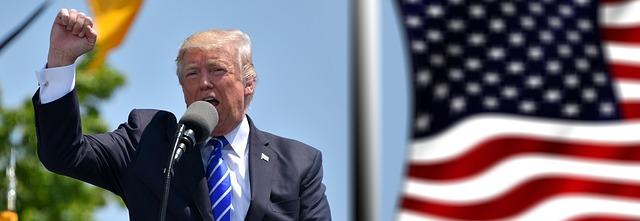
As the United States navigates overlapping challenges overseas and within its own borders, Donald Trump’s tenure in the White House has pushed the idea of a “wartime presidency” into unfamiliar territory. American troops and assets remain involved in a web of regional conflicts and deterrence missions, and global tensions—from Eastern Europe to the South China Sea—continue to simmer. Yet these pressures have unfolded under a president who favors instinct over protocol, confrontation over quiet diplomacy, and spectacle over process.
Instead of the familiar model of crisis leadership built around discipline, coalition‑building, and behind‑the‑scenes bargaining, Trump has embraced a more personal, combative approach that blurs the line between campaign mode and governing. This reimagined presidency has shaped foreign policy, redefined relationships with allies and adversaries, and upended long‑standing assumptions about how a commander in chief behaves when the nation faces war‑like conditions and global crisis.
A Wartime Presidency Reframed: How Trump’s Language Turns Politics into Combat
From televised addresses to late‑night social media posts, Donald Trump has consistently treated political conflict as a form of combat, framing disagreements not as policy disputes but as high‑stakes clashes over survival and dominance. Critics, reporters, opposition lawmakers, and even oversight institutions are frequently depicted as foes to be crushed rather than interlocutors to be persuaded.
Where earlier presidents often leaned on rhetoric of unity, sacrifice, and shared responsibility in times of crisis, Trump has relied on the vocabulary of winners and losers, constantly assigning blame and credit in public view. This shift has transformed the look and sound of the presidency:
- Institutions cast as roadblocks instead of stabilizing guardrails.
- Allies and rivals divided into visible “teams,” praised or shamed in real time.
- Policy debates reframed as personal contests of strength and endurance.
- Media coverage treated as a narrative battleground to dominate, not inform.
| Presidential Style | Typical Language | Intended Signal |
|---|---|---|
| Traditional | “Our partners,” “collective effort,” “shared duty” | Emphasis on cooperation and stability |
| Trump-era | “Fight,” “total mess,” “enemy,” “loser” | Strength defined through confrontation |
In this environment, the White House communicates in black‑and‑white terms—total success versus utter failure, loyalty versus treachery—squeezing out the ambiguity and quiet compromise that once marked crisis management. Cabinet officials, campaign strategists, and foreign counterparts are swept into a communications ecosystem where sharp soundbites and viral clips often eclipse technical briefings or carefully worded policy statements.
As a result, victory is measured less by the details of legislation or diplomatic text than by control of the storyline. The modern presidency begins to resemble a nonstop war room, in which each news cycle is another skirmish and each press conference, rally, or social media volley is a new front in an ongoing campaign.
Inside Trump’s Crisis Room: Instinct, Improvisation, and Split‑Second Calls
Behind closed doors, advisers describe a decision‑making process that mirrors what the public sees. Rather than moving steadily through thick briefing binders and step‑by‑step recommendations, Trump often bounces from classified maps to cable news segments, and from polling data to anecdotes offered by trusted aides and family members.
The process is less a linear chain of analysis than a rapid‑fire exchange of impressions. Intelligence assessments, military options, and diplomatic cables compete for attention with live television and social media reactions. A single striking phrase, a graphic chart, or a pointed comment from a loyalist can redirect a meeting that is already deep into discussions of sanctions, troop movements, or emergency authorities.
Officials preparing for these sessions have adjusted by reengineering how information reaches the president:
- Highly visual briefings that rely on maps, charts, and short captions rather than long text.
- Condensed option menus that present choices in blunt political and military terms.
- Continuous media tracking to gauge how a strike, speech, or executive action might play on major networks and online.
| Factor | Traditional Approach | Trump-Era Approach |
|---|---|---|
| Primary Input | Classified reports and interagency analysis | Intelligence + live media + polling snapshots |
| Decision Style | Structured review through formal channels | Instinct‑driven choices shaped by reaction |
| Timing | Days or weeks of deliberation | Hours—or at times minutes—between briefing and decision |
The resulting “wartime” stance blends campaign tactics with national security decisions. Moves that once required extensive interagency vetting—such as targeted strikes, emergency declarations, or shifts in alliance commitments—are compressed into shorter, more improvisational cycles. The boundary between strategic planning and political theater becomes porous, leaving allies and adversaries alike uncertain whether a given statement signals enduring policy or a fleeting message decision.
When Loyalty Outweighs Expertise: Democratic Norms Under Strain
As presidential power revolves more around one individual’s judgment than institutional processes, the internal checks that once stabilized U.S. governance can begin to weaken. Career professionals in the civil service, military, and intelligence community—long viewed as a source of continuity in turbulent times—may find their assessments dismissed in favor of advisers selected chiefly for personal loyalty.
Over time, this shift can turn the executive branch away from deliberation and toward affirmation. Internal disagreements that would typically sharpen policy now risk being interpreted as disloyalty. The result is a self‑reinforcing echo chamber, where senior officials are expected to defend the president first and the broader public interest second, if at all.
The effects are not confined to bureaucratic turf fights. When skepticism is equated with betrayal, the core norms that sustain independent courts, a free press, and nonpartisan law enforcement can be eroded—especially when campaign‑style rhetoric bleeds into the language of governance. Warning signs of this erosion include:
- Regular verbal attacks on inspectors general, judges, and intelligence professionals who raise concerns.
- Removal or sidelining of veteran experts in favor of politically dependable appointees in critical national security and oversight roles.
- Major policy shifts announced via social media before agencies can formally review or implement them.
- Pressure on institutions to validate preferred narratives, even when evidence points in a different direction.
| Norm | Institutional Role | Loyalty-Driven Risk |
|---|---|---|
| Independent expertise | Provides fact‑based, nonpartisan guidance | Advice is filtered, sidelined, or discarded |
| Rule‑bound process | Ensures consistency, transparency, and review | Decisions made ad hoc, anchored in personality |
| Accountability norms | Places limits on presidential power | Critics rebranded as “enemies,” chilling oversight |
These patterns matter beyond one administration. Once institutional norms are weakened—whether through personnel choices, rhetorical attacks, or procedural shortcuts—it becomes easier for future leaders of any party to push boundaries further, citing precedent in moments of crisis or conflict.
Rebuilding Guardrails: How Policymakers and Citizens Can Reinforce Limits on Presidential Power
Even without rewriting the Constitution, lawmakers still hold significant tools to narrow the unilateral power any president can wield during wartime conditions or national emergencies. The period since 2020 has sparked renewed debate around emergency authorities, surveillance powers, and domestic deployment of federal forces—areas where existing law often grants wide discretion.
Congress and state legislatures can respond by:
- Tightening emergency statutes with clearer definitions and narrower triggers.
- Adding automatic time limits so that extraordinary powers expire unless renewed by lawmakers.
- Expanding fast‑track judicial review when presidents invoke sweeping authorities affecting civil liberties.
- Strengthening whistleblower protections so professionals can report abuses without fear of retaliation.
Agency leaders and career officials can update internal rules—such as ethics guidelines, decision logs, and documentation requirements—to make it harder for informal pressure to override professional standards. These steps rely primarily on political will and clear statutory language, not on far‑reaching constitutional amendments.
Citizens, in turn, remain the decisive check on a presidency that fuses wartime rhetoric with a personalized, media‑driven style of rule. Voters can influence not just who occupies the Oval Office, but how every level of government responds to potential overreach:
- Supporting reforms that mandate public release, to the extent possible, of emergency directives and the legal rationales behind them.
- Pressuring legislators to maintain robust funding for independent inspectors general, nonpartisan election agencies, and neutral law‑enforcement watchdogs.
- Monitoring and remembering votes on transparency, surveillance, and accountability measures—and factoring those records into decisions at the ballot box.
- Backing strategic litigation designed to test the limits of executive authority and clarify constitutional boundaries for future administrations.
| Actor | Key Tool | Immediate Goal |
|---|---|---|
| Congress | Revised emergency and war‑powers laws | Restrict unilateral presidential actions |
| States | Election security and certification safeguards | Protect the integrity of vote counting |
| Courts | Accelerated constitutional review | Draw clear legal red lines in crises |
| Voters | Electoral accountability | Reward candidates who pledge to uphold the rule of law |
Conclusion: Trump’s Wartime Presidency and the Collision of Spectacle and Governance
As the country grapples with global instability, public‑health threats, and intense political polarization, Trump’s wartime presidency has become a live experiment in how far the office can stretch. His approach has challenged deep‑seated expectations about accountability, constitutional limits, and the cultural role of the presidency in times of collective danger.
Whether this style is ultimately remembered as a necessary shake‑up or a destabilizing turn will depend not only on the outcomes of specific crises, but also on how historians, legal scholars, and future leaders interpret this period. What is already clear is that the Trump era has fused televised spectacle with the exercise of state power in ways that will shape debates over presidential authority for years to come.
In a nation confronting both visible adversaries abroad and less tangible threats at home—from pandemics to cyberattacks—the lessons drawn from this chapter will influence how Americans think about the balance between strong leadership and strong institutions the next time a president claims the mantle of a “wartime” leader.