

Muslim communities across the United States are already gearing up for Eid al-Fitr 2026, the joyous celebration that concludes the month-long fast of Ramadan and stands as one of the most significant observances on the Islamic calendar. From early-morning prayers to evening family feasts, Eid in America now showcases a dynamic fusion of long-held religious traditions and the diverse cultures that make up the U.S. Muslim population. As Muslim demographics grow and become more visible, the festival is increasingly recognized not only in major metropolitan areas but also in smaller cities and suburbs.
In 2026, conversations are centering on three key questions: the confirmed date of Eid al-Fitr in the United States, how various communities and institutions will observe it, and whether schools and workplaces will treat it as an official holiday. With more school districts debating closures, municipalities sponsoring public festivities, and community groups organizing large-scale Eid prayers, the holiday is steadily entering the American mainstream.
Below is a detailed guide to Eid al-Fitr 2026 in the United States: expected dates, moon sighting details, how American Muslims celebrate, changes in school policies, and travel tips—including how IndianEagle is highlighting the occasion for Indian and South Asian travelers and diaspora families who plan to celebrate Eid across the country.
Eid al-Fitr 2026 in the United States: Date, Moon Sighting, and Key Details
Based on current astronomical forecasts, Eid al-Fitr in 2026 is expected to fall on Friday, March 20 in most parts of the United States, marking the end of 29 or 30 days of fasting in Ramadan. The precise day, however, will be confirmed only after local moon sighting reports are assessed according to the methods used by different Islamic authorities.
National bodies such as ISNA, regional fiqh councils, and local mosque boards generally follow one of two approaches:
- Direct visual sighting of the new crescent moon (with the naked eye or optical instruments)
- Pre-determined astronomical calculations, endorsed and interpreted by qualified scholars
Because of these varying criteria, communities in states such as New York, Texas, California, Illinois, and New Jersey may not always observe Eid on the same day, although a broad agreement around March 20, 2026 is widely expected.
Projected timeline for Eid al-Fitr 2026 in the U.S.:
- Expected sighting date: Evening of Thursday, March 19, 2026
- Likely Eid prayer day: Friday, March 20, 2026 (pending official announcements)
- Usual prayer windows: From early morning until late morning, often in multiple shifts to manage crowd size
- Geographical differences: Small variations possible between East Coast, Central, and West Coast regions
| US City | Moon Visibility Outlook | Most Likely Eid Date |
|---|---|---|
| New York City | Favorable after sunset | March 20, 2026 |
| Houston | Very favorable skies | March 20, 2026 |
| Chicago | Conditional on cloud cover | March 20, 2026 |
| Los Angeles | Clear horizon expected | March 20, 2026 |
For those planning around work, school, or travel, the practical scenario is that mosques across the U.S. will finalize and announce the Eid date by late evening on March 19. Imams and community leaders are encouraging congregants to stay updated via masjid websites, WhatsApp groups, mobile apps, and social media posts.
In recent years, many North American communities have coordinated their moon sighting processes more closely, which has helped reduce uncertainty for families making decisions about school attendance, Eid prayer logistics, and community celebrations. This coordinated approach is particularly helpful for travelers flying through major U.S. hubs, who can expect peak travel demand between March 19 and March 22 as Muslims gather for one of the most prominent religious events on the U.S. calendar.
How Eid al-Fitr Is Celebrated in the U.S.: From Mosque Prayers to Public Festivals
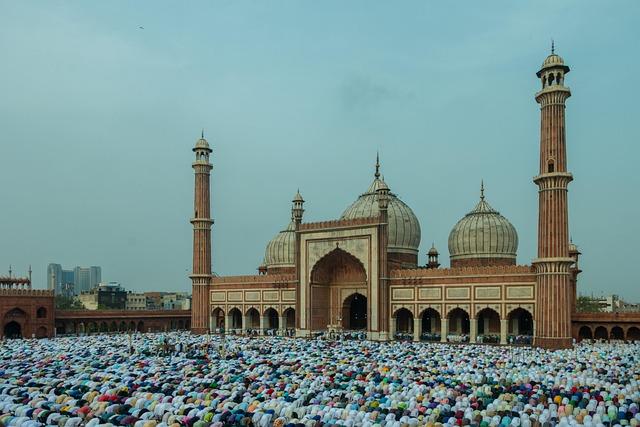
On the morning of Eid al-Fitr 2026, Muslim households across America will begin the day before sunrise, getting ready for special congregational prayers at mosques and Islamic centers. In many metros, parking lots overflow, sports arenas are rented, and public parks are transformed into huge prayer sites to accommodate tens of thousands of worshippers.
Common elements you’ll find at Eid prayer venues across the country include:
- Takbeer recitations resounding from early morning, as worshippers gather and greet one another
- Photo and family corners arranged by Islamic centers for Eid portraits and community snapshots
- Charity stations and Zakat al-Fitr counters to support local food pantries and social service organizations
- Khutbahs (sermons) offered in multiple languages, serving diverse communities from South Asia, the Middle East, Africa, and beyond, as well as second- and third-generation American Muslims
| City | Prayer Venue | Unique Tradition |
|---|---|---|
| Dearborn | Ford Woods Park | Mass outdoor prayer and traditional Arab dessert stalls |
| New York City | Prospect Park | Interfaith representatives joining to share Eid greetings |
| Houston | NRG-area halls | Vibrant bazaars with South Asian, Arab, and African cuisines |
Once the morning prayers conclude, the celebration typically shifts to neighborhood gatherings, family visits, and city-supported festivals. In several parts of New Jersey, California, Minnesota, and other states with sizeable Muslim populations, local governments are increasingly partnering with community organizations to host public Eid programs.
These often feature:
- Street festivals in Muslim-majority or Muslim-dense neighborhoods, with temporary road closures and police escorts
- Eid carnivals hosted on school grounds, university campuses, and community centers, highlighting youth participation
- Official proclamations and greetings from mayors and city councils, recognizing Eid as a key cultural event
- Educational zones with storytelling, calligraphy, and art, giving non-Muslim visitors a chance to learn about the meaning and customs of Eid
Henna booths, halal food trucks, children’s rides, live nasheed performances, and cultural showcases from Pakistani, Indian, Arab, Turkish, Somali, Bosnian, and other communities demonstrate how Eid has become an integral part of the evolving American cultural mosaic. Recent surveys indicate that more than one in four Americans personally knows someone who observes Ramadan or Eid, underscoring the festival’s growing visibility nationwide.
Will Schools Be Closed for Eid al-Fitr 2026? How U.S. Districts Are Adapting
As Eid al-Fitr 2026 approaches, school districts across the country are updating their academic calendars to respond to changing demographics and calls for inclusive holiday policies. In states with sizable Muslim populations, boards of education are increasingly recognizing Eid al-Fitr either as an official day off or as a non-instructional day.
Districts in parts of New York, New Jersey, Michigan, Illinois, Texas, and California are at the forefront of this shift. Their approaches include:
- Declaring Eid al-Fitr an official school holiday, with full closure for students and staff
- Scheduling teacher professional development or planning days to coincide with Eid, ensuring students are off
- Significantly expanding excused absence policies, instructing teachers not to schedule tests or important activities that day
At the same time, there is no single policy nationwide. Many districts in the South and in more rural sections of the Midwest still rely on traditional holiday calendars centered around Christian and federal observances, leaving Muslim families to request individual accommodations.
Parent associations, civil rights groups, and interfaith coalitions, however, are steadily advocating for broader recognition. Data from large districts show that Muslim student enrollment has been climbing, especially in urban and inner-ring suburban schools, prompting administrators to reconsider how holidays are structured.
In 2026, families can expect a range of approaches, such as:
- Full district-wide closure in cities and suburbs with significant Muslim student populations
- Strategic teacher in-service days aligning with the projected Eid date
- Excused absences with flexible deadlines and make-up work opportunities
- No official calendar change, but strong recommendations to staff to be mindful of Muslim students observing the holiday
| Region | Typical 2026 Approach | Note |
|---|---|---|
| Northeast (e.g., NYC, NJ suburbs) | Official school holiday or closure | Adopted after sustained advocacy by community groups |
| Midwest metros (e.g., Detroit, Chicago) | Combination of closures and excused absences | High proportion of Muslim students shaping policy |
| South & Midwest rural | Regular school day | Case-by-case excused absence requests |
| West Coast (e.g., Bay Area, Seattle) | Growing trend toward one-day Eid holidays | Driven by diversity, equity, and inclusion commitments |
Parents planning for Eid al-Fitr 2026 should monitor district announcements, as some boards finalize calendars a year or more in advance, while others adjust closer to the date based on state guidelines and community feedback.
Travel Tips for Eid in America 2026: Top Cities, Events, and Flight Deals
For many families in the U.S. and abroad, Eid al-Fitr 2026 is an opportunity to combine worship, reunion, and exploration. Muslim travelers—especially from Indian, Pakistani, Bangladeshi, and broader South Asian backgrounds—are paying close attention to where celebrations will be most accessible, family-friendly, and memorable.
Major centers such as New York City, Chicago, Houston, and the San Francisco Bay Area continue to be top choices thanks to their large congregational prayers, vibrant halal dining scenes, and active diaspora-led cultural organizations. At the same time, emerging hubs like Dallas, Atlanta, and Seattle are attracting younger travelers and students with late-night suhoor cafes, pop-up markets, and community-run Eid street fairs.
For Indian-origin and South Asian diaspora families flying in from abroad or traveling domestically, factors such as proximity to masjids, ease of airport transfers, and access to short-term rentals close to prayer venues are becoming central to travel planning.
Consider these practical travel tips for Eid al-Fitr 2026 in the United States:
- Book flexible fares around the anticipated moon-sighting period so you can adjust travel dates if Eid is confirmed a day earlier or later.
- Target midweek arrivals at airports like JFK (New York), ORD (Chicago), IAH (Houston), and SFO (San Francisco) to avoid peak weekend surcharges.
- Watch for limited-time offers and Eid-themed promotions from both full-service and low-cost carriers on U.S. domestic and transatlantic/transpacific routes.
- Plan dual-city itineraries, such as pairing New York with Washington D.C. or Dallas with Houston, to experience different regional flavors of Eid prayers and cultural festivities.
- Use airline loyalty programs and credit card miles to upgrade or reduce the cost of long-haul flights from India and other South Asian countries that connect through major U.S. gateways.
| City | Key 2026 Highlights | Flight Deal Window |
|---|---|---|
| New York City | Massive outdoor salah and multicultural Eid fairs in Queens and Brooklyn | Jan–Feb 2026 |
| Chicago | Lakefront gatherings, community picnics, and youth-run cultural programs | Dec 2025–Feb 2026 |
| Houston | Masjid-based carnivals, Indo-Pak street food, and family funfairs | Jan–Mar 2026 |
| San Francisco Bay Area | Large Eid prayers, tech-community Eid meetups, and family-friendly festivals | Jan–Feb 2026 |
*Approximate periods when airlines have historically released the most competitive advance fares.
As more U.S. cities actively recognize Eid al-Fitr, travelers can expect improved on-the-ground support—from better public transit schedules and event guides to greater availability of halal options at airports and hotels.
To Wrap It Up
As Muslim communities across the United States prepare for Eid al-Fitr 2026, the festival’s expanding profile—through large congregational prayers, public cultural events, and evolving school holiday policies—signals a broader transformation in the nation’s social fabric.
From dawn takbeers and charity distribution to neighborhood feasts and city-backed festivals, Eid in America now blends timeless Islamic practices with the unique character of U.S. cities and suburbs. As the expected date of March 20, 2026 approaches, IndianEagle will continue spotlighting how different regions celebrate, how institutions respond to calls for recognition, and how Muslim Americans—and the wider South Asian diaspora—shape the meaning of Eid in a changing, increasingly inclusive United States.