
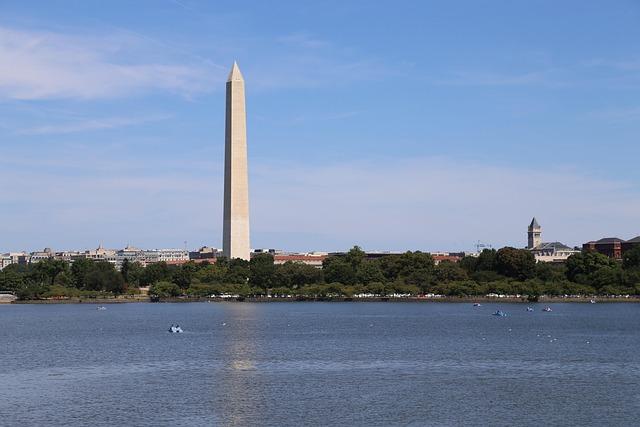
Donald Trump is under intensifying pressure to back up his explosive accusation that political rivals orchestrated the contamination of Washington DC’s Reflecting Pool, where dozens of ducks were recently found dead just before a major campaign rally. The former president has characterized the incident—without offering proof—as a deliberate act of “sabotage” aimed at disrupting his appearance near one of the capital’s most recognizable landmarks. Yet city officials, wildlife specialists and federal agencies say they have uncovered no credible evidence of criminal tampering, deepening scrutiny of Trump’s claim and fueling a broader debate over misinformation in an already volatile election season.
Mounting doubts over Trump’s Reflecting Pool “sabotage” claim
Lawmakers, local leaders and security professionals are increasingly demanding that Trump produce concrete evidence to support his allegation that the Reflecting Pool incident was the result of intentional interference. So far, critics note, he has relied on sweeping assertions and anonymous “insiders,” while the agencies tasked with maintaining the landmark describe what happened as a foreseeable infrastructure and environmental problem.
Behind closed doors, congressional staff are piecing together timelines, reviewing security logs and studying historical maintenance reports in an effort to determine whether anything out of the ordinary actually occurred. Their work comes as public confidence in institutions is already fragile: a 2024 Pew Research Center survey found trust in the federal government remains near historic lows, with barely two in ten Americans saying they trust Washington to do what is right “just about always” or “most of the time.”
Officials in the capital now face a delicate choice: whether to launch a fresh, high-profile investigation focused specifically on the sabotage allegation, or allow scheduled engineering inspections and environmental assessments to proceed without political fanfare. Civil-liberties organizations, for their part, are warning that framing the episode as a political attack—without proof—risks normalizing conspiracy narratives and distracting from real governance challenges.
Key issues driving the current review include:
- Origin of the accusation: No federal body, law-enforcement agency or named official has publicly supported Trump’s version of events.
- Security recordings: US Park Police say they are analyzing available surveillance around the Reflecting Pool, but have yet to announce any findings.
- Technical documentation: Engineers highlight recent repair work and aging systems as plausible, noncriminal explanations for the incident.
- Political stakes: Supporters see the episode as a rallying point; opponents say it exemplifies reckless and divisive rhetoric.
| Stakeholder | Public Stance | Key Demand |
|---|---|---|
| Trump Campaign | Contends sabotage is “probable” | Expanded security briefings and threat assessments |
| DC Officials | Highlight absence of corroborating evidence | Full release of technical and environmental reports |
| Members of Congress | Sharp partisan split | Clear statements from federal investigators and park authorities |
| Park Authorities | Attribute incident to infrastructure and ecological stress | Independent engineering and environmental review |
Official findings undercut central claim of sabotage
Federal investigators and local agencies are increasingly at odds with the narrative advanced by Trump and some of his allies. Early assessments, they stress, point toward long-standing maintenance vulnerabilities and environmental conditions—rather than a coordinated effort to poison or pollute the Reflecting Pool.
Officials familiar with initial lab analyses report that tests on the discolored water have not uncovered any “unusual agents” or synthetic toxins that would typically be associated with intentional contamination. One senior law-enforcement official, speaking on background, described the sabotage allegation as “at best speculative,” noting that multiple agencies are still awaiting complete data sets before drawing firm conclusions.
Internally, staff have prepared briefing materials that juxtapose Trump’s forceful public language with the far more cautious wording used by hydrologists, veterinarians and structural engineers. These documents, according to people who have seen them, emphasize the routine nature of some of the pool’s structural problems and highlight similar wildlife deaths recorded in past years during periods of extreme heat and algae growth.
In private sessions with lawmakers, investigators have laid out their current picture of the incident in direct, evidence-focused terms:
- No verified sabotage has been identified on the basis of existing forensic and toxicology results.
- Known maintenance weaknesses in the Reflecting Pool’s filtration and circulation systems had been flagged in earlier reports.
- Environmental stressors—including warm temperatures, low water circulation and algae blooms—are being treated as the most likely contributors to the duck deaths.
These explanations align with broader trends: wildlife agencies nationwide have documented increased fish and bird die-offs in recent summers, often linked to record heat waves and declining water quality.
| Source | Public Position | Evidence Cited |
|---|---|---|
| National Park Service | Cautious, avoiding premature conclusions | Ongoing water-quality tests, prior maintenance and inspection logs |
| Federal Investigators | Openly skeptical of sabotage theory | Lack of foreign substances or deliberate tampering indicators |
| White House Aides | Echoing Trump’s concerns about possible foul play | Anecdotal reports and generalized security worries |
Republican strategists balance base appeal against broader electoral risks
Trump’s insistence that the Reflecting Pool disturbance was part of a “coordinated attack” on his campaign is forcing Republican candidates up and down the ballot to make difficult strategic decisions. The allegation remains unverified by investigators, yet it resonates with many core Trump supporters who already believe the former president is routinely targeted by shadowy enemies.
For GOP contenders in competitive districts and swing states, the calculus is complicated. Veteran strategists warn that leaning into an unproven conspiracy narrative could energize the most loyal segment of the base while simultaneously alienating moderates, independents and suburban voters who say they are exhausted by constant political drama. Internal campaign memos circulating within some Republican operations reportedly caution that centering the Reflecting Pool story could shift local races away from top concerns such as the cost of living, immigration and public safety, and toward questions of integrity and truthfulness.
In response, candidates are experimenting with varied messaging approaches:
- Amplify: Fully embrace Trump’s characterization, suggest a “deep state” effort to undermine him, and rely on high base turnout to offset any backlash.
- Deflect: Nod to Trump’s frustration, then quickly pivot back to economic or local issues that poll as higher priorities with swing voters.
- Disengage: Decline to address the allegation directly, in the hope that news cycles will move on before the story reshapes the race.
This spectrum of responses reflects a broader divide within the party over how closely to tether campaigns to Trump’s most controversial statements in a general-election environment.
| Faction | Likely Strategy | Perceived Risk |
|---|---|---|
| Hard-right incumbents | Echo and amplify Trump’s narrative | Backlash among independents and moderates |
| Suburban-focused challengers | Deflect and pivot to local priorities | Possible decline in enthusiasm among the core base |
| Swing-state senators | Maintain public distance or silence | Risk of becoming targets of Trump’s social media criticism |
Calls for transparency and fact-based communication intensify
In the shadow of Trump’s allegation that the Reflecting Pool was deliberately tampered with, legal scholars, democracy advocates and crisis-communication specialists are urging a renewed commitment to clear, evidence-driven public communication. They argue that any major claim tied to national landmarks, security or public health should be accompanied by traceable documentation, explicit sourcing and prompt disclosure of what investigators actually know—and what remains uncertain.
Watchdog organizations are pressing for institutional reforms that would make it more difficult for unverified claims to dominate public debate. Among the proposals now circulating in policy circles:
- Real-time evidence disclosure: When incidents occur at high-profile federal sites, agencies would regularly release photographs, sensor readings, maintenance logs and declassified security summaries as investigations progress, rather than waiting for a final report.
- Independent expert briefings: Engineers, environmental scientists, legal scholars and former inspectors general would appear alongside government officials to explain technical findings in accessible language and to provide neutral context.
- Permanent public archives: All official briefings, corrections and clarifications related to major incidents would be stored in a searchable, open database, enabling journalists and citizens to track how narratives evolve over time.
Media analysts note that, in an era when misinformation can spread globally within minutes, the absence of prompt, verifiable information from credible institutions leaves a vacuum quickly filled by speculation and partisan spin. A standardized, transparent briefing structure, they contend, would help anchor public discussion in documented fact rather than rumor.
| Briefing Element | Desired Standard |
|---|---|
| Source of Claim | Clearly identified individuals or agencies, with supporting documentation |
| Evidence Shared | Original, unedited materials wherever possible, with expert explanation |
| Follow-up Corrections | Issued quickly, prominently displayed and linked to previous statements |
Conclusion
As local and federal agencies continue to dissect what happened at the Reflecting Pool, the spotlight is increasingly on Donald Trump to either produce substantiating evidence for his sabotage allegation or walk it back. With no public proof yet presented to support the theory of deliberate contamination, the controversy is sharpening questions about his approach to rhetoric, responsibility and truth in the public square.
For now, two competing narratives are locked in place: one rooted in an unproven claim of political sabotage, the other anchored in methodical, ongoing inquiry into infrastructure and environmental factors. The eventual outcome—whether the allegation is validated, definitively debunked or simply fades without resolution—will help shape not only the legacy of this particular episode, but also the broader national conversation about accountability, misinformation and political discourse in the post-Trump era.