



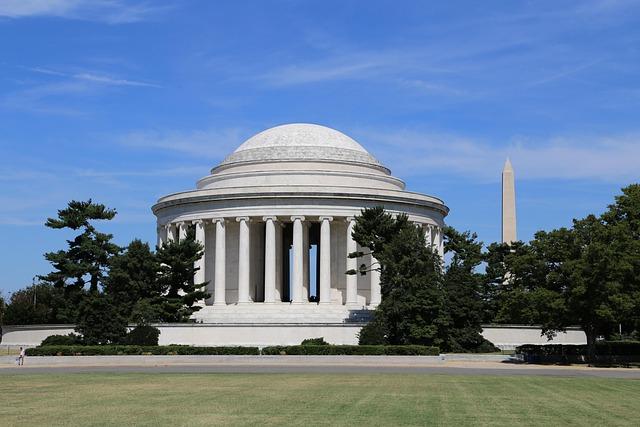
Against a stage of fluttering flags and choreographed fireworks in Washington DC, Donald Trump on Saturday proclaimed that the United States is on the brink of a “golden age of America” as he kicked off observances tied to the nation’s upcoming 250th anniversary. Casting the semiquincentennial as a decisive historical pivot, the former president used the spectacle to lay out his blueprint for national revival, sharpen his 2024 campaign themes and energize supporters in a deeply divided political climate. Speaking before a crowd gathered near the National Mall, his address mixed patriotic ceremony with stark warnings about the country’s trajectory, turning a milestone of national reflection into yet another front in the broader fight over America’s past, present and future.
Recasting the founders’ vision as a roadmap to a new golden age of America
Speaking from a floodlit monument in Washington DC, Trump depicted the forthcoming 250th anniversary as a crossroads moment, drawing heavily on the rhetoric of the Declaration of Independence and the Federalist Papers. He argued that the United States is ready for what he described as a “new birth of greatness,” provided it reclaims what he called the original constitutional design: constrained federal power paired with sweeping individual freedoms. In his telling, the unresolved tensions that shaped the 18th‑century republic—debates over liberty, centralized authority and national identity—now play out in modern struggles over the border, emerging technologies and free speech in the digital age.
His remarks wove together founding‑era imagery with the urgency of a campaign stump speech. Trump cast himself as a guardian of an unfulfilled promise, insisting that the nation can “rise to a higher standard” if it returns to a founding ethos he says has been diluted by bureaucracy and elite institutions. To reinforce this narrative, he linked 21st‑century policy goals to the bedrock ideals he attributes to the founders, arguing that those principles can power a broad “golden age” for American workers, families and entrepreneurs.
The vision revolved around several recurring themes:
- Popular sovereignty: portraying recent elections, court rulings and administrative actions as a contest over whether power ultimately rests with voters or unelected officials.
- Economic independence: drawing a parallel between modern trade and energy disputes and the founders’ battles against British mercantilism and foreign control over American markets.
- Security and order: arguing that strong immigration enforcement and a well‑funded military are today’s expression of the constitutional charge to “provide for the common defence.”
- Civic renewal: urging a reset of education standards, museum exhibits and public monuments to spotlight “American heroes and American stories” that he says have been sidelined.
| Founding Ideal | Trump’s “Golden Age” Outcome |
|---|---|
| Liberty | Looser regulations, stronger protections for political and online speech |
| Self-Government | Shifting authority from federal agencies and experts back toward elected officials and voters |
| Prosperity | Bringing manufacturing home, boosting wages, seeding new high‑tech and energy industries |
| National Unity | Patriotic instruction in schools and shared civic rituals to reinforce a common narrative |
The speech landed at a time when public confidence in US institutions has sagged; Gallup polling in 2024 continues to show trust in Congress and major media near historic lows, while roughly two‑thirds of Americans say the country is on the “wrong track.” Trump’s framing seeks to harness that discontent, arguing that a return to founding ideals can reverse what many voters experience as economic and cultural instability.
Anniversary pageantry as political stagecraft
The 250th anniversary event was crafted as much for television and social media as for those in attendance. With rows of flags, vintage imagery and monument façades illuminated for maximum visual impact, Trump fused campaign branding with curated slices of American history. The semiquincentennial was presented not simply as a birthday celebration but as an inflection point, with the founding era invoked as both inspiration and a warning about the consequences of abandoning “original American principles.”
His use of the phrase “golden age of America” functioned as both aspiration and alarm, suggesting that the next election will determine whether the nation steps into renewed greatness or drifts further from its founding course. Political operatives in both parties noted how the speech transformed the anniversary from a unifying commemoration into a venue for ideological contrast—an approach consistent with broader polarization around national holidays and historical memory.
Symbolism played a central role. Trump repeatedly invoked the Founding Fathers, frontier settlers and military sacrifice, drawing a continuous line from 18th‑century revolutionaries to his present‑day supporters. The staging and storylines were engineered to resonate with core Republican constituencies while nudging undecided voters to view current conflicts through a historical lens.
Several rhetorical techniques anchored this strategy:
- Selective history – emphasizing constitutional triumphs and unity while downplaying unresolved conflicts over race, immigration and inequality that have shaped the past 250 years.
- Visual cues – camera‑ready scenes designed for repetition in campaign ads, fundraising emails and short‑form video clips across social platforms.
- Values framing – presenting contemporary policy planks as faithful applications of founding values rather than as novel partisan proposals.
- Heroic continuity – casting present‑day activists and supporters as heirs to revolutionary‑era patriots defending a threatened inheritance.
| Symbol | Historic Reference | Embedded Political Message |
|---|---|---|
| Founders’ portraits and quotes | 1776, the Constitutional Convention | Portraying the policy agenda as the true “originalist” interpretation |
| Military salutes and veterans on stage | Major US wars and sacrifices | Projecting strength, order and unapologetic patriotism |
| Families and children in the spotlight | Mythic frontier households and post‑war families | Emphasizing traditional values and cultural conservatism |
Such staging reflects a broader trend in US politics: major civic anniversaries—whether Juneteenth’s federal recognition or debates over Columbus Day—have increasingly become vehicles for competing ideological narratives rather than consensus celebrations. Trump’s semiquincentennial framing fits squarely within that pattern.
Policy agenda and cultural flashpoints in the “golden age of America” vision
Trump presented the semiquincentennial as a hinge between decline and renewal, using the moment to preview a second‑term agenda heavy on economic, immigration and cultural pledges. He promised to inaugurate what he called a “second American century”, anchored in sweeping deregulation, expanded fossil fuel development and the dismantling of a wide range of Biden‑era rules on climate, education and diversity initiatives. The former president vowed to launch a far tougher immigration regime—with accelerated deportations, new asylum restrictions and hardened border controls—arguing that such steps are required to preserve the country’s “founding character” and social cohesion.
Behind the scenes, conservative think tanks and allied lawmakers have been circulating draft policy blueprints, echoing past efforts such as “Project 2025,” in an attempt to ensure a ready‑made governing agenda should Republicans regain unified control of Washington.
- Economy: Large‑scale tax cuts, extensive deregulation, aggressive domestic energy expansion and incentives for reshoring manufacturing.
- Immigration: Tighter border controls, faster removals, new limits on asylum claims and reassessment of some legal immigration pathways.
- Culture: Overhauling K‑12 and university standards, bolstering policing, and installing a patriotic curriculum that reduces emphasis on systemic racism.
- Institutions: Reworking the civil service to give the executive branch more direct authority, while leaning on a friendly judiciary to validate major changes.
| Promise | Supporters say | Critics warn |
|---|---|---|
| Patriotic education drive | Restores pride and a unifying national story | Injects partisan politics into classrooms and sidelines difficult history |
| “Law-and-order” escalation | Addresses violent crime and supports police | Risks over‑policing and disproportionate impacts on minority communities |
| Border and asylum clampdown | Reasserts control and deters unlawful entry | Undermines humanitarian protections and international obligations |
The blueprint leans heavily on culture‑war issues that have long defined Trump’s political persona. He highlighted battles over school reading lists, restrictions on gender‑affirming care, conflicts with progressive city governments and clashes with federal agencies. The upcoming years, he insisted, will pit a “golden age of American pride” against what he describes as entrenched elites determined to “erase” tradition and rewrite the nation’s story.
That framing is designed to harden support among his base while forcing other Republicans to align with or distance themselves from hot‑button topics such as transgender rights, book bans and protests on college campuses. Democrats counter that the roadmap revives the most divisive aspects of his first term, ensuring that the 250th anniversary of independence will double as a referendum on civil liberties, pluralism and the boundaries of executive power.
These debates land amid shifting public views: surveys from Pew Research Center show rising concern about political violence, deep partisan distrust and disagreement over how US history—especially slavery and civil rights—should be taught in schools. Trump’s proposals tap directly into those concerns, but offer starkly different remedies than those favored by his critics.
How Trump’s anniversary message reshapes the 2024 landscape
For Americans looking ahead to the 2024 ballot, the anniversary speech functioned less as a ceremonial address and more as a campaign manifesto. By promising a forthcoming “golden age of America”, Trump sought to offer swing and undecided voters a sharp contrast with the present—combining nostalgia for earlier eras of perceived stability with pledges of economic revival and a tougher line on migration and global rivalries.
The framing splits the electorate into two broad camps: those who view his prior term as an interrupted project that must be resumed, and those who associate it with institutional turmoil and social division. Both sides emerged from the speech with new soundbites and images to reinforce their narratives. Among Republican primary voters, the rhetoric amplified long‑standing themes of grievance, cultural anxiety and national sovereignty that have consistently boosted turnout for Trump‑aligned candidates in recent election cycles.
Internationally and within Washington’s policy circles, the remarks were read as both signal and warning. Foreign governments noted the familiar cadence of “America First” nationalism and more transactional diplomacy, which would have implications for NATO, trade agreements and climate negotiations. Domestic opponents, meanwhile, interpreted the triumphant language as an effort to reframe his record and mute ongoing legal and ethical controversies that continue to shadow his political comeback.
Analysts quickly dissected the speech along three main dimensions:
- Key message frames – revival from decline, restored strength, and a sense of manifest national destiny.
- Target audiences – economically dislocated working‑class voters, skeptical suburbanites and the core GOP base whose enthusiasm is vital in swing states.
- Policy cues – signals on trade protectionism, border enforcement, military posture toward rivals like China and Russia, and sweeping institutional reforms.
| Group | Primary Reaction | Likely 2024 Impact |
|---|---|---|
| Core Supporters | Heightened enthusiasm and a sense of shared mission | Stronger turnout in primaries and energized grassroots organizing |
| Undecided & Swing Voters | Mixed reactions, often filtered through economic and safety concerns | Becomes a key persuasion battleground in Midwest and Sun Belt states |
| Allies, Donors & Conservative Groups | Appreciation for clearer message discipline and detailed agenda hints | Potential for intensified fundraising, coordinated policy projects and aligned messaging |
| Critics & Opposition Coalitions | Deeper alarm over democratic norms and civil rights | Sharper counter‑messaging, legal challenges and mobilization of anti‑Trump voters |
Early polling snapshots suggest that while Trump remains polarizing, voters continue to rank the economy, inflation and immigration among their top concerns—issues that his “golden age” rhetoric directly targets. How effectively he translates this message into broader support will depend on whether persuadable voters interpret his agenda as a path to stability or a return to chaos.
Future Outlook
As preparations accelerate for America’s 250th anniversary in 2026, Trump’s call for a “golden age of America” highlights a deeper contest over how the country remembers its founding and imagines the next quarter‑millennium. His supporters view the message as a promise to revive national pride, strengthen borders and restore economic momentum. Opponents hear a selective nostalgia that they say glosses over entrenched racial, regional and political divides.
With the semiquincentennial approaching, competing storylines are already hardening in Washington, state capitols and media ecosystems. Rather than serving as a tranquil moment of shared remembrance, the anniversary is on track to become another arena for partisan conflict over school curricula, public monuments and the meaning of patriotism itself.
Whether Trump’s framing emerges as the dominant lens on the 250th—or simply one of several clashing visions—will depend on the electoral outcomes of 2024 and 2025, the direction of the economy, and the public’s appetite for a more confrontational brand of nationalism. Ultimately, the question he has placed before voters is not only who should lead the country into its next era, but also what it will mean, in practice, to make America “golden” again.