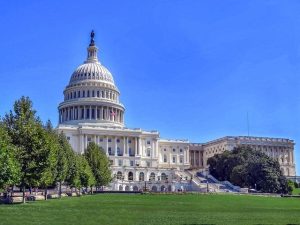




The United States has once again sidestepped a federal government shutdown, but only after days of acrimonious debate and last‑minute dealmaking on Capitol Hill. A temporary funding bill cleared both chambers of Congress and was signed into law just in time, keeping essential federal operations running, preventing mass furloughs, and avoiding immediate disruption to public services. Yet while the most urgent danger has passed, the episode has revived a familiar question: why does the world’s largest economy so frequently flirt with shutting down its own government, and what does this pattern say about the state of American democracy?
This revamped overview unpacks how the standoff emerged, what the new funding deal actually does, who gained or lost political leverage, and why the United States remains at risk of sliding back toward the brink in the months ahead.
How Washington’s Partisan Stalemate Brought the US to the Edge of Shutdown
In the run‑up to the funding deadline, Congress became the arena for a high‑drama confrontation rather than a straightforward budgeting exercise. Leaders from both parties were forced to juggle policy priorities, campaign considerations, and pressure from powerful factions within their own ranks.
A bloc of hardline lawmakers in the House used the “must‑pass” spending bills as leverage, demanding aggressive measures on border enforcement, stricter conditions on Ukraine aid, and deeper cuts to domestic programmes. In the Senate, centrist and moderate members pushed for a compromise that could survive in a divided government, even as they faced skeptics at home.
Negotiations seesawed behind closed doors. Proposals were floated and abandoned within hours, while lawmakers’ public rhetoric intensified, tailored as much for cable news segments and social media audiences as for colleagues across the aisle. Agencies dusted off contingency plans, and federal workers prepared for the possibility of going without pay.
- Major points of contention: immigration and border funding, foreign assistance (especially Ukraine), and reductions to social spending
- Key sources of leverage: short‑term funding bills, threats to oust party leaders, procedural slow‑downs in both chambers
- Political downsides: heightened market anxiety, erosion of public confidence in government, and intensified internal party warfare
| Actor | Core Strategy | Main Risk |
|---|---|---|
| House hardliners | Refuse to back interim funding without major concessions | Being blamed for chaos and potential shutdown |
| Senate moderates | Forge a bipartisan compromise to keep government open | Facing accusations of “selling out” from their base |
| White House | Hold the line on core priorities, resist sweeping policy add‑ons | Perception of rigidity or unwillingness to negotiate |
As the clock ticked down, the dispute shifted from a debate over spending levels to a power struggle within both parties. A relatively small group of lawmakers discovered that by withholding their votes, they could stall or derail leadership‑backed agreements. That gave them outsized influence over the agenda, even when their proposals had almost no prospect of becoming law.
Routine budgeting was effectively transformed into a recurring high‑stakes showdown. Funding for day‑to‑day government operations became a bargaining chip in much larger ideological conflicts, from immigration to the role of federal safety‑net programmes. For millions of Americans watching from the outside, the episode underscored how governing mechanics are often overshadowed by intra‑party battles and the political incentives of permanent confrontation.
Inside the Funding Deal: What Congress Passed and How It Affects Workers and Services
The agreement that ultimately crossed the finish line is a classic stopgap measure. Rather than setting a full‑year budget, lawmakers opted for a short‑term “continuing resolution” that largely extends current spending levels for a limited window of time.
Most controversial policy riders were stripped out to make the package palatable to enough members in both chambers. A few areas received targeted support, including disaster relief and some defence‑related items, but sweeping changes to domestic or immigration policy were postponed. In practice, Congress chose delay over resolution—kicking the larger fight into the near future.
For federal employees and the public, the immediate outlook has improved, but only temporarily:
- Federal employees: Paycheques continue on schedule, furloughs are avoided, and hiring pauses can begin to ease. However, workers face the prospect of renewed uncertainty once this interim funding lapses.
- Public‑facing services: National parks, call centres, museums, and passport offices remain open or quickly resume normal schedules. Many will grapple with backlogs and staffing strain resulting from the pre‑shutdown slowdown.
- Social programmes: Major entitlements such as Social Security and Medicare continue unaffected, but smaller, grant‑based programmes—ranging from nutrition support to community health initiatives—remain vulnerable in the next round of negotiations.
- Long‑term planning: Agencies report that operating under serial short‑term deals makes it far harder to sign multi‑year contracts, launch new initiatives, or commit to long‑range infrastructure and research projects.
| Area | Immediate Effect | Ongoing Risk |
|---|---|---|
| Federal pay | Normal pay schedule continues | Potential disruption at next funding cliff |
| Public services | Operations stay open or quickly resume | Service delays and processing backlogs |
| Agencies | Short‑term operational stability | Constrained ability to pursue long‑term projects |
| Economy | Immediate shock from shutdown is averted | Periodic brinkmanship could dampen investment and confidence |
Recent analyses by the Congressional Budget Office and private forecasters underscore what is at stake: earlier shutdowns have shaved billions of dollars off US GDP, delayed tens of billions in federal spending, and disrupted everything from small business lending to air travel safety inspections. Avoiding that scenario this time protects short‑term growth—but the underlying fragility remains.
Who Came Out Ahead, Who Lost Ground, and Why the Shutdown Threat Persists
With the latest crisis contained, Washington insiders are taking stock of how the power balance has shifted.
The White House can plausibly argue it protected bedrock priorities while avoiding immediate economic harm. It did so without agreeing to the steep domestic cuts or sweeping immigration provisions some House conservatives demanded. Nonetheless, by signing off on only a temporary extension, the administration has accepted that another showdown is all but guaranteed.
Moderates in both parties gained new relevance, presenting themselves as pragmatic deal‑brokers able to keep the lights on when more ideological factions would rather hold out. In closely divided districts and swing states, that role could carry political dividends.
Hardliners, meanwhile, succeeded in drawing national attention to their agenda and in shaping the terms of debate. But they struggled to convert that visibility into the kind of structural budget changes they sought, highlighting the limits of brinkmanship as a tool for actual governance.
- Moderate lawmakers strengthened their image as problem‑solvers who can avert crises.
- Party leadership preserved institutional stability but faced open dissent and criticism from their own ideological wings.
- Hardline factions elevated their messaging yet fell short of achieving far‑reaching policy victories.
- Federal workers and contractors remain on edge, knowing their pay and projects could again be bargaining chips at the next deadline.
| Side | Primary Goal | Result |
|---|---|---|
| White House | Shield core programmes from steep cuts | Secured short‑term funding without major concessions |
| Moderate bloc | Keep government open and avoid shutdown | Increased leverage in future negotiations |
| Hardliners | Win deep spending cuts and attach contentious policy riders | Limited policy gains, but heightened profile |
| Public services | Maintain continuity and stability | Remain susceptible to future funding battles |
Crucially, the very design of the compromise helps set the stage for the next confrontation. Because the deal is a stopgap rather than a comprehensive budget, Washington is already on a countdown to the next fiscal deadline. Structural forces—narrow majorities in Congress, divided government, and an election cycle that rewards partisan conflict—are still intact.
As a result:
- Agencies are forced to plan in short increments, rather than on multi‑year timelines.
- Investors and rating agencies monitor Washington’s calendar almost as closely as economic data.
- Ideological groups on both the right and left are preparing to reassert the same demands they made in this round.
Unless Congress can move from temporary truces to durable agreements on spending levels, deficit reduction, and policy priorities, the threat of another funding lapse will continue to hang over Washington—and over the broader US and global economy. Recent warnings from credit rating agencies, some of which have shifted their outlook on US debt from “stable” to “negative” after past showdowns, underscore how political dysfunction can carry real financial costs.
What Must Change: Reform Ideas to End Routine Budget Crises and Rebuild Trust
Many budget experts argue that these recurring crises are not random accidents but the predictable outcome of a system designed with too many choke points and too few safeguards. The near‑annual reliance on last‑minute continuing resolutions, combined with the ability of small factions to hold up entire bills, makes shutdown threats almost inevitable.
Among the reforms gaining the most attention are:
- Automatic continuing resolutions (CRs): If Congress misses a funding deadline, an automatic extension at current spending levels would kick in, preventing agencies from shutting down while lawmakers continue negotiating.
- Multi‑year budgeting for key sectors: Defence, infrastructure, and major research agencies could receive two‑ or three‑year appropriations, reducing the frequency with which their operations are held hostage to short‑term political fights.
- Greater transparency and public “scorecards”: Clear, accessible tools that show how appropriations compare with promises made on the campaign trail could help voters hold lawmakers accountable.
- Stronger limits on policy “riders”: Tighter rules to prevent unrelated, last‑minute policy provisions from being attached to basic funding bills, reducing opportunities for legislative hostage‑taking.
| Reform Proposal | Main Objective | Impact on the Public |
|---|---|---|
| Automatic CRs | Eliminate shutdown threats as a bargaining tool | Reliable access to essential government services |
| Independent fiscal council | Provide nonpartisan analysis of budgets and deficits | More trustworthy data and less spin around fiscal debates |
| Budget transparency portal | Allow citizens to follow every dollar from appropriation to outcome | Higher public trust and more informed debate |
Specialists also caution that procedural fixes alone will not restore public confidence. Accountability and visibility must accompany structural changes. That is why some watchdogs and reform advocates have floated additional steps:
- Public “failure reports”: Requiring Congress to publish plain‑language explanations whenever it misses budget deadlines, detailing consequences for agencies and taxpayers.
- Greater openness in negotiations: Releasing summaries or live broadcasts of key appropriations talks when feasible, so voters can see who is pushing for what.
- Linking lawmakers’ compensation to on‑time budgets: Suspending pay raises, travel perks, or certain benefits for members when they fail to complete basic budget work on schedule.
- Ethics rules around shutdown‑related fundraising: Restricting the ability of politicians to solicit donations based explicitly on threats to shut down the government.
The goal of these proposals is to shift the burden of crisis politics away from federal workers, contractors, and the public—and onto the decision‑makers who engineer last‑minute showdowns.
Conclusion: A Temporary Truce in a Long‑Running Fiscal Battle
The latest agreement to avert a federal government shutdown highlights, yet again, the deep partisan divides shaping US fiscal policy, as well as the structural weaknesses of the current budget process. Whether this moment proves to be a turning point or merely another pause between confrontations will depend on whether lawmakers can move beyond short‑term fixes and negotiate longer‑term understandings on spending, debt, and the proper scope of government.
For now, federal agencies, their employees, and the millions of Americans who rely on public services can breathe a little easier—but only for a while. Unless Washington tackles the incentives that reward brinkmanship and embraces reforms designed to stabilise the budget cycle, the prospect of another shutdown fight will return as soon as the next deadline looms.