


Former President Donald Trump has floated a sweeping redesign of the U.S. passport, pitching a new “patriot passport” that would display his own portrait as its defining image. Rolled out at a rally-style event and rapidly amplified across conservative media, the proposal is marketed as a bold expression of “American pride” and a way to reclaim what Trump allies frame as a fading sense of national identity. Opponents, however, describe the initiative as an unprecedented personalization of a federal document, raising red flags about the merging of state authority with the branding of a single political figure. As the idea gains attention, lawyers, diplomats, and policy experts are scrutinizing the potential legal, constitutional, and international fallout of turning one of the core instruments of U.S. citizenship into a politically charged symbol.
Trump’s “Patriot Passport” Concept Puts His Image at the Heart of a National Document
Trump’s “patriot edition” passport would mark a dramatic break from the understated design that has characterised American travel documents for decades. According to early visuals circulated by his allies, the familiar coat of arms on the main identification page would be replaced with a full-colour photograph of Trump, surrounded by a stylised flag motif. The presidential seal, historically a central symbol, is reportedly pushed to the margins and reduced in size, a shift critics say visually elevates a partisan personality above the broader institutions of the state.
Supporters praise the proposed “patriot passports” as a way to “restore pride” in U.S. travel credentials and to signal a more assertive American identity abroad. They argue that other countries sometimes emphasise national leaders in their public imagery and see no issue with incorporating Trump’s likeness into a document they regard as an emblem of his era. Constitutional scholars, however, counter that U.S. norms have consistently favoured institutional symbols—such as the eagle, the flag, and the seal—over leader-centric images, precisely to avoid the impression of a personality cult.
Within Washington and foreign capitals, the mock‑ups have already prompted intense debate. Diplomats and former consular officials warn that the move could collide with the global expectation that passports remain politically neutral, functional documents. Some worry that if “patriot passports” are introduced alongside traditional blue passports, Americans could effectively carry two tiers of identification—one seen as official and apolitical, the other as overtly partisan.
- Dominant portrait: Trump’s photograph replacing the traditional central emblem.
- Reworked cover: “United States of America” reportedly sharing space with a campaign-style slogan.
- Themed interior pages: Visa and information pages linked to Trump-era policy themes and imagery.
| Feature | Current Passport | Proposed “Patriot Passport” |
|---|---|---|
| Central Image | Coat of arms | Portrait of Trump |
| Symbol Focus | National emblems | Leader-centric visuals |
| Political Messaging | None | Campaign-style slogans |
Constitutional Concerns: Can a Patriot Passport Remain Politically Neutral?
Legal scholars are already outlining potential constitutional challenges to the “patriot passports” concept. They argue that embedding the face of a sitting or former president into a mandatory federal identity document risks violating core principles of neutrality and equal treatment. Because a passport is not optional for Americans who travel abroad, civil liberties advocates say the design could amount to compelled political messaging—forcing citizens to carry a document that visually endorses a highly polarising figure.
Several constitutional arguments are being discussed in academic and advocacy circles:
- First Amendment issues: Opponents may claim that being required to carry a leader-branded document infringes on free speech rights by associating them with a political figure or slogan they reject.
- Equal protection claims: Citizens who feel singled out or marginalised by the partisan symbolism could argue that the government is privileging one political viewpoint over others in a way that affects all travellers.
- Separation of powers questions: If the redesign is pursued through executive action without explicit congressional authorisation, courts could be asked to determine whether the president overstepped established limits around federal document design.
- Federalism disputes: States that issue related identity documents or rely on passports for verification may push back if the new format is perceived as partisan, creating friction between state and federal practices.
Legal experts point to long-standing precedents warning against overt government endorsement of specific political messages. While U.S. currency and monuments depict historical figures, they are framed as national icons rather than living partisan leaders. By contrast, inserting a contemporary political figure at the centre of a functional document used daily at borders could be seen by courts as qualitatively different, especially in the heated environment surrounding the 2024 election.
International Repercussions: How Foreign Governments Might React
Outside the United States, diplomats anticipate that any rollout of “patriot passports” would receive close scrutiny. Many countries, particularly in Europe and within alliances like NATO, adhere to design conventions that keep passports visibly separate from day‑to‑day politics. The International Civil Aviation Organization (ICAO) also promotes uniform standards intended to ensure that travel documents are secure, machine-readable, and broadly apolitical.
Foreign ministries are expected to examine whether a Trump-branded passport complies with bilateral and multilateral agreements, as well as with ICAO recommendations. If the new design is interpreted as a campaign tool or partisan emblem, policy analysts warn that some governments could respond by intensifying screening, demanding supplementary identification, or even questioning the document’s status in exceptional cases.
| Region | Likely Reaction to “Patriot Passports” |
|---|---|
| EU | Formal legal review, requests for clarification from Washington, potential debates in the European Parliament. |
| Asia-Pacific | Cautious acceptance, emphasis on security checks and added documentation where needed. |
| Latin America | National-level political debates, with responses varying widely by country and administration. |
| Middle East | Heightened political sensitivity, possible symbolic resistance and stronger vetting procedures. |
Recent global polling has shown sharply divided perceptions of U.S. leadership, with some publics viewing Trump favourably and others expressing strong opposition. In that context, a travel document featuring his portrait could be processed very differently around the world, complicating what is currently a standardised experience for American travellers.
Security and Travel Risks: Americans Could Face Extra Scrutiny Abroad
Veteran diplomats and security analysts warn that the personalised nature of “patriot passports” may increase risk for U.S. citizens in certain regions. In countries where anti-Trump sentiment is high or where relations with Washington are tense, a passport bearing his image may be read as a statement of personal allegiance rather than a neutral credential. That perception, experts say, could heighten the visibility of Americans to hostile actors or lead to more confrontational interactions with security services.
Former consular officials stress that passports are designed to represent the state rather than any single officeholder. Turning them into what critics liken to “campaign merchandise with legal force” threatens to blur the line between foreign policy and domestic political branding in the eyes of foreign authorities. This, they argue, could complicate the work of U.S. embassies and consulates that already navigate delicate political environments.
Immigration lawyers also anticipate that travellers using “patriot passports” could encounter more frequent delays and inspections. Even in friendly countries, front-line border officers wield significant discretion and may respond cautiously to a highly unusual document.
- Visa processing slowdowns: Consulates may take extra time to update internal guidance, authenticate the new design, and confirm that it meets international standards.
- Discretionary refusals or limits: Border agents could be more inclined to shorten permitted stays or request additional proof of purpose, particularly in politically sensitive environments.
- Inconsistent treatment: Different airports or land crossings might interpret instructions in varied ways, leaving travellers uncertain about what to expect.
| Region | Likely Concern | Risk Level |
|---|---|---|
| Western Europe | Symbolic demonstrations, additional questions at entry points. | Low–Medium |
| Middle East | Political profiling at checkpoints, possible targeting in highly polarised areas. | Medium–High |
| East Asia | Extra document verification, procedural delays when systems adjust to the new format. | Medium |
| Latin America | Case-by-case scrutiny, varying responses depending on domestic politics. | Variable |
Risk levels are based on expert interviews, existing diplomatic frictions, and recent travel advisories.
Calls for Oversight: Protecting Nonpartisan National Symbols
The controversy over “patriot passports” has prompted a broader discussion in Washington about who should control the design of national symbols used abroad. Policy analysts and democracy advocates argue that passports, seals, and other federal emblems must remain strictly nonpartisan to maintain public trust and international credibility. They warn that if one administration can transform such documents into personalised branding tools, successors could escalate the trend, eroding long-established norms of institutional neutrality.
Think tanks focused on governance and foreign policy are urging Congress to assert stronger oversight. Briefing papers circulating on Capitol Hill recommend that committees responsible for foreign affairs and appropriations hold hearings on passport design authority, tighten statutes governing changes to federal identifiers, and mandate formal impact assessments before any redesign is approved.
To prevent further politicisation, experts are proposing several structural safeguards:
- Legally binding design criteria: Statutory standards requiring that federal documents, especially those recognised internationally, highlight national symbols rather than individual political leaders.
- Bipartisan congressional review: Mandatory sign‑off from committees in both chambers before any major redesign can be implemented by the executive branch.
- Transparent consultation process: Publicly available design rationales, including input from civil liberties groups, diaspora communities, and diplomatic practitioners.
- Independent expert review panels: External boards of design specialists, legal scholars, and former diplomats tasked with assessing how proposed changes would affect U.S. soft power and diplomatic standing.
| Proposed Safeguard | Primary Goal |
|---|---|
| Congressional pre-approval | Limit unilateral executive moves and prevent sudden politicisation of official documents. |
| Nonpartisan design charter | Codify principles that protect the neutrality and continuity of national symbols. |
| Public comment period | Gauge reactions from citizens, advocacy groups, and Americans living overseas. |
| State Department audit | Evaluate diplomatic, security, and operational impacts before any new passport is issued. |
Future Outlook: “Patriot Passports” and the Battle Over American Identity
As the “patriot passports” idea moves through the political and legal cross-currents of Washington, it is poised to become another symbol of the broader fight over Trump’s legacy and the future of American identity. Supporters see the proposal as a bold reclamation of national pride, asserting that a more assertive visual identity reflects a stronger America on the world stage. Critics counter that the plan risks turning a neutral proof of citizenship into a de facto campaign banner, undermining both constitutional norms and the safety of ordinary travellers.
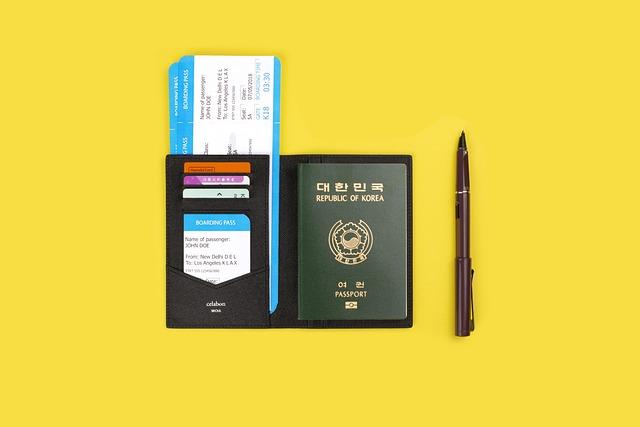
With the 2024 election cycle accelerating and debates over nationalism, patriotism, and political symbolism intensifying, the fate of the “patriot passport” proposal could reverberate far beyond the realm of travel policy. Whether the initiative advances, is modified, or stalls under legal and diplomatic pressure, it highlights how even routine instruments of everyday life—like a passport tucked into a travel wallet—can become central battlegrounds in the struggle over who defines what it means to be American, and how that identity is displayed to the rest of the world.