

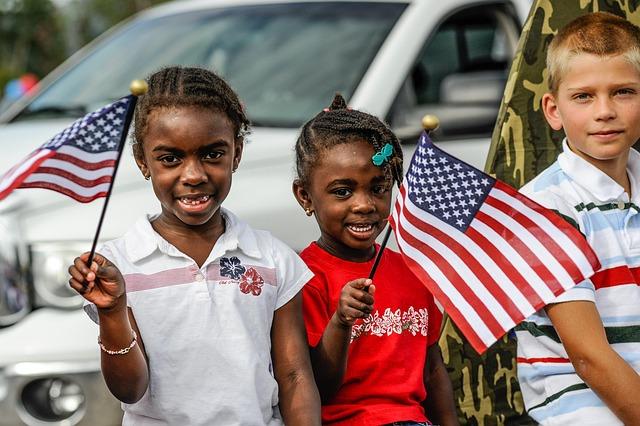
Washington DC’s iconic Fourth of July parade – a hallmark of national Independence Day festivities – will not roll down Constitution Avenue this year, as an intense heat wave tightens its grip on the nation’s capital. Local leaders halted the event amid forecasts of dangerous temperatures and oppressive humidity, warning that large crowds packed along the National Mall would face unacceptable health risks.
The decision, which city officials described as “extraordinary but necessary,” is one of the most visible signs yet of how extreme heat is reshaping public life in Washington and across the United States. According to the National Weather Service, roughly 40% of Americans experienced heat alerts at some point during recent summers, and the number of days above 95°F is projected to keep rising in many major cities.
Heat wave forces Fourth of July parade cancellation in Washington DC
Authorities moved quickly as forecasts worsened, with the city’s emergency management office, public health department and federal partners monitoring conditions block by block along the parade route. By midweek, emergency departments had already seen a notable uptick in heat-related cases, from severe dehydration to early signs of heat stroke.
Officials concluded that keeping thousands of spectators, marching bands, performers and workers outdoors for hours under triple-digit heat posed a “clear and escalating threat” to public safety. The abrupt call meant that civic organizations, school groups, youth teams and veterans’ associations – many of which had spent months preparing uniforms, floats and routines – had to stand down with little notice.
Residents and tourists were instead urged to stay indoors during the hottest hours, check on neighbors and avoid strenuous outdoor activity as the heat index soared beyond seasonal norms. Health agencies emphasized frequent hydration, light clothing and the importance of recognizing early symptoms of heat distress such as dizziness, nausea and confusion.
To help people cope, the city pivoted to an emergency heat-response plan that included:
- Cooling centers activated in public libraries, recreation centers and community hubs in every ward
- Misting stations placed near Metro stops, high-traffic intersections and major tourist areas
- Extended transit hours and added service on key lines to reduce outdoor wait times
- Digital alerts sent via text, apps and social media with real-time heat warnings and safety guidance
| Metric | Value | Impact |
|---|---|---|
| Forecast high | 102°F | Outdoor events deemed unsafe |
| Heat index | 110°F+ | Increased heatstroke risk |
| Cooling centers | 30+ | Emergency relief for residents |
| Medical calls | Rising | EMS resources redeployed |
Public health experts say these measures are increasingly essential. The Centers for Disease Control and Prevention (CDC) estimates that hundreds of deaths in the U.S. each year are directly attributed to extreme heat, making it one of the country’s deadliest weather hazards – more lethal on average than hurricanes, floods or tornadoes.
Extreme heat exposes weaknesses in Washington’s event planning and emergency readiness
Beyond the immediate disappointment, the halted Fourth of July parade has thrown a spotlight on how vulnerable Washington’s event infrastructure is to sustained high temperatures. Officials routinely model for crowd control, security threats and thunderstorms, yet the city’s Independence Day blueprint proved far less robust for a prolonged heat emergency.
Permits were issued, security lines drawn and vendor contracts signed under what once passed as “normal” summer assumptions. But the tools needed for a modern heat-resilient event – from additional shaded areas to flexible schedules that can shift away from the midday sun – were often missing or too limited in scope.
The situation also highlighted the complexity of shared authority in the capital. Responsibility for the National Mall and surrounding streets is split among the National Park Service, the District government, federal security agencies and private organizers. That fragmented structure made it harder to coordinate a unified, early response as the forecast worsened.
Key shortcomings that emerged include:
- Insufficient cooling infrastructure along the Mall, with too few shaded areas, tents and cooling devices
- Fragmented communication channels between federal, city and private partners, leading to uneven messaging
- Reactive, not proactive planning for multi-day heat waves, with contingency plans triggered only at the last minute
- Uneven access to shade, water, restrooms and medical care for spectators with mobility challenges or health conditions
| Planning Area | Current Approach | Heat-Ready Gap |
|---|---|---|
| Event Timing | Fixed midday schedules | No shift to cooler hours |
| Public Alerts | Last-minute advisories | Lack of early warnings |
| On-site Care | Standard first-aid tents | Limited heat-stroke capacity |
| Infrastructure | Temporary stages, minimal shade | Few cooling stations, misting units |
Urban planners and climate researchers warn that Washington can no longer treat such heat waves as anomalies. The capital’s growing “urban heat island” – driven by concrete, asphalt and limited tree cover – means that some neighborhoods can be several degrees hotter than others, especially at night. Older transit infrastructure and crowded housing add to the strain.
Advocates are now pushing for a new standard that bakes climate realities into every permit and event proposal, with mandatory heat-risk assessments, modeled crowd behavior under extreme temperatures, and clear thresholds for partial or full cancellations. Without those changes, they caution, Washington’s public festivals could face repeated disruption as summers grow hotter and less predictable.
Heat-related illness surges, with vulnerable residents bearing the brunt
For doctors and nurses on the front lines, the canceled parade is just one visible symptom of a wider public health emergency. Hospitals and urgent care centers in the region have reported a wave of patients suffering from heat exhaustion, dehydration, fainting spells and respiratory distress linked to the high temperatures.
Clinicians stress that when humidity is high and overnight lows remain elevated, the body struggles to cool itself, even during short stints outside. This compounds risk for people with existing heart disease, lung conditions, diabetes or kidney problems. In many cases, those most at risk have the fewest resources to adapt.
Health professionals are calling for more than broad “stay hydrated” notices. They want targeted protections focused on communities where heat risk and social vulnerability overlap, describing the moment as a “layered crisis of climate and inequality.”
Groups identified as particularly at risk include:
- Older adults living alone or with limited mobility, especially in apartment buildings without reliable air conditioning
- Low-income households in top-floor units, older buildings or overcrowded homes where interior temperatures can exceed outdoor heat
- Outdoor workers – from construction crews and street vendors to delivery drivers and maintenance staff – who spend long days in direct sun
- People with chronic heart and respiratory conditions who are especially sensitive to heat and degraded air quality
- Unhoused residents relying on parks, benches and transit stations for shelter, with few options to cool down safely
Proposed strategies range from door-to-door wellness checks and subsidized air conditioners to stricter workplace protections and expanded shelter access. Some cities have experimented with “buddy systems” that pair volunteers with elderly neighbors during heat emergencies, while others use data mapping tools to identify blocks with the highest combination of heat exposure and health risk.
| Group | Key Risk | Suggested Protection |
|---|---|---|
| Seniors | Rapid dehydration | Wellness checks, cooled housing |
| Outdoor workers | Heat stroke on shift | Mandatory breaks, shaded rest areas |
| Unhoused people | No safe indoor refuge | 24/7 cooling centers, water distribution |
Public health agencies are also encouraging more robust data collection on heat-related illnesses and deaths, which experts believe are systematically undercounted nationwide. Better tracking, they say, would help make the case for sustained investment in cooling infrastructure, tree planting and affordable energy programs.
Rethinking Independence Day: how cities are adapting celebrations to a hotter climate
Washington’s canceled Fourth of July parade has prompted city leaders, event planners and emergency managers around the country to quietly reconsider what summer patriotism looks like in an era of record-breaking temperatures, wildfire smoke and increasingly volatile storms.
Behind the scenes, many municipalities are exploring substantial changes: shifting parades and road races into the early morning, shortening or staggering outdoor programs, and setting clearer thresholds for heat index, air quality or storm severity that automatically trigger schedule changes or cancellations.
Some officials acknowledge that the traditional all-day outdoor celebration – with morning parades, afternoon festivals and late-night fireworks – may no longer be feasible every year. Instead, they are experimenting with more flexible, hybrid formats that preserve tradition while reducing health risks.
Core adaptations under discussion or implementation include:
- Misting corridors and large shade canopies placed strategically along popular parade routes and viewing areas
- Expanded cooling centers in libraries, schools, community colleges and sports arenas with extended holiday hours
- Integrated heat and smoke alerts through city apps, text systems and social channels that update conditions in real time
- Fireworks spread over multiple nights or shorter displays to reduce crowd density on any single evening
- Hybrid in-person and livestreamed ceremonies, allowing vulnerable residents to participate from home
Regulators are also looking at updating event permitting requirements so that heat-readiness is treated as a core safety obligation, not an optional add-on. That includes heat-specific medical staffing, water distribution plans, shaded rest stops and backup indoor venues.
| City Measure | Climate Risk Addressed |
|---|---|
| Parade start before 9 a.m. | Peak heat |
| Mandatory cooling tents | Heat stress |
| Backup indoor venue | Severe storms |
| Air-quality trigger levels | Wildfire smoke |
Cities in the Southwest and Gulf Coast, where extreme heat has been a seasonal reality for years, are increasingly serving as models. Some have formal “heat action plans” that integrate meteorological forecasts with outreach to vulnerable groups, labor rules for outdoor workers and adaptive scheduling for public events. Washington’s leaders are now under pressure to adopt similar long-term strategies.
The Conclusion
As Washington DC confronts another blistering summer, the sudden cancellation of its high-profile Fourth of July parade signals more than a one-time disruption. It illustrates how quickly longstanding civic rituals can be upended when extreme weather collides with large crowds and aging infrastructure.
For residents, tourists and businesses that count on the annual parade, the loss is economic as well as emotional, interrupting a familiar rhythm of family gatherings, downtown foot traffic and patriotic pageantry. For policymakers and emergency planners, it is a case study in the tough choices that lie ahead as public safety increasingly comes into tension with tradition.
With temperatures expected to remain elevated, officials say their immediate focus has shifted to robust heat-mitigation efforts and ensuring that remaining Independence Day events can proceed with enhanced safeguards. Whether Washington’s signature parade returns in its traditional format next year will depend not only on security and logistics, but also on how quickly the city adapts its planning to a hotter, more volatile climate – one in which flexibility, shade and cooling may prove just as essential to celebration as flags and fireworks.