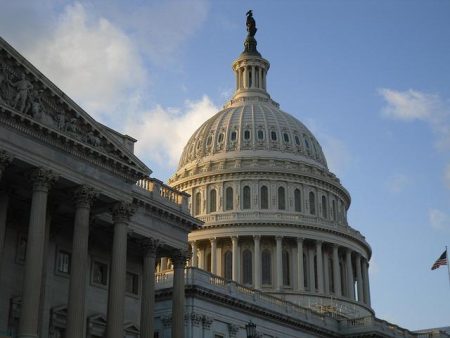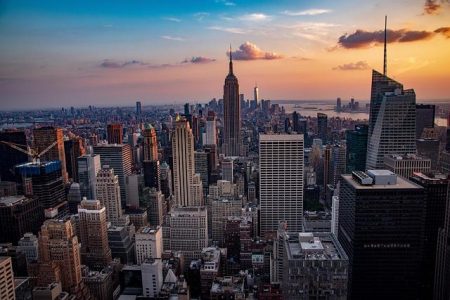



Washington, D.C., long marketed as America’s front window to the world and a natural stage for global spectacle, will not host a single match at the 2026 World Cup. When FIFA confirmed the final list of venues for the expanded tournament across the United States, Canada, and Mexico, the U.S. capital – accustomed to inaugurations, state visits, and diplomatic summits – was missing.
For a region with one of the country’s most established soccer fan bases, a sizeable international population, and an NFL stadium within easy driving distance, the omission was jarring. It immediately sparked questions: how did a city so rich in symbolism and visibility, sitting at the heart of American political power, fail to secure a spot in North America’s biggest sporting event in a generation?
What emerged from conversations with local officials, bid insiders, and industry executives is a story of divided authority, outdated infrastructure, and shifting priorities inside both FIFA and American soccer. Rather than a single decisive error, the Washington region found itself outmaneuvered by cities that could offer what World Cups increasingly demand: centralized control, newer stadiums, and turnkey “event ecosystems” that require minimal compromise and few surprises.
The unraveling of Washington’s World Cup bid offers a revealing case study in how mega-events are awarded today – and what that means for the future of big-ticket sports in the District and its suburbs.
Why Washington Fell Off the 2026 World Cup Map: Power, Logistics, and a Divided Bid
Behind the scenes, the competition to host 2026 World Cup games unfolded less like a neutral technical evaluation and more like a full-blown political campaign. FIFA, U.S. Soccer, major broadcasters, and powerful club and NFL owners all weighed in, each with their own priorities: stadium control, sponsor conflicts, hospitality inventory, and TV-friendly settings.
In that environment, Washington was pitching an inherently complicated proposition. The bid tried to wrap together:
- Washington, D.C.’s global symbolism and tourist magnetism
- A primary match venue in Maryland (FedEx Field)
- A heavy reliance on Virginia’s hotel and hospitality capacity
On paper, it was a regional powerhouse. In practice, the bid looked fractured at the exact moment when decision-makers were gravitating toward simple, unified deals – the kind where one mayor, one stadium authority, and one ownership group could sign comprehensive agreements without months of cross-border negotiation.
Governance, Dollars, and Control: The Core Obstacles
Several structural problems repeatedly surfaced in the Washington bid:
- Stadium governance: Authority over the match venue, transportation, and adjacent development was divided among multiple state, local, and private actors.
- Commercial rights: Existing NFL and corporate sponsorship deals at FedEx Field risked colliding with FIFA’s strict global sponsorship and branding rules.
- Public funding: Upgrades and temporary modifications lacked a single, forceful political champion able to push through clear financing commitments.
- Competing markets: Other cities offered newer venues with cleaner ownership structures and fewer legal or political complications.
From FIFA’s vantage point, the contrast was stark. While some regions spoke with one voice, the Washington area functioned like a committee.
| City | Stadium Control | Bid Cohesion |
|---|---|---|
| New York/New Jersey | Centralized | High |
| Dallas | Owner-aligned | High |
| Washington Region | Fragmented | Low |
The Infrastructure Gap: FedEx Field vs. Modern “Event Campuses”
Beyond politics, the hard numbers did not favor Washington. FedEx Field, which opened in 1997, is no longer viewed as a state-of-the-art venue. Over the last decade, it has frequently ranked near the bottom of NFL stadium lists for fan experience, accessibility, and amenities. In 2021 and 2022, high-profile plumbing and railing incidents during Washington Commanders games amplified its reputation as outdated.
To bring FedEx in line with FIFA expectations, the region would have needed substantial temporary renovations and operational overhauls. That meant additional costs and more layers of negotiation – exactly what competing markets worked to avoid.
At the same time, FIFA has increasingly favored fully integrated “mega-campuses”:
- Stadiums connected directly to rail lines or high-frequency transit
- Entertainment districts with built-in fan zones, hospitality, and retail
- Clear lines of authority over security, operations, and commercial use
Washington’s offering, by comparison, depended on a patchwork of highways, commuter rail, and dispersed training and practice sites, plus an aging stadium far from the city’s most iconic backdrops. The capital’s unmatched symbolism – the Capitol dome, the National Mall, the monuments – could not compensate for the relative lack of a modern, plug-and-play venue.
In a World Cup era increasingly defined by event industrialization, sentimental value lost out to the quantifiable calculus of hotel nights, predictable transport flows, and broadcast-ready stadium infrastructure.
Regional Rivalries, Quiet Alliances, and FIFA’s Opaque Selection Process
The story of Washington’s exclusion is also the story of how American soccer’s internal map has shifted.
According to people familiar with the process, regional blocs emerged as informal power centers. Some influential MLS owners and local soccer federations quietly advocated for their own cities, signaling to FIFA and U.S. Soccer that:
- Hosting multiple nearby markets – including Washington – was not a priority.
- Consolidating matches in a single metro area would maximize economic impact.
- Regional “duplication” of host cities could dilute prestige and visitor spend.
In effect, Washington found itself boxed in. Instead of a neutral competition where every bid was judged purely on its merits, the capital was operating inside a landscape where neighbors were also competitors – and in some cases, active opponents.
A Scoring System Few Fully Understood
Compounding that challenge was a selection framework many insiders describe as murky.
Publicly, FIFA highlighted a familiar list of criteria: stadium capacity, sightlines, pitch quality, security, transport networks, and fan experience. But bid teams across the continent say they were never fully sure how each factor was weighted or whether priorities shifted over time.
Washington’s pitch leaned heavily into its split identity:
- A downtown core for fan festivals, media presence, and global diplomacy
- A suburban NFL venue for the matches themselves
Locally, this dual footprint was touted as a strategic advantage. Internationally, once the quiet scoring rubric was applied, it may have been perceived as dilution rather than depth.
Bid organizers in multiple cities describe a process that, at times, felt more like a diplomatic negotiation than a transparent procurement. They point to:
- Evaluation criteria that appeared to evolve from one phase of the bid to the next.
- Feedback that was late, incomplete, or missing on crucial infrastructure and governance issues.
- Regional lobbying that blurred the boundary between technical assessments and political influence.
The divergence between the public messaging and the unspoken priorities is captured in the way factors were discussed versus how they were perceived:
| Factor | Publicly Emphasized | Perceived Behind the Scenes |
|---|---|---|
| Stadium configuration | Capacity & sightlines | Existing NFL relationships |
| Market size | Tourism impact | Media leverage & sponsors |
| Geography | Regional balance | Rival city veto power |
In that environment, Washington’s divided bid – spanning three jurisdictions and multiple power centers – struggled to command the kind of unified backing that some competing cities were able to marshal.
What the 2026 World Cup Snub Exposes About Washington’s Infrastructure and Leadership
The immediate reaction to Washington’s omission focused on pride and politics. But the decision also spotlighted deeper structural vulnerabilities in the region’s infrastructure and decision-making.
World Cups now favor cities that can demonstrate near-seamless connectivity:
- Direct or frequent rail from airport to stadium
- Reliable transit from city center to match venues and training sites
- Integrated security and emergency response across multiple jurisdictions
In the Washington region, those elements exist – but not in the cohesive form that global events increasingly demand.
A Capital City with 20th-Century Constraints
The Washington Metro, which first opened in the 1970s, remains heavily used but has faced years of safety crises, service cuts, and delayed modernization. New Silver Line extensions to Dulles International Airport arrived only recently after long delays. Chronic maintenance issues and episodic shutdowns have undermined confidence among both riders and planners.
Meanwhile, FedEx Field relies heavily on highway access and surface parking, a model increasingly out of step with 21st-century mega-event expectations. By contrast, many successful host cities could demonstrate:
- Stadiums directly plugged into high-capacity transit
- Mixed-use districts that keep fans on foot rather than in cars
- Proven track records hosting large, multi-day sports and entertainment festivals
Washington’s leaders had long promoted in-progress transit improvements and potential stadium solutions. But in FIFA’s risk-averse calculations, blueprints and renderings could not compete with rails, tunnels, and venues already in place.
How Other Host Cities Outpaced the Capital
Bid documents from successful host cities and subsequent city council reports reveal several recurring patterns that Washington struggled to match:
- Transit access: Treated as a central performance metric, not a secondary box to tick at the end of the bid.
- Stadium integration: Emphasis on venues embedded in neighborhoods and rail networks, reducing the need for temporary fixes.
- Unified leadership: A single empowered body or organizing committee representing the city and region with clear authority.
The contrast is clear when comparing typical host models to the Washington region’s current structure:
| City Model | Transit to Stadium | Leadership Approach |
|---|---|---|
| Host Cities | Dedicated rail, frequent service | Single, empowered organizing body |
| D.C. Region | Patchwork Metro, car‑dependent routes | Fragmented city-state-federal roles |
In effect, FIFA’s decision served as a stress test of Washington’s big-event readiness. The region did not fail on every metric – but it did fall short of the increasingly high bar set by rival cities with streamlined governance and modern, event-friendly infrastructure.
Lessons for Washington and Other Cities Planning Future Global Sports Bids
For Washington and for other metros eyeing future Olympics, World Cups, or Formula 1 races, the 2026 outcome delivers a blunt message: major events now favor cities that behave like integrated partners, not supplicants.
Future bids will need to demonstrate not just available venues and hotel rooms, but integrated regional planning that anticipates and solves organizer problems in advance:
- Clear, secure airport-to-stadium transport plans
- Unified law enforcement and emergency management structures
- Guaranteed training sites and fan zones under consistent control
Legacy and historical prestige, once seen as leverage, now matter less than one-stop political coordination and credible, detailed plans for both operations and community impact.
Balancing Visibility, Cost, and Public Trust
At the same time, city leaders face a more skeptical public. Surveys from U.S. and European cities in the past decade show rising concern about the cost and disruption of mega-events, especially in the wake of the COVID-19 pandemic and mounting climate-related challenges.
To remain competitive, future bids will need to:
- Align tournament infrastructure with existing long-term transit, housing, and resilience goals
- Demonstrate tangible benefits for residents – not just tourists and sponsors
- Show that investments will pay off beyond a few weeks of matches or ceremonies
That means moving away from ad hoc, event-specific promises and toward durable projects that would make sense even without a tournament on the horizon.
Key focus areas emerging from the Washington experience include:
- Clear governance: Establishing a single empowered bid and organizing entity with authority across agencies and borders (city, suburbs, and state-level partners).
- Infrastructure alignment: Connecting event needs to existing regional plans for transit, housing, security, and climate adaptation, rather than building one-off solutions.
- Financial transparency: Providing open, verifiable accounting on who funds upgrades, who benefits from revenues, and who assumes long-term risks.
- Community consent: Building visible protections for neighborhoods and small businesses, and involving residents early in the planning process.
When viewed through this lens, Washington’s 2026 bid looks less like a one-off disappointment and more like an early warning about what it will take to succeed in future cycles.
| Priority | Washington’s 2026 Lesson | Future Strategy |
|---|---|---|
| Stadium Plan | Unclear, shared control | Single venue, single landlord |
| Regional Politics | Scattered voices | Unified cross-border bloc |
| Public Narrative | Late, defensive | Early, data-driven case |
| Legacy | Implicit, assumed | Specific, measurable promises |
The Way Forward: A Capital City on the Sidelines
Washington’s absence from the 2026 World Cup lineup underscores a broader shift in how power, money, and visibility are distributed in American sports infrastructure. A city that once served as shorthand for national identity and international diplomacy will experience this World Cup not as a host, but as a spectator – organizing fan festivals and watch parties rather than staging matches under the global spotlight.
For local planners and elected officials, the snub is more than symbolic. It is a reminder that history, monuments, and proximity to political power no longer guarantee a place on the world’s premier sporting stages. For FIFA and U.S. Soccer, the decision reflects a clear hierarchy of priorities: capacity, commercial flexibility, and modern facilities now outweigh sentiment and legacy.
By the time the 2026 tournament kicks off, the United States will showcase a portfolio of gleaming stadiums from Seattle to Miami. The capital of the country, however, will not be among them. How long that exclusion resonates – and whether Washington uses it as a catalyst to modernize its infrastructure, streamline its governance, and rethink its approach to mega-events – will shape not just the next World Cup cycle, but the future of major sports and entertainment bids across the region.