




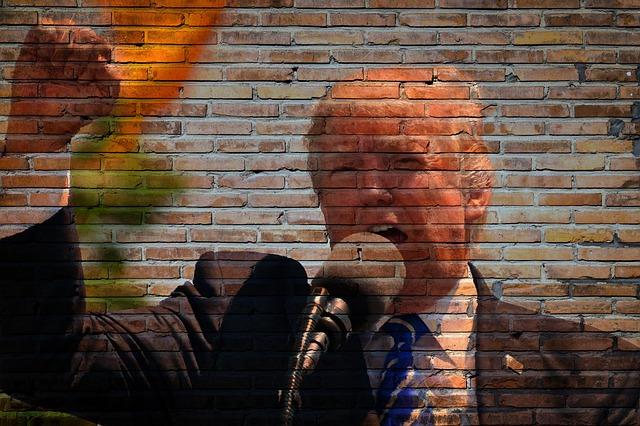
Former President Donald Trump is moving quickly to capitalize on fresh statistics showing a nationwide decline in crime, turning the numbers into a centerpiece of his midterm election pitch. While criminologists warn that these short‑term shifts should be read cautiously, Trump and his allies are presenting the trend as proof that a tough “law and order” approach works — and as a contrast to what they describe as Democratic mismanagement of public safety.
The pivot to a more upbeat crime narrative marks a notable change from the darker, crisis‑focused rhetoric that has dominated Republican messaging in recent years. It also illustrates how both parties are adjusting their crime talking points as they compete for control of Congress and fight for the attention of voters preoccupied with inflation, abortion rights and democratic norms.
Trump Recasts Crime Debate As Proof Of GOP “Law And Order” Credentials
On the stump, Trump has begun weaving the latest crime numbers into a broader story about Republican leadership and control. At rallies in swing districts and key Senate battlegrounds, he cites FBI reports and state‑level statistics showing declines in violent and property crime to argue that stricter sentencing, larger police budgets and aggressive border enforcement are finally paying off.
His remarks often follow a familiar pattern: praise for officers and sheriffs, a warning that Democrats “invited chaos” through bail reform and policing overhauls, and a claim that Republican policies “got tough and crime went down.” Campaign aides have been distributing streamlined data sheets and talking points to GOP candidates lower on the ballot, encouraging them to repeat the same themes on local television, conservative talk radio and at town halls.
Updated crime figures have given the Trump orbit a concrete set of numbers to put behind that message. Early 2024 reports from the FBI and major city police departments, for example, show:
– Homicides down roughly 10–15% in many large cities compared with 2022 peaks
– Robberies and aggravated assaults declining in several major metropolitan areas
– Burglary and larceny showing modest drops nationally, even as car thefts remain elevated in some regions
Republican strategists say this trendline helps them pull attention away from Democratic themes such as abortion access and election integrity and back toward a traditional GOP strength: public safety.
Campaign ads, social media posts and stump speeches now frequently highlight:
- Documented declines in murders and shootings in multiple big‑city police jurisdictions
- Side‑by‑side comparisons of property crime trends in Republican‑led vs. Democratic‑led states
- Pledges to increase federal support for local law enforcement agencies
- Warnings that a Democratic Congress would “undo progress” and trigger another surge in crime
| Issue | Trump Framing | Midterm Objective |
|---|---|---|
| Violent Crime | “Falling because we got tough on criminals” | Calm uneasy suburban and swing voters |
| Policing | “Fund and respect the police, don’t defund them” | Mobilize core law‑and‑order supporters |
| Border Security | “Strong borders mean safer communities” | Brand Democrats as weak on safety and sovereignty |
What The Latest Crime Data Reveals Beyond National Talking Points
Beneath the national averages Trump highlights lies a far more uneven and complicated reality. Federal and local data collected over the last one to two years show broad signs of improvement on some measures of violence, but also persistent or rising levels of certain offenses — and sharp differences between regions, cities and neighborhoods.
In many major metropolitan areas, homicide counts that spiked during the first years of the COVID‑19 pandemic are now moving downward. The Council on Criminal Justice, for example, reported double‑digit percentage drops in murders across dozens of large U.S. cities between 2021 and 2023. Yet analysts caution that in many places, those numbers remain higher than they were in the early 2010s, even after recent gains.
Meanwhile, other categories tell a less optimistic story:
– Car thefts have soared in some cities, driven in part by viral social media trends exploiting vulnerabilities in certain car models.
– Retail theft and shoplifting remain a pressure point for downtown business districts, especially in commercial corridors that are still recovering from pandemic‑era closures.
– Gun‑related incidents, including nonfatal shootings, continue to burden specific neighborhoods even in cities where overall homicide figures have improved.
Criminologists emphasize that shifts in policing strategies, pandemic disruptions, housing costs and local economic conditions are all reshaping when and where crime occurs. Urban cores that saw intense violence in 2020 and 2021 are stabilizing in some regions, even as nearby suburbs or smaller cities deal with rising gun violence or property crime.
Big Cities, Small Towns And The Patchwork Of Crime Trends
Once analysts move beyond the nation’s largest metro areas, the picture becomes even more complicated. Mid‑sized cities and smaller communities often experience large percentage swings in crime because a relatively small change in incidents can dramatically shift the rate per capita. Politicians from both parties frequently seize on those swings to bolster national narratives.
Recent data show:
- Homicides down in multiple large coastal and Sun Belt cities, but still above levels recorded 8–10 years ago.
- Property crime rebounds in central business districts tied to tourism, nightlife and renewed office traffic.
- Regional gaps between coastal hubs, parts of the industrial Midwest and sections of the rural South and Mountain West.
- High sensitivity to policy shifts, with noticeable changes in crime coinciding with new enforcement tactics, prosecutor priorities or social programs.
Researchers stress that these differences rarely line up neatly along partisan lines. Cities in Republican‑leaning states with strong economic growth can still face spikes in gun violence; Democratic‑run metros with heavy investments in community programs can see sharp drops in homicides but lingering property crime issues. What often matters most are local budgets, community trust, prosecutor decision‑making and the presence (or absence) of targeted violence‑reduction strategies.
| City Group | Violent Crime Trend | Property Crime Trend |
|---|---|---|
| Large Coastal Metros | Down from recent peaks, especially in homicides | Mixed, with modest increases in some downtown areas |
| Midwestern Cities | Still above pre‑2020 baselines | Stable to edging upward, especially in certain neighborhoods |
| Sun Belt Hubs | Homicides falling, aggravated assaults largely flat | Gradual improvement as economies expand and populations grow |
How Political Spin Distorts The Crime Conversation
As campaign season intensifies, crime statistics inevitably shift from analytical tools into political weapons. Candidates from both parties cherry‑pick data to confirm what they already want voters to believe: that their side keeps communities safe and the other side courts danger.
Republicans often point to declining violent crime as validation of stricter enforcement and opposition to progressive reforms. Democrats, for their part, highlight long‑term national declines from 1990s crime highs and emphasize that many cities began seeing homicide decreases before recent conservative policy pushes.
In stump speeches and television ads, this complex reality is usually compressed into a handful of emotionally charged claims. Short‑term fluctuations are stretched into sweeping stories of success or catastrophe. The result is a public debate that seldom matches the nuance of what researchers and law enforcement leaders describe.
Voters are routinely confronted with:
- Selective storytelling – Politicians embrace data showing declines in one serious offense while downplaying increases in other categories like auto theft or retail crime.
- Short‑window conclusions – A few months of positive or negative numbers are portrayed as proof that a policy has definitively “worked” or “failed.”
- Outlier anecdotes – Isolated but shocking crimes are elevated into symbols of national crisis or, conversely, single success stories are held up as evidence of a full turnaround.
| Common Campaign Claim | What The Data Actually Shows |
|---|---|
| “Crime is at historic lows everywhere.” | Certain violent offenses are down from recent highs, but levels remain above pre‑pandemic benchmarks in many communities. |
| “America is under siege from criminals.” | National averages are relatively stable, with serious problems concentrated in specific cities and neighborhoods. |
| “One policy fixed the crime wave.” | Crime trends usually shift over years due to multiple factors — policing, economics, demographics and social programs — not a single decision. |
Beyond “Tough On Crime”: Why Experts Urge Targeted Investments
While Trump and his allies celebrate lower crime numbers as proof their “law and order” agenda is working, criminal justice experts tend to frame the issue differently. Their central argument: durable public safety gains depend less on campaign rhetoric and more on where governments invest money and how they design interventions.
Policy researchers from universities, think tanks and nonpartisan organizations increasingly point to strategies that combine enforcement with prevention. They highlight evidence that focused spending on high‑risk people and places can reduce violence without simply filling more prison beds.
Among the approaches drawing attention:
- Violence interruption teams that employ credible community messengers to mediate conflicts and prevent retaliation in neighborhoods with high shooting rates.
- Mental health crisis response units that respond alongside, or instead of, police officers to calls involving people in psychiatric distress or substance use crises.
- Youth employment and mentoring programs in cities facing chronic gun violence, aimed at disrupting the pipeline from school failure to street involvement.
- Data‑driven policing tools that help departments allocate staff based on real‑time information — paired with civil rights safeguards and transparency to avoid discriminatory practices.
Recent research suggests that when cities combine these strategies with targeted enforcement of the most violent offenders, they can achieve meaningful reductions in shootings and homicides. Several pilot programs launched in the last decade — from group violence intervention efforts to hospital‑based violence intervention programs — have reported declines in repeat victimization and retaliation, though results vary by city and design.
To shift from slogans to measurable outcomes, experts have outlined a funding roadmap that emphasizes specific priorities over generic calls to “crack down on crime”:
| Priority Area | Suggested Focus | Expected Impact |
|---|---|---|
| Community Programs | Violence interruption, mentorship, youth outreach | Lower repeat offenses and fewer retaliatory shootings |
| Public Health | Mental health services, addiction treatment, overdose prevention | Reduced crisis calls and pressure on police and emergency rooms |
| Policing | Training, modern technology, accountability measures | Greater public trust, higher clearance rates and more accurate data |
How The Crime Debate Could Shape The Midterms — And Beyond
As the midterm campaign accelerates, Trump’s emphasis on falling crime rates shows how central public safety remains to the political battlefield. Republicans argue that the recent data vindicate their insistence on tougher sentences, larger police budgets and strict border controls, and they warn that putting Democrats in charge of Congress would jeopardize fragile gains.
Democrats counter that the broader trajectory of crime — including the historic decline from 1990s highs, the pandemic‑era spike and the subsequent partial retreat — cannot be neatly credited to any single administration. They highlight local reform efforts, investments in community‑based programs and the complexity of national trends that long predate Trump’s time in office.
For voters, the crime debate is unfolding alongside other powerful concerns: the cost of living, debates over abortion and reproductive rights, questions about democratic stability and ongoing culture‑war battles. In that environment, the political effect of crime statistics may depend less on the precise numbers than on which party more convincingly promises security, stability and a sense of control in a deeply polarized country.
Regardless of who wins the messaging war, the underlying challenge remains the same: turning short‑term improvements in certain crime categories into long‑term, broadly shared safety — not just in the cities that dominate headlines, but in smaller towns and neighborhoods that rarely make the national news.


