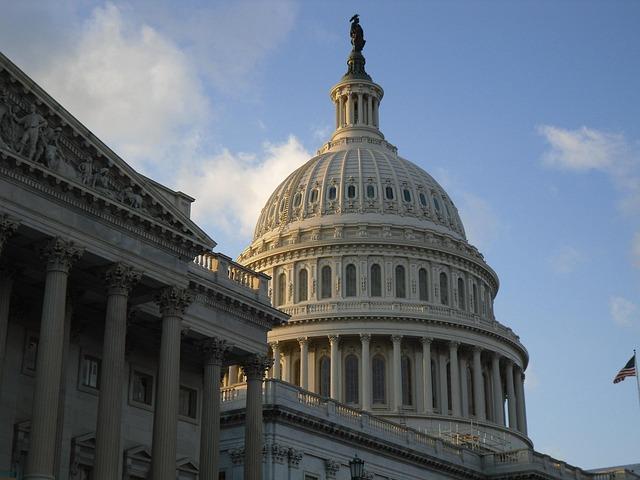
Donald Trump is highlighting a recent drop in crime in Washington, D.C., arguing that his tough-on-crime stance—and threats of federal action—forced local leaders to crack down. On the campaign trail and online, he frames the city’s improved numbers as a direct response to his pressure. Yet a closer look at crime statistics, historical patterns, and on-the-ground policy shifts in the District shows a far more layered reality—one that makes it difficult for any one politician, including Trump, to credibly claim singular credit for changing a city’s crime trajectory.
Trump’s crime narrative vs. Washington’s complex reality
At rallies and in interviews, Donald Trump has pointed to recent declines in several high-profile crime categories in Washington, D.C., casting them as proof that his rhetoric on law and order still shapes local behavior. The implication: even without the presidency, his public threats of federal intervention pushed the capital’s leaders into action.
Local data, however, tell a more nuanced story. Figures from the Metropolitan Police Department and the D.C. Sentencing Commission reveal that crime patterns in the district are being shaped by a mix of local decisions, demographic shifts, and post-pandemic adjustments. Homicides and carjackings, which surged between 2020 and 2023, have fallen from their peaks in early 2024. But criminologists warn that such swings are common in big cities and are rarely the product of a single speech, politician, or policy sound bite.
In fact, much of the change appears tied to:
– Adjusted policing tactics and deployment
– Evolving prosecution strategies
– Backlogged courts slowly normalizing after COVID disruptions
– Community-based violence prevention efforts
Local officials and neighborhood organizations—rather than outside federal actors—have been steering many of the changes, particularly in areas hardest hit by gun violence and car theft.
Crime is falling in some areas—but not across the board
Headline figures can make it sound as if Washington is enjoying broad, across-the-board safety gains. The reality is more uneven. While some serious violent crimes have retreated from recent highs, many residents and business owners say daily frustrations and fears have not disappeared.
Ongoing concerns include:
- Stubborn property crime including shoplifting, package theft, and auto break-ins
- Uneven policing outcomes between neighborhoods, with certain corridors seeing faster improvement than others
- Lingering court delays that slow down trials and sentencing, weakening the sense of swift accountability
| Offense | 2023 Trend | Early 2024 Shift |
|---|---|---|
| Homicide | Significant increase | Noticeable decline |
| Carjacking | Near historic highs | Sharp reduction |
| Theft | Elevated citywide | Mixed results, still high |
In this context, Trump’s assertion that his pressure alone “fixed” Washington functions more as a campaign narrative than an evidence-based explanation. It glosses over critical elements such as local governance choices, neighborhood-level interventions, broader population trends, and the still-evolving post-COVID urban landscape.
Post-Trump crime trends in D.C.: a patchwork, not a straight line
Since Donald Trump left office in January 2021, Washington, D.C.’s crime data have not followed a single clear arc. Instead, they show overlapping trends that reflect both global disruptions and distinctly local decisions.
Some key patterns:
– Homicides and carjackings climbed sharply through the pandemic and into 2023, then began to ease.
– Burglaries and some theft categories have shown a downward drift over the longer term, though they were disrupted by pandemic shutdowns and the gradual return of office workers and tourists.
– Downtown vs. neighborhood dynamics have diverged, with commercial corridors often recovering faster than certain residential areas.
Analysts cite several forces behind these shifts: the resurgence of nightlife and office activity, evolving drug markets, changes in youth behavior and school attendance, targeted enforcement against repeat offenders, and the slow clearing of court backlogs.
Citywide statistics mask deep neighborhood differences
Even when city totals look better, the lived experience of crime varies block by block. Some parts of the downtown core and major commercial strips have seen a visible reduction in overt street crime, while particular residential neighborhoods still report ongoing issues with auto theft, gunfire, and robberies.
A simplified look at directional trends, comparing the end of Trump’s presidency to more recent years, illustrates this complexity:
| Offense Type | 2020 Level* | 2023 Level* | 2024 Trend* |
|---|---|---|---|
| Homicide | Climbing | Higher peak | Declining from peak |
| Robbery | Fluctuating | Marked spike | Uneven decrease |
| Burglary | Falling | Lower than 2020 | Relatively stable |
| Motor vehicle theft | Moderate | Steep rise | Still high, slower growth |
- Violent crime shot up after 2020 and has only recently begun to edge down, complicating claims of any prolonged “Trump effect.”
- Property crime resumed its pre-pandemic pattern in some areas but remains troublesome in categories like auto theft and catalytic converter theft.
- Neighborhood-level experiences diverge dramatically, making sweeping political claims an unreliable guide to how safe residents actually feel.
*These reflect general directional patterns taken from local crime reports and public dashboards; exact year-to-year figures vary by data source and crime definition.
What’s really behind D.C.’s recent crime decline? Local policies and community work
Criminologists and city leaders tend to point away from presidential politics and toward a series of incremental but consequential changes made inside Washington’s own institutions. Much of this work began before Trump began spotlighting the city’s crime trends on the campaign trail.
Among the most important shifts:
– The Metropolitan Police Department has intensified a focused deterrence approach, zeroing in on a relatively small set of blocks and individuals driving a disproportionate share of shootings and armed robberies.
– Prosecutors have refined their handling of gun and repeat-offender cases, facing pressure from residents angered by high-profile incidents involving individuals with prior records.
– Courts have made more use of high-intensity supervision for people awaiting trial in serious cases, while working through pandemic-era backlogs.
– The city has expanded violence interruption, youth outreach, and housing stabilization programs that had been piloted on a smaller scale, particularly in neighborhoods repeatedly hit by gunfire.
While these moves generate far less national attention than campaign speeches, their timing lines up more closely with when and where crime has dipped most sharply. Blocks saturated with customized patrols, targeted investigations into gun trafficking, and embedded social services have often seen the earliest and steepest improvements.
A former D.C. police leader summed it up as “a stack of small gains”: not one big policy, but a combination of practical adjustments producing cumulative change.
Key components include:
- Retargeted patrols toward the small set of streets with chronic shootings and robberies
- Tighter follow-through on firearms cases in local courts, reducing quick returns to the street in serious incidents
- Expanded mediation and conflict resolution in public housing and high-density complexes
- Granular, updated hotspot maps that guide weekly deployment and investigative priorities
| Driver | What Changed | Observed Impact |
|---|---|---|
| Policing | Narrower focus on high-risk people and places | Drop in retaliatory shootings and some carjackings |
| Courts | More consistent sentencing in gun and violent cases | Longer incapacitation for serious repeat offenders |
| Community | Scaled-up outreach, including credible messengers and youth mentors | Earlier intervention in disputes before they turn violent |
How D.C. and federal officials can lock in real safety gains
If policymakers want to move beyond talking points and stake out a durable safety strategy, they will need to double down on approaches that data—not campaign slogans—actually support. That will require combining targeted enforcement with transparent reporting and sustained investments in the physical and social environment of high-crime areas.
1. Prioritize focused, data-driven enforcement
Instead of broad, low-yield crackdowns, decision-makers should keep channeling officers, investigators, and supervision resources toward:
– The relatively small group of individuals linked to repeated gun crimes
– The most active blocks and intersections for shootings, robberies, and carjackings
This means resisting the temptation to deploy showy sweeps that produce lots of stops and headlines but little measurable impact on serious violence.
2. Make crime data open, timely, and verifiable
Real accountability requires clear numbers. City and federal partners can:
– Maintain public, machine-readable crime dashboards that track reported offenses, clearances, and court outcomes
– Invite independent researchers and watchdog groups to audit data and methods
– Publish regular, accessible summaries explaining trends and changes in strategy
Such transparency makes it harder for any side to cherry-pick numbers or spin short-term fluctuations into sweeping claims.
3. Invest in environmental and social conditions where crime clusters
Research across multiple U.S. cities shows that relatively modest physical changes—like repairing streetlights, activating vacant lots, and improving transit access—can produce sustainable safety benefits. To build on that:
– Expand street lighting, park upgrades, and blight removal in the same hotspots that receive enhanced patrols
– Scale up youth violence interruption and mentorship in neighborhoods with persistent shootings
– Pair enforcement actions with housing and employment supports to stabilize individuals most at risk of involvement in violence
Critically, officials should publish before-and-after results, including any changes in racial disparities, to ensure that improvements in safety do not come at the expense of civil rights.
4. Evaluate what works—and end what doesn’t
Programs and tactics should be judged by outcomes, not rhetoric. That means:
- Target high-harm offenders with narrowly focused investigations, rather than sweeping dragnets
- Maintain real-time public dashboards that allow residents to track whether claims of progress match reality
- Back environmental fixes such as better lighting, safer transit stops, and maintained public spaces
- Attach clear metrics and sunset clauses to major public safety initiatives, winding down those that fail to show results
| Policy Tool | Evidence Trend | Political Appeal |
|---|---|---|
| Hotspot patrols | Reliable short-term reductions in crime | Moderate |
| Broad stop-and-frisk campaigns | Limited effectiveness, high civil-liberties concerns | High |
| Environmental design and place-based fixes | Strong, lasting gains, especially for property and street crime | Lower, less visible to voters |
| Violence interrupter programs | Mixed results, highly dependent on implementation and local context | Moderate |
The Conclusion
As the 2024 campaign cycle intensifies, claims about crime in Washington, D.C., are likely to become louder, sharper—and less accurate. The available data show a reality that defies simple slogans: violent crime remains a serious concern even as some categories decline; year-to-year swings are normal; and drawing straight lines from any single politician to citywide crime outcomes is not supported by evidence.
Whether crime continues to fall or rises again will depend on a dense network of local decisions about policing, prosecution, social services, and urban planning—not on who delivers a rally speech a few miles away. As voters sift through competing boasts and blame, the numbers themselves will continue to reflect the impact of practical policies and neighborhood-level work, not campaign spin.