
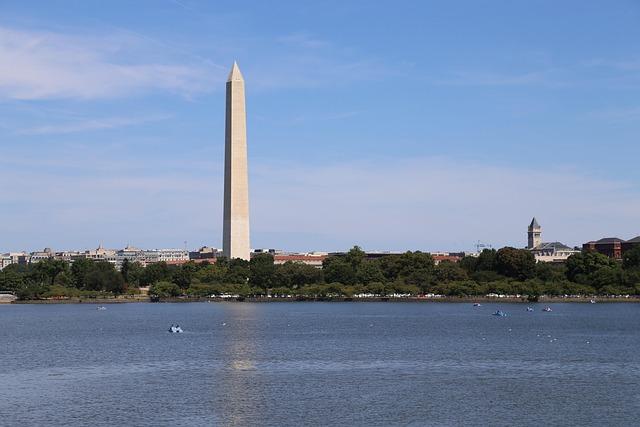
The nation’s capital is gearing up for a landmark moment in American motorsport as the Freedom 250 Grand Prix of Washington, DC powers onto the calendar with full live coverage on FOX Sports. Set against monuments, museums, and sweeping avenues, the Freedom 250 Grand Prix of Washington DC blends big-city drama with top-tier racing, turning the city’s streets into a high-speed arena. Every lap, strategic gamble, and championship-defining move will be broadcast nationwide, positioning this event as a new centerpiece for fans and a bold showcase of urban racing in the United States.
As the final barriers go up and teams complete their last simulations, the Freedom 250 is already being discussed as a potential long-term pillar of the U.S. racing scene—a race that unites elite competition, patriotic atmosphere, and cutting-edge broadcast technology under one unmistakable skyline.
FOX Sports turns Washington, DC into a live racing stage: new camera tech, data tools, and immersive Freedom 250 coverage
FOX Sports is approaching the Freedom 250 Grand Prix of Washington DC as both a race and a live-action city portrait, designing its coverage so that Washington itself feels like part of the starting grid. High-altitude camera systems will chart sweeping views along Pennsylvania Avenue and over the National Mall, while onboard 4K cams and helmet-mounted lenses will capture every steering correction and curb strike through the tight federal corridors.
Viewers will see “Capital View” split-screen replays pairing live telemetry with overhead city references, helping fans understand not only what happened but where it happened in relation to DC’s most recognizable landmarks. A redesigned graphics suite mirrors the sharp aesthetics of Washington’s monuments, with minimalist fonts and clear data overlays that make complex information easy to follow at race pace.
In FOX Sports’ main studio, an upgraded data wall will fuel deeper analysis. Commentators will be able to call up live models showing tire wear projections, fuel windows, virtual safety-car probabilities, and expected pit-stop deltas, giving fans unprecedented insight into why teams make certain calls in real time.
Beyond the core race feed, fans can expect:
- Extended pre-race programming that weaves together policy, local history, and motorsport culture, highlighting how major events like the Freedom 250 fit into Washington’s civic identity.
- Live driver radio segments during crucial strategy inflection points, including green-flag runs, pit cycles, and caution periods, allowing viewers to hear the tension and calculation inside the cockpit.
- Fan cam mosaics aggregating curated clips and social posts from around the circuit—rooftops, grandstands, and watch parties—building a crowd-sourced mosaic of race-day energy.
- Hyper-local weather and air-quality overlays tuned to individual sections of the track, giving context when wind shifts, humidity spikes, or air quality indices may influence strategy.
| Innovation | Track Impact | Fan Experience |
|---|---|---|
| Smart Safety Zones | Adaptive yellow-flag lighting | Clear, instant incident info |
| Hybrid Pit Stalls | Quieter, faster stops | Better audio for TV and grandstands |
| Edge-to-Edge Wi‑Fi | Real-time setup feedback to teams | Latency-free in-app timing and replays |
| Geo-Targeted LED Boards | Dynamic braking-point cues | Localized stats for each corner |
These innovations align with broader shifts in sports broadcasting. According to recent industry surveys, more than 60% of motorsport fans now use a second screen while watching live events, making live data feeds, interactive maps, and camera choice increasingly central to how audiences consume a race. The Freedom 250 Grand Prix of Washington DC on FOX Sports is built to meet that expectation.
Reimagining a street race in the capital: logistics, safety, and how the Freedom 250 reshapes Washington, DC neighborhoods
Routing a 250-mile race through Washington’s federal corridors and residential blocks has forced organizers to rewrite the usual playbook for urban motorsport. The Freedom 250 layout threads past agencies, monuments, parks, and apartment buildings, requiring a delicate balance between spectacle, safety, and day-to-day city life.
Engineers have mapped existing boulevards and intersections into a high-speed circuit by adding custom chicanes, expanding runoff areas, and reinforcing barrier systems. Using advanced “digital twin” modeling, planners can simulate crashes, medical responses, and evacuation paths down to the second, then refine marshal placement and emergency vehicle staging before a single car rolls out.
To minimize disruption for residents and commuters, event operations are built around precision timing and containment:
- Dynamic street closures that reopen specific blocks between practice, qualifying, and race sessions, reducing downtime for businesses and local traffic.
- Dedicated transit corridors preserved for buses, Metro shuttle routes, and first responders to keep essential services running even during peak race activity.
- Noise-mitigation walls and acoustic barriers installed near sensitive sites such as schools, places of worship, and senior-living facilities.
- Geo-fenced rideshare hubs that concentrate drop-offs and pick-ups in controlled areas, limiting random congestion within residential streets.
| Zone | Safety Focus | Neighborhood Benefit |
|---|---|---|
| Capitol Loop | Reinforced barriers, wider escape roads | Improved crosswalk lighting year-round |
| Waterfront Sector | Enhanced flood and crowd controls | Upgraded bike lanes and signage |
| Shaw Connector | Speed-restricted service alleys | Sidewalk repairs and street trees |
Residents along the Freedom 250 Grand Prix route are seeing more than just temporary fencing—they’re seeing long-term urban upgrades. Community benefit agreements negotiated with advisory neighborhood commissions and local groups guarantee concrete commitments: hiring quotas that prioritize DC workers for event staffing, dedicated vendor rows for DC-based small businesses, and formal post-race reviews analyzing noise, congestion, and air quality impacts.
This framework reflects a broader trend in major-event planning. Cities like Singapore and Montréal have shown that street races can coexist with daily life when paired with infrastructure investment and clear community protections. Washington’s approach with the Freedom 250 is being watched closely by urban planners as a potential model for how historic, high-density cities can embrace large sporting events without sacrificing livability.
Who can win the Freedom 250 Grand Prix of Washington DC? Contenders, setups, and strategies that could decide the race
As trucks roll into the paddock and engineers unpack laptops, attention turns to the teams most likely to control the narrative of the Freedom 250 Grand Prix of Washington DC. The circuit forces a hard choice between different philosophies: slippery, low-drag machines that fly down the Potomac-side straights, versus cars tuned for mechanical grip and stability under brutal braking in the heart of downtown.
Early simulations point to a race defined by energy deployment and tire discipline. With hybrid systems playing a central role, the drivers who can manage battery charge and discharge through traffic while preserving tire life on a rough street surface will hold the upper hand, particularly in the critical middle phase of the 250 miles when track temperatures peak and caution periods tend to cluster.
Crew chiefs are leaning toward flexible, race-focused setups instead of one-lap glory. The prevailing belief in the paddock: a car that qualifies second or third but comes alive after Lap 40 may be more valuable than a pole-sitter that fades as rubber builds up.
Expect to see:
- High-downforce configurations to keep cars planted through the complex turns around K Street and similar heavy braking zones.
- Low-drag aero trim tailored for aggressive overtaking moves along the Capitol-adjacent backstretch.
- Split tire approaches that pair grippy, short-life compounds with more durable options, creating strategic crossovers as stints evolve.
- Fuel-map cycling that alternates between push modes for attack laps and lean settings for conservation, especially before expected safety-car windows.
- Safety-car ready strategies with multiple pre-modeled pit plans ready to deploy at the first sign of a yellow flag.
| Contender | Primary Strength | Strategic Focus |
|---|---|---|
| Capital Dynamics Racing | Qualifying pace | Front-row start, track-position defense |
| Potomac Performance | Long-run tire life | Undercut on worn fields, late surge |
| Monument Motorsports | Hybrid deployment | Energy push on restarts, bold passes |
| Federal Street GP | Pit-stop execution | Short fills, two-stop gamble |
Layered on top of these car-specific choices is a surge in data-driven race craft. Leading outfits will run live strategy models that ingest updated weather forecasts, wind direction, on-track incidents, and tire performance data lap by lap. These tools can instantly recalculate whether to extend a stint, pit under a safety car, or swap team orders.
Fans should watch for:
– Teams “stacking” cars in the same pit box during cautions to minimize time lost under yellow.
– Drafting alliances between teammates down the longest straights to protect track position on restarts.
– Subtle tweaks in rear-wing angle late in the race as teams trade stability for top speed in a final push.
In such a tight field, the margin of victory may come down to micro-decisions: the timing of a push-to-pass activation, an aggressive call to stay out on worn tires, or a last-minute choice to sacrifice a grid row in qualifying to gain a more drivable race setup.
How to watch the Freedom 250 Grand Prix of Washington DC on FOX Sports: schedule, platforms, and viewing tips
Fans who want to experience the Freedom 250 Grand Prix of Washington DC from home will find the event integrated across the full FOX Sports ecosystem. The main live race will air on FS1 in most regions, with surrounding coverage and shoulder programming on FS2 and via the FOX Sports app. Because regional affiliates can occasionally adjust schedules, viewers should confirm local airtimes on their electronic program guide or inside the app’s schedule tab.
For those watching without traditional cable, authenticated streaming remains the primary path. Participating providers will offer live access via login, and most will support replay viewing shortly after the race conclusion. Multi-device households can combine the main FS1 feed on a television with additional views—onboard cameras, live timing, and pit-lane perspectives—on tablets, phones, or desktops.
| Platform | Coverage | Notes |
|---|---|---|
| FS1 | Main race broadcast | HD, English commentary |
| FS2 | Practice & qualifying | Check regional schedule |
| FOX Sports app | Live stream & replays | Login with TV provider |
To get the most value from the FOX Sports coverage of the Freedom 250 Grand Prix of Washington DC, analysts suggest approaching it like a full race-day experience:
- Use the pre-race shows to understand likely strategies, tire allocations, and evolving weather patterns that could tilt the race one way or another.
- Switch between onboard and pit-lane feeds when available to follow undercut attempts, slow stops, or bold calls to stay out on old tires during caution periods.
- Stay tuned for post-race breakdowns that unpack stewards’ decisions, controversial incidents, and the implications for the championship chase going forward.
Before lights out, viewers should also ensure their apps are updated, streaming devices are tested, and login credentials are handy. With motorsport viewership in North America growing—recent seasons across major series have seen audience bumps in the mid-single-digit percentage range—events like the Freedom 250 are increasingly designed for fans who want both the drama and the data.
Conclusion: The Freedom 250 Grand Prix of Washington DC and the future of American street racing
When the last car crosses the finish line and crews begin to dismantle grandstands, the Freedom 250 Grand Prix of Washington DC will leave behind far more than temporary tire marks on city streets. It will have demonstrated that the nation’s capital can double as a complex, world-class racing venue, fusing political symbolism, modern infrastructure, and competitive motorsport into a single, high-impact weekend.
On track, the event delivers everything fans expect from a premier series: daring overtakes into heavy braking zones, razor-thin pit-lane margins, and championship contenders taking calculated risks for crucial points. Off track, it offers a new lens on Washington, repositioning the city not only as a center of governance but as a versatile stage for major sporting events that demand meticulous planning and collaboration.
For teams, the data gathered here—from hybrid deployment patterns to tire wear on urban asphalt—will shape strategy decisions at the next rounds on the schedule. For FOX Sports viewers, the Freedom 250 Grand Prix of Washington DC is less an endpoint than a key chapter in a season defined by innovation, rivalry, and evolving race craft.
As the calendar rolls forward, the checkered flag in Washington stands as a marker of what modern American street racing can be: technologically advanced, city-conscious, and unafraid to turn iconic downtown avenues into the ultimate test of speed and strategy.