
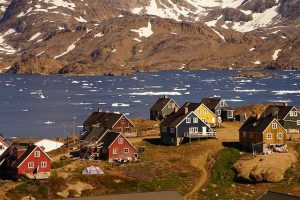




The latest U.S.–Denmark agreement on American military access to bases in Greenland has temporarily cooled tensions in the Arctic, but it has not erased long‑standing uncertainty about Washington’s goals in the region. Framed by all parties as a technical update to an aging defense framework, the pact lands at a moment of sharp geopolitical competition in the High North and growing frustration in Nuuk over being treated as a strategic asset rather than a political equal. Public statements from Washington, Copenhagen and Nuuk emphasize stability and continuity; privately, however, many Greenlanders still question whether their sovereignty, livelihoods and environment will again be overshadowed by great‑power maneuvering.
Greenland’s guarded approval: Pragmatic reset, not a breakthrough
In Nuuk, the renewed U.S. military pact is widely seen as a necessary recalibration rather than a cause for celebration. Greenland’s political leadership has become far more assertive on foreign and security policy in the last decade, and officials describe the new deal as a late but welcome recognition of their role as decision‑makers, not bystanders. Their endorsement, however, is explicitly conditional.
The caution is rooted in history. Memories of Cold War land seizures, decisions made in Copenhagen and Washington without local input, and the enduring presence of Thule Air Base still shape public debate. For many in civil society—particularly younger politicians, activists and community leaders—those experiences are a reminder that promises of “partnership” can quickly give way to unilateral decisions.
Greenlandic stakeholders are therefore tying any deeper U.S. engagement to concrete, measurable gains at home. They stress that security cooperation must be matched with socioeconomic opportunities, environmental accountability and transparent decision‑making processes—rather than being confined to elite diplomatic channels.
- Formal consultation with the Greenlandic parliament (Inatsisartut) before any future expansion of U.S. facilities or changes in operational scope.
- Legally binding safeguards on environmental protection and cleanup, including legacy pollution and Cold War–era contamination sites.
- Local job creation and skills transfer in sectors such as construction, logistics, technology and dual‑use infrastructure management.
- Transparent data-sharing regarding surveillance systems, early‑warning radars and Arctic monitoring networks located on Greenlandic territory.
| Issue | Historical Pattern | Current Expectation |
|---|---|---|
| Local consent | Key decisions forged in Copenhagen–Washington channels with minimal Greenlandic input | Nuuk represented directly in all negotiations and strategic reviews |
| Environment | Unresolved waste sites and persistent fears tied to nuclear‑era activities | Specific remediation timelines and dedicated funding for cleanup |
| Economy | Limited spillover benefits for local firms and workers | Structured contracts and procurement opportunities for Greenlandic companies |
Arctic security gains versus anxiety over dependence on Washington
From a strategic standpoint, Nuuk’s policymakers recognize that the renewed U.S. presence brings real advantages. With Russia expanding its Arctic capabilities and China pursuing polar research, shipping and investment projects, enhanced U.S. radar coverage, joint training and upgraded infrastructure are seen as essential tools for safeguarding Greenlandic and broader North Atlantic security.
Officials underscore that U.S. military assets can be leveraged for search-and-rescue operations, maritime domain awareness and environmental monitoring across a vast territory whose coastline is more than 44,000 kilometers long. These capabilities, they argue, can elevate Greenland’s voice in regional forums such as the Arctic Council and NATO discussions on the High North. The agreement also opens a more direct channel between Nuuk and Washington, softening Denmark’s traditional gatekeeper role and giving Greenland new leverage in transatlantic security debates.
Still, the fear of exchanging one dependency for another runs deep. Critics within the Inatsisartut and among NGOs warn that a larger U.S. footprint could gradually constrain Greenland’s policy options, especially if future economic support or infrastructure upgrades are implicitly tied to defense concessions. There is also apprehension that key contracts and high‑value jobs will flow to foreign firms, leaving only low‑paid or temporary work for local residents.
In public meetings, community organizers often frame the discussion around two core principles: balance and reciprocity. They argue that Greenland should not simply host strategic installations, but must also shape how they are used and how benefits are distributed. Before fully embracing Washington’s security umbrella, many want enforceable guarantees on environmental standards, open information flows and lasting social benefits.
Denmark and Greenland converge on transparency and shared control over U.S. bases
Copenhagen and Nuuk, despite different constitutional roles, are increasingly aligned on one key point: decisions affecting Greenland’s territory and communities must be more transparent, and must involve Greenlandic authorities from the outset. Danish and Greenlandic diplomats have been discussing new oversight mechanisms aimed at turning consultation into genuine co‑management.
Draft ideas under consideration include institutionalized oversight bodies, clearer reporting obligations for the U.S., and joint committees to monitor environmental and security risks. Both governments want regular, detailed briefings on how installations operate, how they might evolve, and what long‑term infrastructure is planned.
- Formalized access to operational information, including risk assessments and long‑term planning documents.
- Joint monitoring teams to track compliance with environmental and health‑and‑safety standards.
- Predictable consultation timelines before major upgrades, new deployments or technology changes are authorized.
- Shared crisis protocols detailing roles and responsibilities in case of accidents, pollution incidents or security threats.
| Proposed Mechanism | Danish Role | Greenlandic Role |
|---|---|---|
| Annual Base Review Council | Chairs negotiations and coordinates with U.S. defense officials | Prepares and presents local social, economic and environmental impact reports |
| Joint Transparency Portal | Oversees security vetting and classification of sensitive data | Publishes accessible public summaries and outreach materials |
| Environmental Task Force | Provides regulatory oversight and aligns standards with EU/NATO norms | Conducts on‑site inspections and engages affected communities |
Both Copenhagen and Nuuk now make clear that endorsing future U.S. upgrades will be politically challenging if local communities feel decisions are imposed from above. In Greenland, parties across the political spectrum increasingly treat transparency and shared decision making as the core of Arctic security policy, not a peripheral demand. In Denmark, policymakers argue that more inclusive governance is essential to keeping the defense arrangement compatible with democratic standards and public opinion.
Rethinking future agreements: Binding safeguards, social dividends and climate resilience
Policy experts in both capitals argue that any successor to the current defense framework should move beyond aspirational language and establish legally enforceable social and environmental safeguards. In their view, security cooperation can only be sustainable if it is anchored in community benefits and robust climate planning.
Proposals from think tanks, academic institutions and independent commissions emphasize clear benchmarks for local hiring, targeted education and training pipelines, and meaningful indigenous consultation protocols. Analysts stress that impact assessments should be publicly available in both Greenlandic and Danish, and that research data gathered through Arctic monitoring programs should be shared with Greenlandic universities and institutions rather than remaining confined to foreign agencies and think tanks.
- Mandatory local benefit clauses attached to major construction, maintenance and logistics contracts, ensuring Greenlandic companies and workers have first opportunities.
- Ring-fenced funds earmarked for coastal protection, infrastructure reinforcement and adaptation to thawing permafrost and changing sea ice.
- Independent oversight body with a Greenlandic majority, empowered to audit compliance and recommend corrective measures.
- Periodic review clauses allowing renegotiation of terms as climate risks, technological capabilities or geopolitical conditions evolve.
| Priority Area | Proposed Safeguard |
|---|---|
| Community Investment | Allocate 5–10% of base‑related spending to local infrastructure, health, education and cultural projects |
| Climate Resilience | Create a joint U.S.–Greenland fund for coastal defenses, early‑warning systems and climate‑adapted infrastructure |
| Transparency | Publish annual, independently reviewed reports on social, economic and environmental impacts |
Climate experts emphasize that Arctic warming is proceeding at roughly three to four times the global average, according to recent scientific assessments. This rapid change is already reshaping Greenland’s coastlines, fisheries and infrastructure. For them, any long‑term U.S. military presence must integrate adaptation and resilience planning from the outset—treating climate risk as a central pillar of security, not a peripheral add‑on.
They point to existing models under NATO, the EU and other multilateral frameworks where infrastructure funding is contingent on emissions standards, biodiversity safeguards and climate‑proof design. Applying comparable criteria in Greenland, they argue, could turn the defense pact into a pioneering example of rights-based Arctic governance, in which strategic imperatives are weighed against the survival of small coastal communities facing rising seas, unstable ground and shifting ecosystems.
Conclusion: A test of credibility for U.S. Arctic policy
The updated U.S. military arrangements in Greenland have helped defuse some of the immediate friction in the Arctic relationship among Washington, Copenhagen and Nuuk. Formal statements emphasize mutual respect, shared security interests and a modernized partnership. Yet distrust has not vanished: skepticism persists in the Greenlandic capital, among Danish legislators and across a wider region anxious about a renewed era of great‑power competition in the High North.
Whether this agreement evolves into the foundation of a more balanced partnership—or becomes another episode in a long record of unequal ties—will depend far more on implementation than on the text itself. Delivering clear benefits to Greenland’s population, expanding transparency around U.S. activities, and ensuring that local authorities shape rather than simply receive strategic decisions will be the key measures of success.
For now, the pact highlights two realities at once: Greenland remains central to U.S. defense and Arctic security planning, and American influence faces real limits in a politically more assertive and climate‑stressed Arctic. As ice melt accelerates and geopolitical rivalry intensifies, the central question is no longer whether Washington can secure its interests in Greenland, but whether it can do so while convincingly supporting the long‑term aspirations of Greenlanders and Danes who increasingly expect to be full partners in charting the future of the High North.


