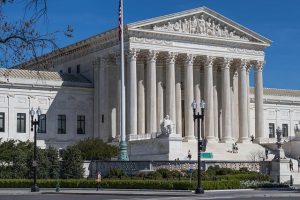



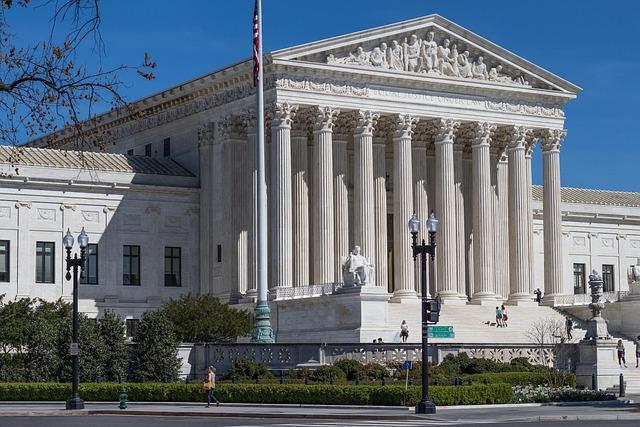
The U.S. Supreme Court is weighing, for the first time, the constitutionality of “geofence” warrants—broad digital dragnets that compel tech companies to hand over location data on every device within a defined area during a specified time frame. The practice, increasingly used by law enforcement to identify suspects in criminal investigations, has ignited a high-stakes clash between public safety and digital privacy. As the justices probe whether such warrants run afoul of Fourth Amendment protections against unreasonable searches, their eventual ruling could reshape the boundaries of surveillance in an era when smartphones quietly log the movements of millions of Americans.
Supreme Court questions sweeping reach of geofence warrants in digital dragnet cases
During oral arguments, several justices pressed government lawyers on whether warrants that compel tech companies to disclose location data for every device within a broad radius risk turning routine investigations into digital fishing expeditions. The questioning revealed unease with a practice that can sweep in hundreds of innocent bystanders whose only “suspicious” act was being in the wrong place at the wrong time. Civil liberties advocates argue that such tools invert traditional policing by starting with a vast pool of unknown individuals and working backwards to identify suspects, raising the specter of mass, suspicionless surveillance. In response, prosecutors emphasized the investigative value of the technique in cases where leads are scarce, insisting that existing warrant requirements and judicial oversight already impose meaningful limits.
The justices explored narrower alternatives and potential safeguards, including more precise geographic boundaries, shorter time windows and prompt deletion of irrelevant data. Legal analysts noted that the outcome could establish a new baseline for how far law enforcement may go in mining location histories stored by tech companies. Key points under scrutiny include:
- Scope of data requests – how many devices and how much time can be covered
- Degree of anonymization – whether initial data must be de-identified
- Notice and transparency – what users and courts are told about these searches
- Limits on reuse – whether collected data can be used beyond the original case
| Issue | Privacy Concern | Law Enforcement View |
|---|---|---|
| Radius & timeframe | Overbroad capture of bystanders | Necessary to avoid missing suspects |
| User anonymity | Risk of easy re-identification | Can be phased, from anonymous to named |
| Data retention | Long-term tracking potential | Valuable for follow-up leads |
Privacy at the crime scene how location data turns millions of bystanders into potential suspects
Unlike traditional warrants that name a suspect or specific device, these digital dragnets start with a place and time, scooping up data from every phone that happened to be nearby. That shift has turned everyday activities — walking a dog, visiting a clinic, waiting for a bus — into digital breadcrumbs preserved on corporate servers and later parsed by police. Civil liberties advocates warn that this transforms millions of ordinary people into data points in an investigative sweep, often without their knowledge. In practice, an evening stroll through a neighborhood where a robbery occurs, or a brief stop at a bank where a bomb threat is called in, can thrust an unwitting bystander into the early stages of a criminal probe.
Critics say the quiet expansion of these tools risks normalizing suspicion by algorithm, where presence in a digital radius can feel as damning as fingerprints. Privacy lawyers point out that people whose movements are disclosed under these warrants may never be notified or given a chance to challenge the search. Rights groups highlight how this approach can amplify existing inequities through:
- Mass data capture that gathers information on everyone near a crime scene, not just likely suspects.
- Chilling effects on protests, religious observance and medical visits as people fear their movements will be logged.
- Opaque procedures that leave users unaware their location history has been scanned, flagged or shared.
| Role | How Location Data Is Used |
|---|---|
| Bystander | Device ID collected in a digital radius sweep |
| Investigator | Filters and ranks devices seen near the incident |
| Court | Weighs broad public safety claims against privacy harms |
Tech firms caught in the middle as justices weigh limits on police access to user data
As the Supreme Court considers how far investigators can go in demanding location data from tech companies, digital giants such as Google, Apple and Meta are finding themselves at the fault line between law enforcement imperatives and civil liberties. These companies face mounting pressure from all sides: police and prosecutors seeking swift access to digital footprints, judges probing the constitutional limits of dragnet data sweeps, and users increasingly wary of invisible surveillance built into everyday devices. Corporate legal teams are recalibrating their playbooks, weighing when to challenge warrants they see as overly broad, when to quietly comply, and how to maintain public trust while operating under often-sealed court orders.
The stakes are high, not only for criminal investigations but for the tech sector’s business model and global reputation. Firms are updating transparency reports, revising data retention policies, and lobbying in Washington for clearer statutory guardrails. Key tensions include:
- Privacy vs. safety: Whether mass data collection can be justified by potential investigative gains.
- User trust: How frequent disclosures to police may erode confidence in cloud and mobile services.
- Compliance costs: The operational burden of processing complex, large-scale warrants.
- Global ripple effects: How a U.S. ruling could influence data demands by foreign governments.
| Company | Typical Response | Key Concern |
|---|---|---|
| Partial data, narrowed by time and place | Bulk location queries | |
| Apple | Limited logs, strong device encryption | Protecting on-device privacy |
| Meta | User records under court order | Volume of law enforcement requests |
Congress urged to set clear standards for location tracking as court signals appetite for new rules
Legal scholars and privacy advocates are pressing lawmakers to move faster than the courts, warning that the rapid expansion of location-based policing has outpaced statutes written for an analog era. They argue that Congress should define when bulk digital location data can be accessed, how long it may be stored, and what kind of judicial oversight is required. Central to their demands are clearer thresholds for probable cause and explicit protections against dragnet-style searches that sweep in people who happened to be near a crime scene but have no connection to the offense. Civil liberties groups stress that without bright-line rules, law enforcement, tech companies, and judges are left to improvise policy through case-by-case decisions—an approach they say risks inconsistent outcomes and eroding trust.
Policy proposals circulating on Capitol Hill focus on narrowing the circumstances in which federal and local agencies may deploy such tools and imposing stronger transparency obligations. Advocates are calling for:
- Strict warrant standards that limit broad, backward-looking searches of historical location data.
- Clear minimization rules requiring the prompt deletion of data on uninvolved bystanders.
- Mandatory notice provisions so affected users eventually learn their data was swept into an investigation.
- Public reporting by agencies and tech firms on the volume and scope of location-data requests.
| Key Issue | What Advocates Want |
|---|---|
| Scope of warrants | Tightly targeted requests, not broad data dragnets |
| Data on bystanders | Automatic filtering and rapid deletion requirements |
| User transparency | Delayed notice and clear disclosures of government access |
Final Thoughts
As the justices weigh how far law enforcement may reach into troves of digital location data, the outcome could redefine the boundaries of privacy in the smartphone era. A ruling is not expected for several months, but legal experts say the decision is likely to reverberate well beyond the specific Google records at issue, shaping how courts, tech companies and police navigate the balance between investigative power and constitutional protections in years to come.