
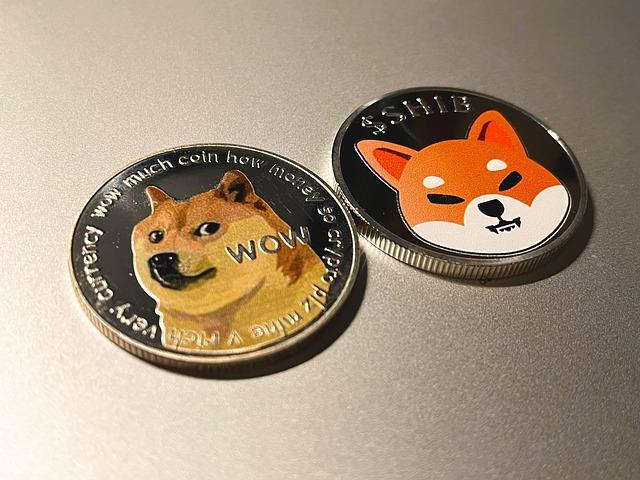
Dogecoin was never supposed to be a permanent fixture in finance. Launched in 2013 as a tongue‑in‑cheek experiment based on a viral Shiba Inu meme, it was widely written off as a novelty in an already saturated cryptocurrency market. Yet more than ten years later, the “joke” coin not only survives but remains impossible to ignore. Its emblem shows up on debit cards, billboards, sports sponsorships, and conference swag. It trades on top‑tier exchanges, powers online tipping, and commands a community that sees wild price swings as part of the entertainment. In a financial ecosystem that keeps rewarding attention, Dogecoin forces a serious question: what exactly qualifies as a joke when markets continue to price it in?
Dogecoin’s Unfinished Punchline: Why the Meme Coin Refuses to Disappear
Dogecoin began as a satire of early crypto hype, a playful response to an industry that often took itself too seriously. Over time, though, it evolved into a kind of permanent digital tag—sprayed across the walls of internet culture, speculative trading, and even political fundraising. Each time commentators declare that “DOGE is finally dead,” it resurfaces in a new context: emblazoned on racing cars, mentioned in late‑night TV monologues, or embedded as a tipping button on community platforms.
Its longevity has less to do with cutting‑edge technology and more to do with story and participation. Dogecoin’s narrative is crowd‑owned and continuously rewritten by online communities that specialize in irony but deploy actual capital. In an industry littered with inactive GitHub repos and abandoned Telegram groups, this particular meme has managed to retain an active, if chaotic, base.
Market behavior underscores the shift from one‑off curiosity to persistent background presence. Dogecoin now functions as a kind of ambient asset in digital finance—always there, even when it’s not trending:
- On‑ramp apps: Major retail trading platforms continue to list Dogecoin near the top of their crypto menus, often alongside Bitcoin and Ethereum.
- Social media: Mentions spike whenever a celebrity, especially tech or entertainment figures, posts a dog meme or cryptic comment.
- Entry‑level exposure: A notable share of casual traders still cite DOGE as their first cryptocurrency purchase, particularly during hype cycles.
- Community infrastructure: Fans maintain forums, Discord servers, and Reddit threads where DOGE is used, discussed, and promoted daily.
These recurring signals show how Dogecoin has moved from a fleeting prank to a fixture in retail speculation. They are reinforced by a set of micro‑dynamics that keep attention and liquidity circulating:
- Retail loyalty from early buyers who never sold and continue to identify with the coin.
- Pop‑culture crossovers that periodically bring DOGE back into mainstream news cycles.
- Perceived affordability that encourages micro‑bets even when broader markets are bearish.
- Grassroots promotion through memes, community drives, and viral stunts instead of traditional advertising.
| Signal | Where It Appears | Effect |
|---|---|---|
| Celebrity Mentions | Social Media Posts | Short‑term price and volume spikes |
| Micro Purchases | Retail Trading Apps | Broadens the holder base over time |
| Merch & Memes | Online Marketplaces | Reinforces brand persistence |
| Tip Jars | Creator Platforms | Supports everyday, low‑value transactions |
As of 2024, Dogecoin still ranks within the top cryptocurrencies by market capitalization, often fluctuating in and out of the top 10–15 assets, with a multi‑billion‑dollar valuation that rivals publicly listed companies. That sheer scale makes it hard for institutions, regulators, and platforms to treat it as a harmless sideshow.
From Running Gag to Digital Plumbing: How Dogecoin Underpins Online Interactions
Dogecoin may have started as an internet joke, but today it operates as quiet infrastructure in a surprising number of digital spaces. On forums, livestreams, and chat platforms where credit cards feel too formal or too slow, DOGE acts as a default “tip currency.” It flows through Discord servers, Reddit communities, streaming platforms, and small creator storefronts as a kind of informal, cross‑border cash.
Because transaction fees are typically low and sending even tiny amounts is culturally acceptable, micro‑payments that would be impractical in traditional systems suddenly become viable. This behavior has created a shadow layer of compensation for online work that often goes unpaid in ad‑driven models—moderation, meme creation, community organizing, and fan contributions.
- Creator economies: Streamers, illustrators, writers, and modders accept DOGE as a light‑hearted but genuine form of payment for shout‑outs, custom work, and bonus content.
- Community governance: Groups use shared Dogecoin wallets to crowdfund moderator tools, server upgrades, contests, and local meetups.
- Charity and activism: Grassroots initiatives rely on DOGE wallets to move funds quickly across borders, especially during emergencies when conventional channels lag or impose high fees.
| Use Case | Why DOGE? | Impact |
|---|---|---|
| Social tipping | Fast, low‑friction transfers | Rewards viral posts and community contributions |
| Micro‑donations | Allows extremely small transfers | Channels support to niche and long‑tail creators |
| Global fan payments | Works without local bank accounts | Lets international audiences pay creators directly |
DOGE in Commerce: A Low‑Stakes On‑Ramp for Brands and Buyers
On the commercial front, Dogecoin has taken on an unexpected role as a low‑pressure way for businesses to experiment with cryptocurrency. Rather than signaling high finance or institutional adoption, accepting DOGE often signals cultural fluency—the brand “gets the internet.”
E‑commerce shops, indie game studios, VPN providers, and digital services have added Dogecoin to their checkout options alongside traditional processors like Visa, Mastercard, and PayPal. In most cases, DOGE payments still represent a tiny proportion of overall sales. Yet merchants report that these transactions punch above their weight in terms of social engagement, customer loyalty, and brand visibility.
For consumers, spending a meme coin can feel less intimidating than moving Bitcoin or stablecoins; the transaction is framed as fun experimentation rather than serious portfolio allocation. For businesses, it doubles as a sandbox for learning how blockchain payments, accounting, and volatility management fit into their existing operations without committing to a wholesale shift in infrastructure.
The Engine Behind the Meme: What Really Keeps Dogecoin Alive
If you strip away the dog memes and slogans about “going to the moon,” Dogecoin’s persistence can be traced to a network of overlapping incentives. Online culture keeps it in motion: tipping rituals on Reddit and Discord, shout‑outs during livestreams, in‑jokes on X (Twitter), and viral TikToks all generate a constant low hum of activity that most token projects could never afford to buy.
Many retail traders, fatigued by opaque DeFi protocols and complex yield schemes, see Dogecoin as straightforward: cheap to enter, easy to describe, and wrapped in a narrative that feels like a playful jab at legacy finance. Crypto exchanges amplify this by giving DOGE prime placement in trading interfaces, knowing it reliably attracts high retail volume and transaction fees.
This interplay—between speculation, humor, and accessibility—creates a self‑reinforcing loop. As long as people are entertained and can move in and out of positions easily, liquidity tends to linger even when prices swing violently or expert commentary turns negative.
At the same time, several more durable forces help anchor Dogecoin’s presence:
- Platform integrations: Payment processors, wallets, and fintech apps keep adding DOGE support because user demand, however cyclical, remains identifiable and noisy.
- Merchant adoption: Businesses use it as a marketing lever—accepting DOGE becomes a talking point that earns media coverage and social shares.
- Ongoing development: A lean but active group of developers maintains the core codebase, issues updates, and monitors network security, preventing the chain from stagnating.
- Cultural ubiquity: The Shiba Inu meme has effectively become a global shorthand for crypto culture itself, blurring the line between brand and ecosystem.
Industry observers often boil this down to a simple equation: as long as three things overlap—attention, liquidity, and a functioning network—an asset like Dogecoin can remain viable well beyond its expected shelf life.
- Social capital: For some holders, using DOGE is part of their online persona, conferring status or in‑group membership.
- Speculative upside: Short, news‑driven rallies entice momentum traders looking for quick, high‑beta opportunities.
- Platform support: Exchanges and broker‑apps that profit from DOGE trading have clear incentives to keep it accessible and visible.
- Brand recognition: The meme itself operates as perpetual advertising, requiring minimal formal marketing spend.
| Force | Impact |
|---|---|
| Social Media Memes | Ensures DOGE recurs in news and trend cycles |
| Exchange Listings | Maintains liquidity and broad retail access |
| Retail Traders | Generate sudden volume surges around headlines |
| Developer Upkeep | Preserves baseline functionality and network security |
Navigating the Age of Meme Coins: What Regulators and Investors Need to Do Next
Regulators and institutional investors now operate in a landscape where meme coins can move billions in market value within hours. Conventional risk models, disclosure norms, and capital frameworks were not built for assets whose prices can hinge on a single tweet or viral clip.
Supervisory authorities are under pressure to update their toolkits to reflect retail crowd dynamics, real‑time sentiment shifts, and the fragile tokenomics behind many meme‑driven assets. That requires cross‑functional teams combining market surveillance, behavioral science, data analytics, and technology expertise. It also implies stress‑testing financial institutions, payment firms, and stablecoin issuers against coordinated social‑media shocks—events where narratives move faster than formal information channels.
At the infrastructure level, regulators are increasingly exploring real‑time reporting expectations for exchanges and trading platforms: visibility into order‑book depth, leverage concentrations, liquidation waterfalls, and holdings concentration in a few wallets. Another emerging question is whether meme tokens that function like lottery tickets or high‑velocity gambling products should sit in a distinct regulatory bucket, complete with enhanced warnings, deposit limits, and cooling‑off mechanisms designed to curb impulsive speculation.
- Regulators — Map how meme coins like Dogecoin interact with banks, brokers, and payment firms; require clearer, standardized risk labels on trading apps; and force greater transparency from platforms that actively promote speculative flows.
- Institutional investors — Update risk frameworks to incorporate virality and social sentiment; model scenarios where meme‑driven assets whip markets around core holdings; and tighten governance standards before offering or holding meme tokens.
- Retail‑oriented platforms — Implement default safeguards such as position thresholds, volatility pop‑ups, loss‑probability disclosures, and educational prompts at the point of purchase.
| Actor | Priority Action | Timeframe |
|---|---|---|
| Regulators | Define meme‑asset risk tiers and tailored disclosure rules | 0–12 months |
| Asset managers | Integrate on‑chain and sentiment data into risk dashboards | Ongoing |
| Exchanges | Publish standardized risk indicators for meme tokens | Within 6 months |
The Bigger Picture: What Dogecoin Says About Modern Markets
Whether Dogecoin ultimately becomes a historical footnote or a lasting pillar of crypto culture is still uncertain. What is clear is that its path—from a parody in an online forum to a token featured on race cars, corporate balance sheets, and creator tip jars—exposes how deeply internet culture has penetrated the financial system.
DOGE now sits at a crossroads where fandom, technology, and capital markets intersect. It doubles as an informal gauge of online sentiment and a live experiment in how narratives can create, destroy, and recycle value. For regulators, professional investors, and everyday users, Dogecoin’s story underscores a larger shift: in a world shaped by memes, recommendation algorithms, and global social networks, assets designed not to be taken seriously can become enduring parts of the market architecture.
The lingering presence of Dogecoin is less an anomaly than a preview. It signals that future cycles of digital finance may be driven as much by culture and community as by spreadsheets and code—and that dismissing something as “just a joke” is no longer a reliable risk assessment.